Address
304 North Cardinal
St. Dorchester Center, MA 02124
Work Hours
Monday to Friday: 7AM - 7PM
Weekend: 10AM - 5PM
Address
304 North Cardinal
St. Dorchester Center, MA 02124
Work Hours
Monday to Friday: 7AM - 7PM
Weekend: 10AM - 5PM

The philosophy of modern minimalism in kitchen design is often defined by what you don’t see. We obsess over hidden cabinetry, integrated appliances, and handle-less drawers to create a space of serenity and clean lines. However, a common oversight in these high-end designs is the sensory experience—specifically, the olfactory one. A kitchen can look like a masterpiece of architectural minimalism, but if it smells like yesterday’s organic waste, the aesthetic illusion is instantly shattered.
To truly achieve a minimalist sanctuary, your trash can must be more than just a sleek container; it must be technologically engineered to be “invisible to the nose.”
In a minimalist kitchen, every object is scrutinized for its visual impact. We choose stainless steel for its reflective qualities and plastic for its versatility. Yet, many homeowners mistakenly believe that the exterior material is the primary factor in hygiene. As the modern household evolves toward 2026 standards, we are learning that a premium stainless steel shell is merely a visual choice, not a biological solution.
The reality of waste is messy. Decomposition produces hydrogen sulfide and methanethiol—volatile organic compounds (VOCs) that don’t care about the color of your bin. To maintain a “scent-free” minimalist environment, the focus must shift from the shell of the bin to the science of the seal.
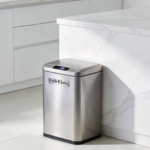
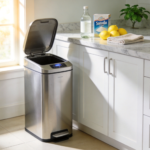
The most effective modern trash cans, such as those developed by Elylife, utilize sensor-controlled lids to manage the internal environment. Unlike manual step-on bins that rely on a gravity-dropped lid—which often leaves a microscopic gap—sensor bins are designed for precision.
Minimalism is also about health. A “clean” look should reflect a clean reality. Traditional bins can harbor biofilms—slimy layers of bacteria—that bond to the surface over time. To combat this, 2026-grade bins are increasingly utilizing Silver-Ion (Ag+) technology. These antimicrobial agents are infused into the liners to disrupt bacterial growth, ensuring that the bin doesn’t become a hidden reservoir for pathogens in your minimalist home.
For the digital-savvy homeowner or professional, even the marketing and visualization of these tools have become standardized. Many brands now utilize a 16:9 aspect ratio for product visualizations to ensure these high-tech bins fit perfectly into the wide-angle, panoramic views of modern kitchen renders. This ensures that the bin is a seamless part of the design process from conception to installation.
The future of kitchen design is multisensory. While we continue to hide our fridges behind cabinet panels and our dishwashers under counters, we must also “hide” our waste through superior engineering. A trash can that is invisible to the nose is the final frontier of the minimalist movement. By prioritizing sensor-driven sealing and antimicrobial tech, you ensure that your kitchen remains a masterpiece not just for the eyes, but for every sense.
Contrary to popular belief, the material of the exterior shell (plastic or stainless steel) is not the primary factor in odor control. The most critical factor is the use of a sensor-controlled lid and a high-quality seal, which prevents air exchange between the bin and the kitchen.
Sensor lids provide a more consistent and controlled closure. This ensures the lid lands perfectly on the gasket every time, maintaining the hermetic seal. It also prevents the “piston effect,” where a rapidly closing manual lid pushes odors out into the room.
Silver-Ions (Ag+) are antimicrobial agents infused into the material of the bin or its liner. They disrupt the metabolic processes of bacteria and fungi, preventing the growth of mold and biofilms that cause lingering odors.
To maintain optimal air quality, activated carbon filters should generally be replaced every 3 to 4 months, depending on the volume of organic waste processed.
Modern sensors are designed for high-frequency use and are often moisture-resistant. Maintenance is typically limited to simple battery replacements or occasional charging, depending on the model’s power source.