Address
304 North Cardinal
St. Dorchester Center, MA 02124
Work Hours
Monday to Friday: 7AM - 7PM
Weekend: 10AM - 5PM
Address
304 North Cardinal
St. Dorchester Center, MA 02124
Work Hours
Monday to Friday: 7AM - 7PM
Weekend: 10AM - 5PM
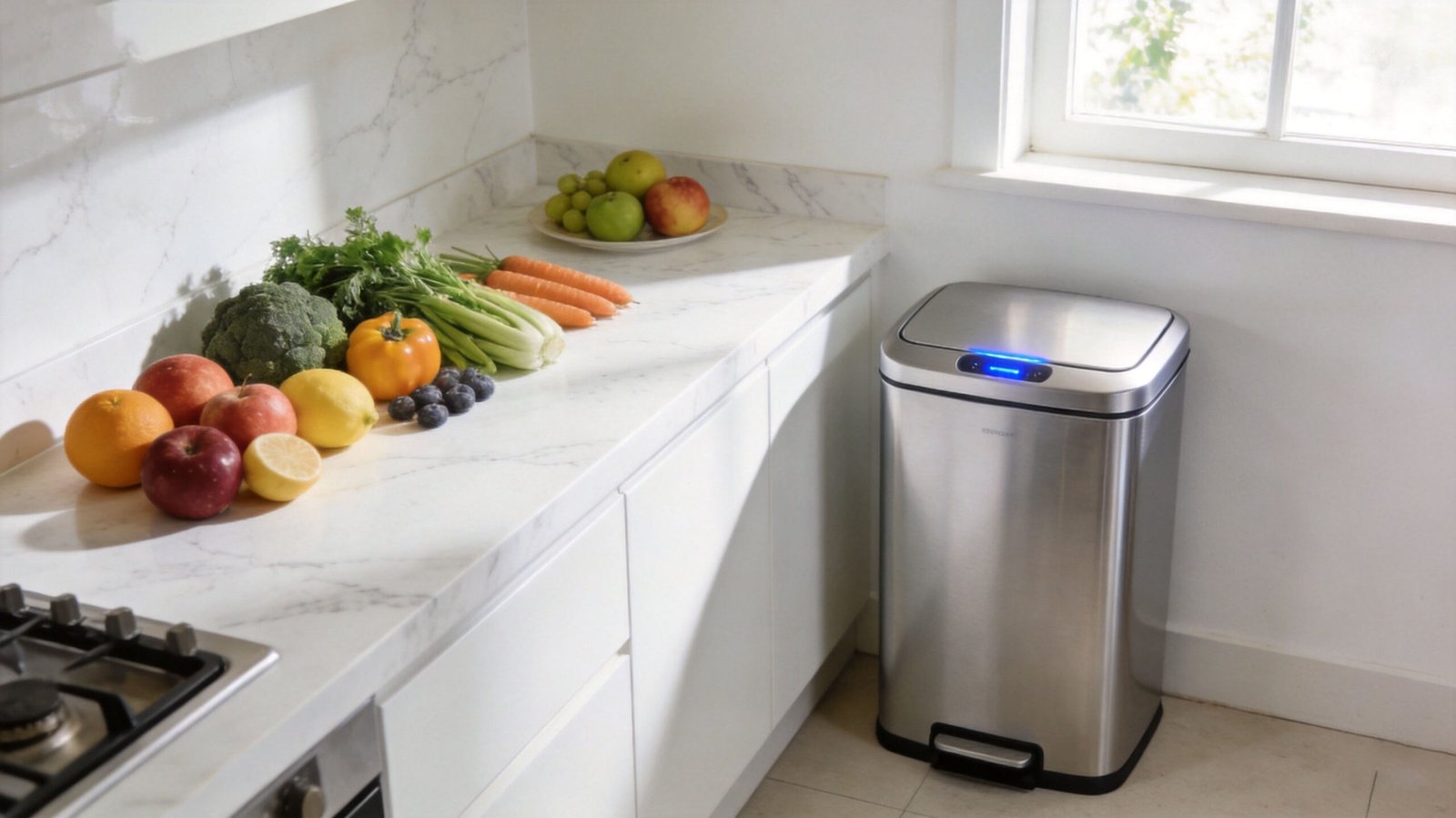
Meta Description: Summer brings peak food poisoning season. Discover how a sealed smart sensor trash can protects your kitchen from bacteria, pests, and airborne contaminants — keeping your family safer every day.
Summer is barbecue season. It’s also peak food poisoning season.
According to the CDC, foodborne illness cases surge by as much as 30% during the warmer months — and your kitchen trash can may be playing a bigger role in that risk than you realize. An open or poorly sealed bin doesn’t just look and smell bad. It becomes an active source of bacterial contamination, pest attractant, and airborne pathogen dispersal that can reach your food prep surfaces within hours.
The good news? A properly sealed smart sensor trash can addresses all three of these risks simultaneously. Here’s the science behind why — and what you should know to keep your kitchen safer this summer.
Most people don’t think about their trash can as a health hazard. They think of it as a utility — a place things go so they don’t have to deal with them. But from a microbiological perspective, your kitchen bin is the single most contaminated surface in your home.
Food waste — particularly meat scraps, dairy residue, and fruit peels — begins decomposing within hours of being discarded. In summer temperatures (above 75°F / 24°C indoors), bacterial colonies can double in size every 20 minutes. A banana peel tossed in the bin at noon can harbor billions of bacteria by evening.
When your trash can lid is open or poorly sealed, those bacteria don’t stay contained. Air currents from normal kitchen activity — walking past, opening the fridge, running the dishwasher — carry aerosolized bacteria and mold spores across your kitchen. Research published in the Journal of Applied Microbiology has shown that bioaerosols from decomposing organic waste can travel up to 3 meters from their source.
Flies are the most overlooked vector in kitchen contamination. A single housefly can carry over 100 species of pathogenic bacteria — including E. coli, Salmonella, and Shigella — on its body and in its gut.
An open or loosely sealed trash can is essentially a fly invitation. Once flies access food waste, they transfer pathogens to every surface they land on afterward — including your cutting boards, countertops, and clean dishes. Studies have found that a single fly landing can deposit between 300 and 700 bacteria onto a surface.
The solution is simple: eliminate the attractant and block access. A sealed trash bin with an airtight lid does both.
Not all trash cans are created equal when it comes to contamination prevention. Here’s how a well-designed sealed smart sensor trash like the Elylife series protects your kitchen environment.
A quality sensor trash can features a silicone gasket seal around the lid rim. When the lid closes, it creates an airtight enclosure that:
This isn’t just about comfort — it’s about containment. The sealed environment inside the bin significantly slows the aerobic decomposition process, which is what produces both odor and airborne bioaerosols.
When you’re handling raw chicken or peeling vegetables and need to discard waste, touching a manual lid transfers bacteria directly to the handle — and then to the next person who touches it.
A motion-sensor activated lid eliminates this entirely. Wave your hand, the lid opens. Walk away, it closes. No surface contact, no bacterial transfer chain.
This is especially critical during summer cooking sessions when you’re handling more raw proteins, fresh produce, and perishable ingredients. The more frequently you access the bin during prep, the more critical touch-free operation becomes.
For a deeper look at how touch-free operation reduces bacterial spread, check out our article on How Sensor Trash Cans Reduce Cross-Contamination.
Sealed smart trash cans are physically inaccessible to insects and small pests. The combination of:
Creates a barrier that flies, ants, and other pests simply cannot breach. This is fundamentally different from a pedal bin or open-top bin, where even a momentary lapse (lid left open, foot pedal gap) provides entry.
Owning a sealed smart trash can is the foundation. But your daily habits determine how much protection you actually get. Here are five practices that food safety experts recommend during the high-risk summer months.
In temperatures above 80°F (27°C), food waste in a sealed bin is still decomposing — just more slowly than in an open bin. The sealed environment slows aerobic bacterial growth, but anaerobic bacteria will still thrive if waste sits for multiple days.
Rule of thumb: If your bin contains any food waste (scraps, spoiled produce, expired dairy), empty it within 24 hours during summer. Non-food waste (packaging, paper) can wait longer.
If you’re discarding meat packaging with residual blood or juice, rinse it briefly before placing it in the bin. The same goes for dairy containers with residue. This simple step dramatically reduces the initial bacterial load entering your sealed environment.
It takes five seconds and reduces the bacterial population inside your bin by an order of magnitude.
Your trash can should be accessible but not adjacent to your primary cutting board or prep area. A distance of at least 3 feet (1 meter) minimizes the chance that any aerosolized particles from waste disposal reach your clean food surfaces.
This is particularly important when the bin lid is opening and closing — each cycle creates a brief air disturbance. Position the bin so that disturbance flows away from, not toward, your prep area.
While the interior gets the most attention, the exterior — particularly around the sensor window and lid rim — collects kitchen grease, splatter, and ambient bacteria over time.
A weekly wipe-down with a mild disinfectant keeps the exterior hygienic and ensures the sensor continues functioning at full sensitivity. Avoid harsh chemicals near the sensor window — a damp microfiber cloth is sufficient for the optical component.
An oversized trash liner that overhangs the rim breaks the gasket seal. A compromised seal means your airtight bin is no longer airtight.
Choose liners sized specifically for your bin capacity. The inner retention ring should hold the bag snugly with zero excess material extending past the rim. This ensures every lid closure achieves a complete seal.
If you’re choosing the right bin size for your household, our Elylife K Series 2026 Buying Guide breaks down every model by capacity and use case.
A sealed smart trash can isn’t a standalone solution — it’s one critical component of a hygienic kitchen ecosystem. The most effective food safety strategy addresses all the touchpoints:
表格
| Kitchen Element | Hygiene Risk | Smart Solution |
|---|---|---|
| Trash can | Bacterial aerosolization, pest attraction | Sealed sensor bin with airtight gasket |
| Cutting boards | Cross-contamination from raw proteins | Separate boards, sanitize between uses |
| Kitchen sink | Splash zone for drain bacteria | Touchless faucet, regular drain cleaning |
| Dish sponges | Bacterial reservoir | Replace weekly, use disposable alternatives |
| Refrigerator handles | High-touch contamination point | Clean daily, consider antimicrobial covers |
When these elements work together, the cumulative effect on kitchen hygiene is dramatic. And the sealed smart trash bin — the component that handles your most contaminated waste stream — is arguably the most impactful single upgrade you can make.
Several converging trends make kitchen hygiene particularly critical this summer:
Rising temperatures: Meteorological data shows that 2026 summer temperatures across major US metro areas are trending 1-2°F above the 30-year average. Higher temperatures mean faster bacterial growth on organic waste.
Increased home cooking: The USDA reports that home food preparation continues to rise post-pandemic, meaning more food waste generated at home and more frequent trash bin access throughout the day.
Smart home integration: As kitchens become more connected (touchless faucets, smart appliances, voice-controlled systems), the trash can is the last remaining high-touch holdout in many households. Upgrading to a sensor-activated model completes the hygienic kitchen.
表格
| Action | Frequency | Why It Matters |
|---|---|---|
| Empty food waste | Daily (summer) | Prevents bacterial buildup |
| Rinse high-risk waste | Every disposal | Reduces initial bacterial load |
| Wipe bin exterior | Weekly | Removes surface contamination |
| Deep clean interior | Bi-weekly (summer) | Eliminates residue and odor |
| Check gasket seal | Monthly | Ensures airtight containment |
| Replace batteries | Every 5-6 months | Prevents sensor failure |
| Verify lid closes fully | Every use | Confirms seal integrity |
Your kitchen trash can handles the waste you can’t afford to let contaminate your food. This summer, make sure it’s working as hard as the rest of your hygiene routine.


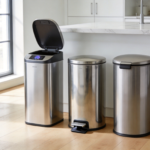
[…] Why a Sealed Smart Trash Can Is Your Kitchen’s Secret Weapon Against Foodborne Illness […]
[…] more on how sealed bins protect against biological hazards, our Kitchen Food Safety Guide covers the hygiene […]
[…] odor management strategies, our Summer Trash Can Odor Control Guide and Kitchen Food Safety Guide provide additional […]
[…] also prevent fruit fly infestations, a common summer kitchen pest that can carry bacteria. Our Kitchen Food Safety Guide covers additional strategies for keeping organic waste contained and […]
[…] households managing food safety concerns in the kitchen, our Sealed Smart Trash Can Kitchen Food Safety Guide explains how placement near food prep zones reduces cross-contamination […]