Address
304 North Cardinal
St. Dorchester Center, MA 02124
Work Hours
Monday to Friday: 7AM - 7PM
Weekend: 10AM - 5PM
Address
304 North Cardinal
St. Dorchester Center, MA 02124
Work Hours
Monday to Friday: 7AM - 7PM
Weekend: 10AM - 5PM
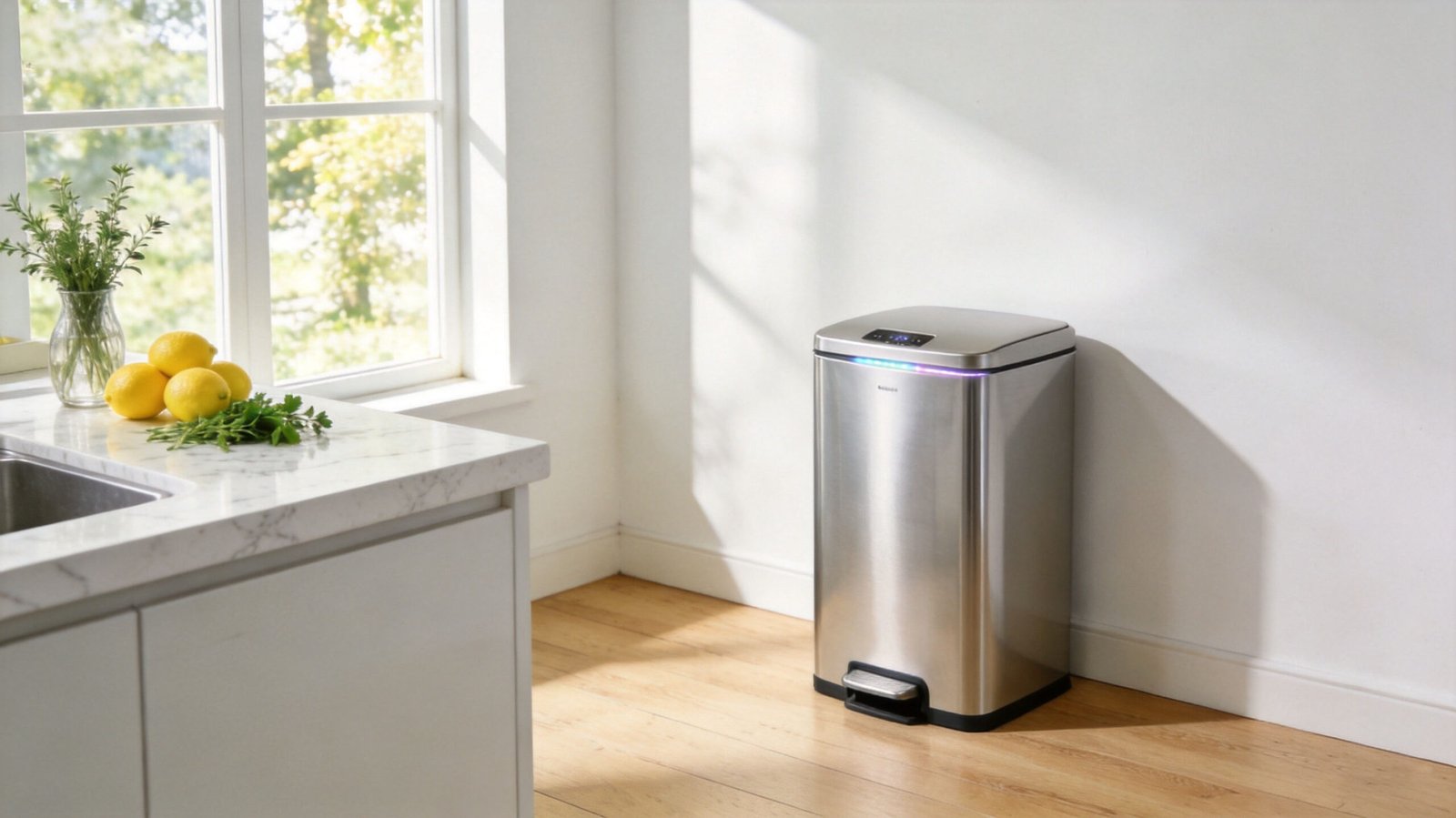
Meta Description: Summer heat turns your trash can into an odor factory. Learn 7 science-backed strategies to keep your smart sensor trash can fresh, clean, and odor-free all summer long.
The temperature hits 90°F. You walk into your kitchen. And there it is — that sour, unmistakable wave of trash can odor that makes you instinctively hold your breath.
Sound familiar?
Summer doesn’t just make you sweat. It accelerates the bacterial decomposition of organic waste inside your trash can by a factor of 2 to 4 times compared to cooler months. Food scraps begin breaking down within 2 hours at temperatures above 85°F. By the end of a hot July afternoon, your bin has become a biological reactor — pumping out volatile sulfur compounds, ammonia, and fatty acids that no amount of air freshener can mask.
But here’s the good news: if you own a smart sensor trash can like the Elylife series, you already have an odor-control advantage over traditional bins. With a few targeted strategies, you can keep your sensor bin smelling like day one — even through the dog days of summer.
Here are 7 expert strategies that actually work.
Before diving into solutions, it helps to understand the science. Summer creates a perfect storm for trash can odor — and it’s not just about heat.
Bacteria that cause food decomposition — including Clostridium, Pseudomonas, and Bacillus species — thrive in the temperature “danger zone” between 40°F and 140°F. During summer, your kitchen trash can often sits at 80-95°F, the exact range where these microorganisms multiply fastest.
Research from the USDA shows that bacterial populations can double every 20 minutes in this temperature range. A single banana peel tossed in your bin after breakfast can host over 10 million bacterial colonies by dinner time — each one releasing odor-causing gases.
Summer humidity — often 60-80% in many U.S. states — adds another dimension. Moisture accelerates decomposition, creates ideal conditions for mold and mildew growth inside the bin, and prevents odorous compounds from dissipating. Instead, they concentrate in the warm, humid air trapped inside the bin.
A smart sensor trash can like Elylife’s models offers three structural advantages against summer odor:
These features provide a strong foundation. But even the best-sealed bin needs strategic support during peak summer months.
This is the single most impactful summer-specific trick that most people overlook.
Before tossing high-odor food waste (shrimp shells, raw meat packaging, fish bones, coffee grounds, watermelon rinds) into your sensor bin, place it in a small bag and refrigerate or freeze it until trash day. This keeps the waste below 40°F, halting bacterial growth and odor production entirely.
What to pre-chill:
Why it works: By the time the waste enters your bin, it’s already cold. The sealed environment of your Elylife sensor bin then maintains a lower internal temperature for longer, slowing the bacterial clock.
This is particularly effective for households that cook frequently during summer — backyard BBQs, grilled seafood dinners, and fresh produce that spoils faster in heat.
Place an open box or a small breathable sachet of baking soda inside your sensor bin, tucked behind the trash bag liner. Sodium bicarbonate (baking soda) is a proven odor neutralizer — it doesn’t mask smells, it chemically neutralizes acidic and basic odor molecules.
How to do it without interfering with the sensor:
What it neutralizes:
Many commercial “trash can deodorizers” simply add fragrance to mask odors. Baking soda eliminates them at the molecular level — and it won’t interfere with your sensor bin’s infrared detection window.
Not all trash bags are created equal — and summer is not the time for the thin, economy-grade liners that work fine in winter.
What to look for in a summer trash liner:
表格
| Feature | Winter Liner | Summer Liner |
|---|---|---|
| Thickness | 0.7-0.9 mil | 1.2-1.5 mil |
| Odor barrier | Standard | Activated charcoal or baking soda infused |
| Scent | Unscented | Light fresh scent (optional) |
| Tear resistance | Adequate for cold waste | High — summer waste is heavier and wetter |
| Leak protection | Basic | Reinforced bottom seam |
A 1.3 mil or thicker liner with activated charcoal provides a second layer of odor containment — even if some gases escape the waste itself, the charcoal-infused bag material absorbs them before they reach the air inside the bin.
Pro tip: For your Elylife sensor bin, choose liners specifically labeled as “drawstring” type to ensure a secure fit around the rim. A loose liner can interfere with the smooth lid closure and compromise the airtight seal.
This is the most counterintuitive strategy, and possibly the most important.
In cooler months, you might comfortably go 4-5 days between trash pickups. Summer changes the calculus entirely. At 90°F, the bacterial load in a kitchen bin reaches peak odor production within 48-72 hours — even if the bin isn’t full.
Recommended summer emptying schedule:
The key insight: you’re not emptying because the bin is full — you’re emptying because the bacterial population inside has reached a critical threshold where odor production becomes exponential.
Pair this with a quick rinse of the bin interior using warm water and a splash of white vinegar after each bag change. This resets the bacterial count to near zero and gives your next bag a fresh start.
For more optimization strategies, check out our 10 Expert Tips for Getting the Most Out of Your Sensor Bin, which covers placement, maintenance, and daily-use techniques year-round.
Summer grime builds up faster than you’d expect. Here’s what accumulates on your sensor bin during July and August:
On the sensor window:
On the lid gasket seal:
Weekly cleaning routine (takes 3 minutes):
A clean gasket is a sealed gasket. If the gasket has debris or grease buildup, your bin’s airtight seal — its primary defense against summer odor — is compromised.
For a deeper dive into touch-free hygiene benefits, our guide on How Sensor Trash Cans Reduce Cross-Contamination explains the science behind sensor bin surfaces.
This sounds simple, but many households place their kitchen trash can in locations that are summer odor disaster zones:
Worst locations in summer:
Best locations in summer:
Every 10°F increase in temperature roughly doubles the rate of bacterial decomposition. Moving your bin from a 95°F spot (near the oven) to a 78°F spot (interior wall, away from heat) cuts odor production by more than half.
Once a month during summer, give your sensor bin an overnight deep clean using plain white vinegar — the most underrated odor-fighting tool in your kitchen.
The vinegar overnight protocol:
Why vinegar works: Acetic acid in white vinegar (typically 5% concentration) kills 99% of common household bacteria, neutralizes alkaline odor compounds like ammonia, and dissolves the biofilm that forms on plastic and metal bin surfaces. Biofilm — a thin layer of bacteria embedded in a protective slime matrix — is the primary reason why a bin continues to smell even after you change the bag.
Important: Never use bleach in a sensor trash can. Bleach can corrode metal components, damage the silicone gasket, and its fumes can interfere with the infrared sensor. Vinegar is safe, effective, and cheap.
How does a smart sensor trash can stack up against other common summer odor solutions?
表格
| Approach | Odor Effectiveness | Effort Level | Cost | Compatibility |
|---|---|---|---|---|
| Smart sensor bin (sealed) | ★★★★☆ | Low — passive containment | Higher initial investment | Purpose-built |
| Air freshener spray | ★★☆☆☆ (masks, not eliminates) | High — multiple sprays daily | Low per use | Works with any bin |
| Baking soda box in bin | ★★★☆☆ | Medium — biweekly replacement | Very low | Works with any bin |
| Double-bagging waste | ★★★☆☆ | High — extra bags daily | Moderate | Works with any bin |
| Taking out trash daily | ★★★★☆ | High — daily trips | Low (time cost) | Any bin |
| Smart bin + summer strategies (this guide) | ★★★★★ | Low-Medium — weekly 5-min routine | Very low incremental | Purpose-built + optimization |
The clear winner: combining your Elylife sensor bin’s built-in advantages with the seven strategies above creates a layered defense that no single approach can match.
表格
| Task | Frequency | Time Required | Impact |
|---|---|---|---|
| Pre-chill high-odor waste | Every use | 0 extra effort (plan ahead) | High — stops odor at source |
| Empty kitchen bin | Every 48 hours | 2 minutes | High — resets bacterial growth |
| Replace trash liner | With each empty | 1 minute | Medium — adds secondary barrier |
| Wipe sensor window | Weekly | 30 seconds | Medium — maintains sensor accuracy |
| Clean lid gasket with vinegar | Weekly | 1 minute | High — preserves airtight seal |
| Baking soda sachet refresh | Every 2-3 weeks | 1 minute | Medium — absorbs accumulated VOCs |
| Vinegar overnight deep clean | Monthly | 5 min active + overnight passive | Very high — eliminates biofilm |
| Relocate bin away from heat | One-time adjustment | 5 minutes | High — reduces internal temperature |
Summer doesn’t have to mean living with trash can odor. Your Elylife smart sensor bin was engineered to solve exactly this problem — and with these seven strategies, you’ll turn it into an unstoppable odor-control system. Less smell, less stress, more summer enjoying.


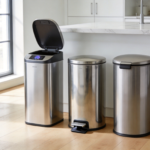
[…] Consider odor-control bags: Bags with baking soda or charcoal infusion complement the sealed lid design by providing a secondary odor barrier. For a deeper guide on managing bin odors, check our Summer Trash Can Odor Control article. […]