Address
304 North Cardinal
St. Dorchester Center, MA 02124
Work Hours
Monday to Friday: 7AM - 7PM
Weekend: 10AM - 5PM
Address
304 North Cardinal
St. Dorchester Center, MA 02124
Work Hours
Monday to Friday: 7AM - 7PM
Weekend: 10AM - 5PM
You’ve allergy-proofed the bedroom. You’ve upgraded the air filter. You’re vacuuming with a HEPA system every week.
Yet every morning, you wake up with a stuffy nose, itchy eyes, and that nagging post-nasal drip that just won’t quit.
Here’s the culprit nobody talks about: your kitchen trash can.
According to the American College of Allergy, Asthma & Immunology, indoor allergens — including mold spores, dust mite proteins, cockroach allergens, and bacterial particles — are a leading trigger of year-round allergy symptoms. And research from the National Institute of Environmental Health Sciences confirms that homes with poor waste management practices show significantly higher concentrations of these allergens in indoor air.
The problem? Your trash can is a biological magnet — collecting, incubating, and quietly redistributing allergens every time someone walks by. But here’s the good news: upgrading to a smart sensor trash can with a sealed design can dramatically cut your allergen exposure.
Here’s what’s happening inside your bin, why it matters for your health, and exactly what to do about it.
Most people think of trash as just “dirty stuff you throw away.” But from an allergen perspective, your kitchen bin is far more problematic than a dusty shelf or a musty basement. Here’s why.
Mold is the number one hidden allergen in your trash can — and it starts growing within 24-48 hours on any organic waste that contains moisture. According to the EPA, mold produces allergens, irritants, and in some cases potentially toxic substances (mycotoxins). Inhaling or touching mold spores can cause allergic reactions including sneezing, runny nose, red eyes, and skin rash.
Where mold thrives in your bin:
The real danger is that mold reproduces by releasing microscopic spores into the air — spores that are only 2-5 micrometers in diameter. They’re small enough to remain airborne for hours, small enough to bypass your nasal filtration system, and small enough to trigger an immune response when they land in your lungs.
Every time you open a traditional open-top trash can, you release a puff of these concentrated spores directly into your kitchen air.
Research shows the average household trash bin can host over 400 million bacteria per square inch, including species like E. coli, Salmonella, and Staphylococcus. While many people associate bacteria with odor (and they do produce volatile organic compounds), the health risk goes deeper.
Bacterial cell fragments — specifically endotoxins from the cell walls of gram-negative bacteria — are potent airborne allergens. When bacteria die and their cell walls break apart, these endotoxins become aerosolized. Studies have linked elevated indoor endotoxin levels to increased asthma symptoms, chronic coughing, and allergic rhinitis.
In a warm kitchen (above 75°F), bacterial populations inside a trash can can double every 20 minutes. By the end of a single day, a banana peel in your bin could harbor over 10 million bacterial colonies — each one a potential source of airborne allergenic proteins.
The Asthma and Allergy Foundation of America identifies cockroach allergens as a leading trigger for asthma in urban environments. Cockroach saliva, feces, and shedding body parts contain proteins that become airborne and cause allergic reactions.
Your trash can attracts cockroaches and other pests in two ways:
Once pest allergens settle on surfaces around your bin (countertops, floors, cabinets), they persist for months — and become airborne every time someone walks by or opens a cabinet.
If you’re using a step-can or an open-top bin, you’re essentially running an allergen dispersal system in the heart of your home. Here’s the cycle:
The Allergen Amplification Loop:
A 2024 study published in the Journal of Allergy and Clinical Immunology found that homes with sealed waste containment systems showed 30-40% lower indoor mold spore counts compared to homes with open-top bins — even when controlling for other variables like ventilation, pets, and cleaning frequency.
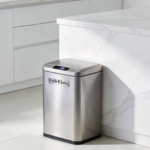
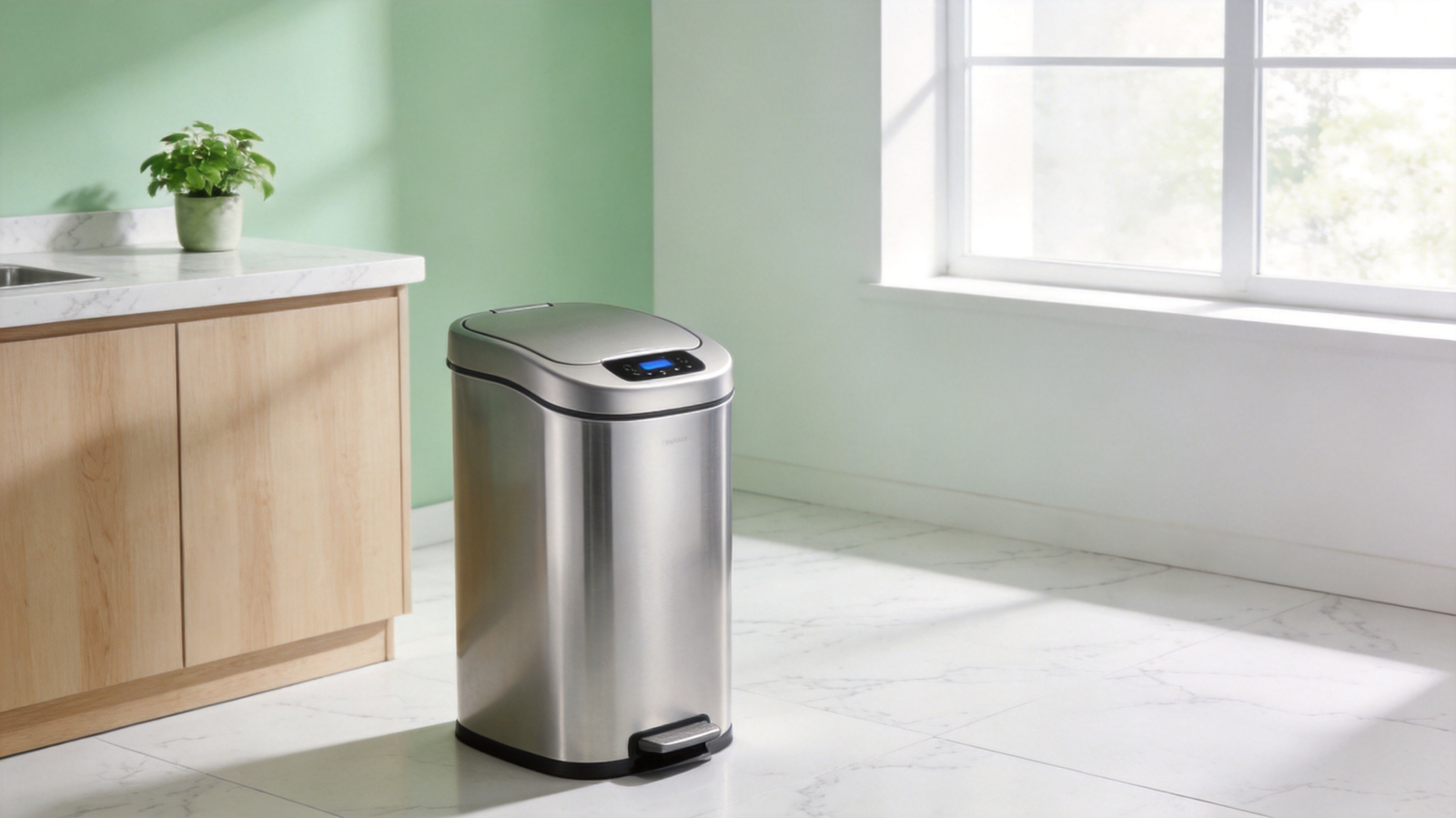
A smart sensor trash bin like the Elylife series addresses every point in the allergen amplification loop through three core design features:
The silicone gasket seal around the lid of an Elylife sensor bin creates an airtight barrier between the waste inside and the air in your kitchen. This means:
Compare this to a step-can: every time the foot pedal lifts the lid, even briefly, the seal is broken and a fresh batch of allergens is released.
When you touch a traditional bin lid, you pick up mold spores and bacterial particles on your hands. You then transfer these to countertops, faucet handles, your face — essentially spreading the allergen load across your kitchen.
A smart sensor bin eliminates this vector entirely. The infrared sensor opens the lid automatically when it detects your motion, so your hands never contact the bin surface. This is especially important for allergy sufferers who may already have compromised nasal and sinus membranes.
For a deeper look at how touch-free bins reduce germ transfer, our guide on How Sensor Trash Cans Reduce Cross-Contamination breaks down the science.
The Elylife sensor bin closes within 1-2 seconds after detecting that you’ve removed your hand. Compare this to a manual lid that you prop open with your hip while scraping a plate, or a swing-top lid that stays open until it slowly creaks shut. Those extra seconds of open-lid time allow allergen concentrations to spike in the immediate breathing zone.
Upgrading to a smart sensor bin is the most impactful single change you can make. But for maximum allergen reduction, pair it with these seven strategies:
Mold begins growing within 24 hours on moist organic waste. By emptying your kitchen bin every day or two, you interrupt the mold growth cycle before spore production reaches critical levels.
Pro tip: If you can’t empty daily, double-bag high-moisture waste (fruit scraps, coffee grounds) in a small separate bag before placing it in the bin.
Once a week, remove the liner and rinse the interior with a solution of white vinegar and water (50/50 ratio). Vinegar kills 99% of common household bacteria and neutralizes alkaline allergenic compounds.
Critical step: Dry the bin completely before inserting a new liner. Moisture left in the bin accelerates mold regrowth — even with a sealed lid.
Not all trash bags are equal. Look for liners with:
Position your sensor bin away from:
Best placement: against an interior wall, near the AC return vent if possible.
A dirty sensor window can cause delayed lid closure, extending allergen exposure time. A dirty gasket prevents a complete seal, allowing slow allergen leakage between uses.
Monthly maintenance takes 2 minutes:
Create a small countertop container specifically for high-allergen waste:
Empty this container daily into your sealed sensor bin, or directly into your outdoor bin.
The EPA recommends keeping indoor humidity between 30-50%. Above 60%, mold growth accelerates dramatically — including inside your trash can.
Use a simple digital hygrometer (under $15) near your bin station. If humidity consistently reads above 55%, consider running a dehumidifier in the kitchen or improving ventilation.
表格
| Factor | Open-Top Bin | Step-Can | Smart Sensor Bin (Sealed) |
|---|---|---|---|
| Allergen containment during idle | ★☆☆☆☆ (fully exposed) | ★★★☆☆ (closed but unsealed) | ★★★★★ (airtight seal) |
| Allergen release during use | ★★★★★ (lid open 10-30 sec) | ★★★★☆ (lid open 5-15 sec) | ★★☆☆☆ (lid open 1-3 sec) |
| Cross-contamination via touch | ★★★★☆ (hands touch lid) | ★★★☆☆ (hands touch pedal area) | ★☆☆☆☆ (no contact needed) |
| Pest access to waste | ★★★★★ (fully accessible) | ★★☆☆☆ (partial barrier) | ★☆☆☆☆ (sealed + no food odor escape) |
| Mold spore release frequency | Continuous | Intermittent | Near-zero when sealed |
| Effort to maintain allergen-free | High — constant attention | Medium — regular cleaning | Low — sealed design + weekly 2-min routine |
The smart sensor bin isn’t just a convenience upgrade — it’s a health intervention for allergy sufferers.
表格
| Task | Frequency | Time | Impact |
|---|---|---|---|
| Empty kitchen bin | Every 24-48 hours | 1 minute | High — interrupts mold growth cycle |
| Rinse bin interior with vinegar | Weekly | 3 minutes | High — resets bacterial count to near zero |
| Wipe sensor window and gasket | Weekly | 2 minutes | Medium — maintains seal integrity and sensor speed |
| Replace trash liner | With each empty | 30 seconds | Medium — secondary allergen barrier |
| Empty high-allergen waste container | Daily | 30 seconds | High — removes mold-prone items before spore release |
| Check humidity near bin station | Weekly (or monitor continuously) | 10 seconds | Medium — prevents accelerated mold growth |
| Deep clean bin with baking soda + vinegar | Monthly | 5 minutes | Very high — eliminates biofilm and embedded allergens |
| Replace bin location if near heat/humidity | One-time | 5 minutes | High — slows all biological growth inside bin |
Your allergies don’t have to be a mystery. The trash can in your kitchen — and how you manage it — is one of the most impactful (and most overlooked) factors in your indoor allergen load. Upgrade to a sealed smart sensor bin, follow the seven strategies above, and start breathing easier tonight.