Address
304 North Cardinal
St. Dorchester Center, MA 02124
Work Hours
Monday to Friday: 7AM - 7PM
Weekend: 10AM - 5PM
Address
304 North Cardinal
St. Dorchester Center, MA 02124
Work Hours
Monday to Friday: 7AM - 7PM
Weekend: 10AM - 5PM
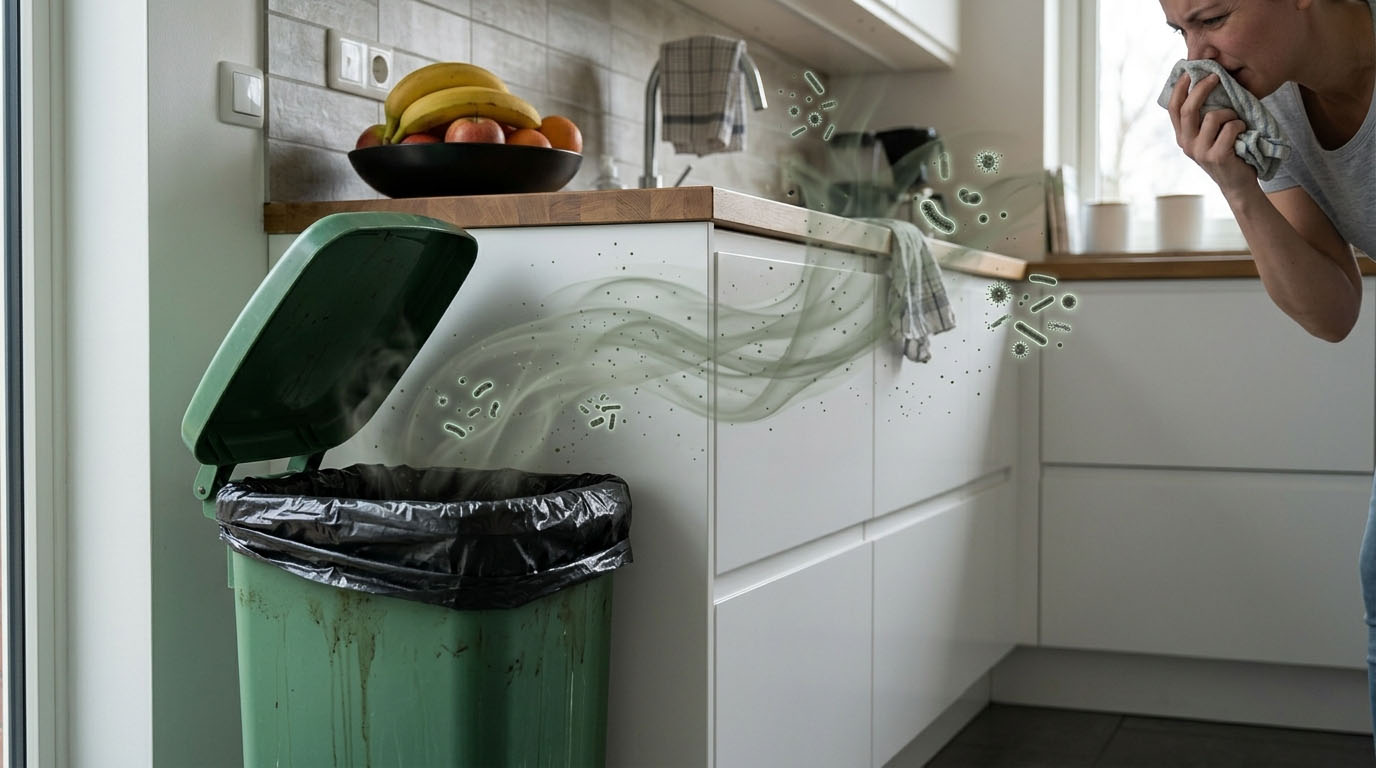
You take great pride in your kitchen. You wipe the marble islands until they gleam, you soak your cutting boards in lemon and salt, and you wouldn’t dream of leaving a damp sponge in the sink overnight. But there is a silent, microscopic city thriving in your kitchen—one that you interact with dozens of times a day without a second thought.
We aren’t talking about the floor or the drain. We are talking about your trash can lid. In the quest for a sterile home, the waste bin is often the most overlooked piece of equipment. However, new microbiological studies suggest that the traditional manual trash can is the single greatest vector for cross-contamination in the modern home. Today, we unmask this hidden source of bacteria and explore how Elylife Smart Home technology is providing the ultimate biological circuit breaker.
The kitchen is a high-stakes environment for hygiene. One moment you are handling raw protein, the next you are garnishing a salad. In between these actions, you inevitably need to dispose of waste.
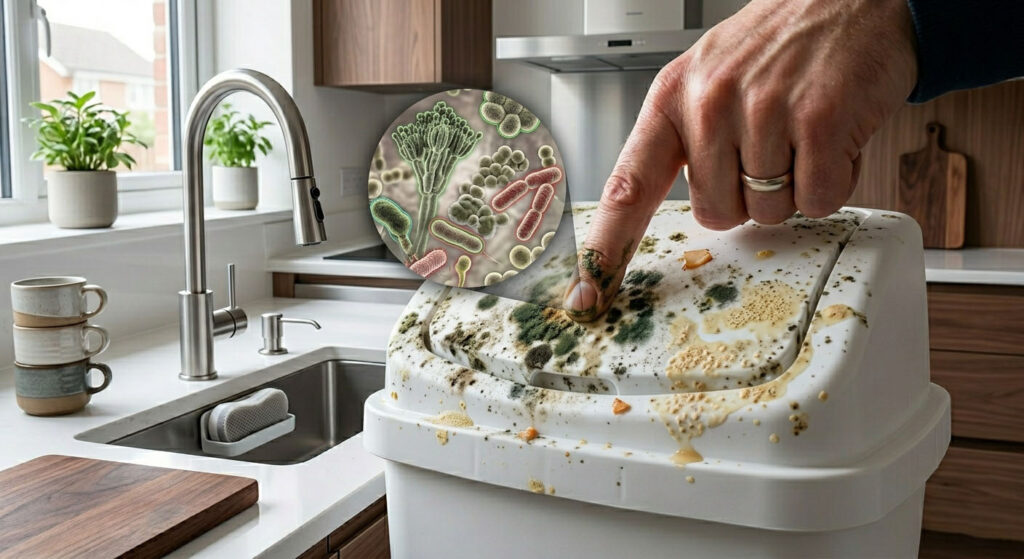
Most people view a trash can lid as a simple plastic or metal barrier. Microbiologists, however, view it as a Biofilm Habitat. Because kitchen bins are often kept in warm, humid areas (like under the sink or near the stove), the lid becomes a prime site for bacterial colonization.
It’s not just what you touch; it’s what you breathe. When you manually lift a lid or slam a pedal bin shut, you create a sudden displacement of air. This is known as the Aerosolized Plume.
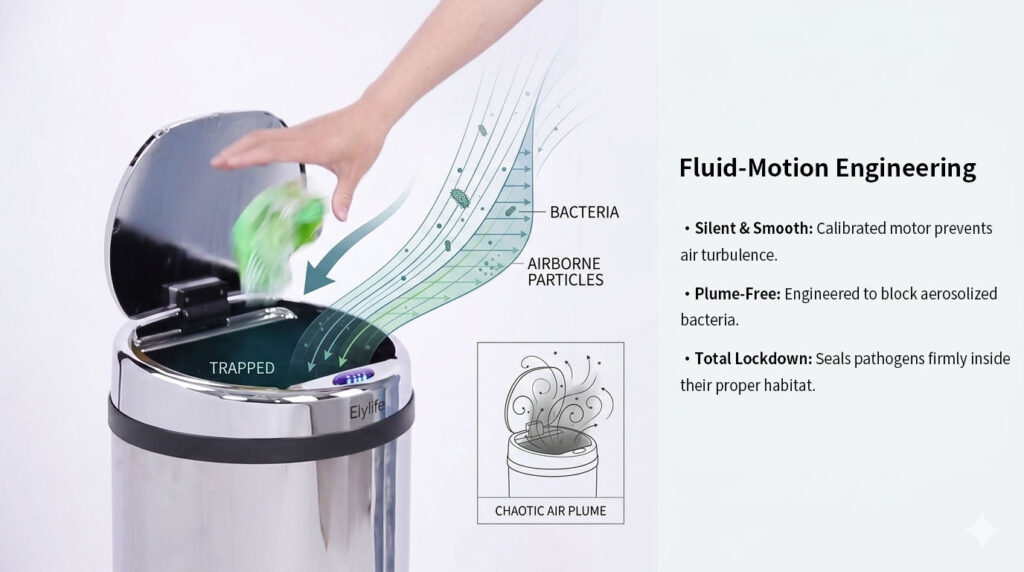
Many brands claim that “stainless steel” is the answer to kitchen hygiene. While stainless steel is non-porous and easier to clean than cheap plastic, it doesn’t solve the Contact Problem.
In 2026, the kitchen is no longer just a place to cook; it’s a wellness center. We track our macros, we filter our water, and we purify our air. It is only logical that we also automate our waste management.
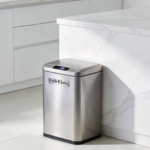
The Elylife Smart Home philosophy treats the trash can as a “Sanitary Vault.” By utilizing high-precision sensors, airtight compression seals, and antimicrobial inner linings, we have transformed the dirtiest object in your home into a high-tech guardian of your family’s health.
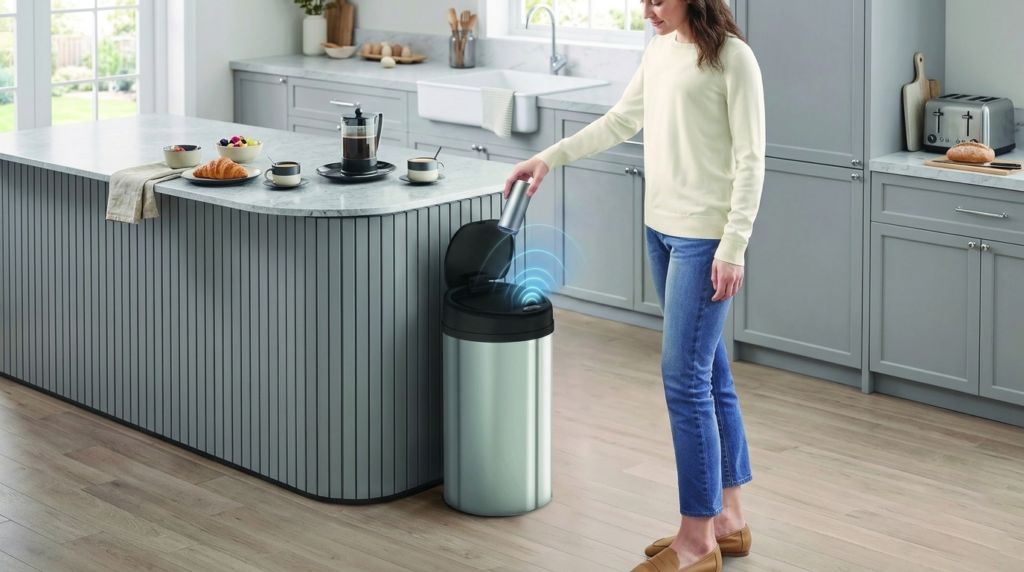
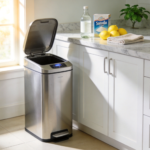
A: Yes. While a pedal bin is “hands-free,” the mechanical action of the lid is often violent, causing more air turbulence and bacterial dispersal. Furthermore, pedal bins frequently fail to close completely, leaving a gap for odors and bacteria to escape. Elylife’s sensor bins provide a consistent, airtight seal every time.
A: Because you never touch the lid, it stays much cleaner than a manual bin. However, for total peace of mind, we recommend a quick wipe with a disinfectant cloth once a week to remove any settled dust or airborne grease.
A: Elylife sensors are sealed units. They are designed to withstand the humid environment of a kitchen without allowing moisture or bacteria to penetrate the electronics. This ensures both hygiene and long-term durability.
A: Bacteria thrive on oxygen. By providing a precision-fit seal, Elylife bins limit the amount of fresh oxygen available to the waste inside, which can slow down the decomposition process and the growth of certain aerobic bacteria.
We spend thousands of dollars on high-end appliances and organic ingredients, yet we often settle for a primitive “bucket” for our waste. If you want to eliminate the most significant hidden source of bacteria in your home, it’s time to stop touching the lid.
The transition to an Elylife automatic sensor trash can is more than a convenience; it is a vital upgrade to your home’s biological security.
Don’t touch the dirt. Control it with Elylife.