Address
304 North Cardinal
St. Dorchester Center, MA 02124
Work Hours
Monday to Friday: 7AM - 7PM
Weekend: 10AM - 5PM
Address
304 North Cardinal
St. Dorchester Center, MA 02124
Work Hours
Monday to Friday: 7AM - 7PM
Weekend: 10AM - 5PM
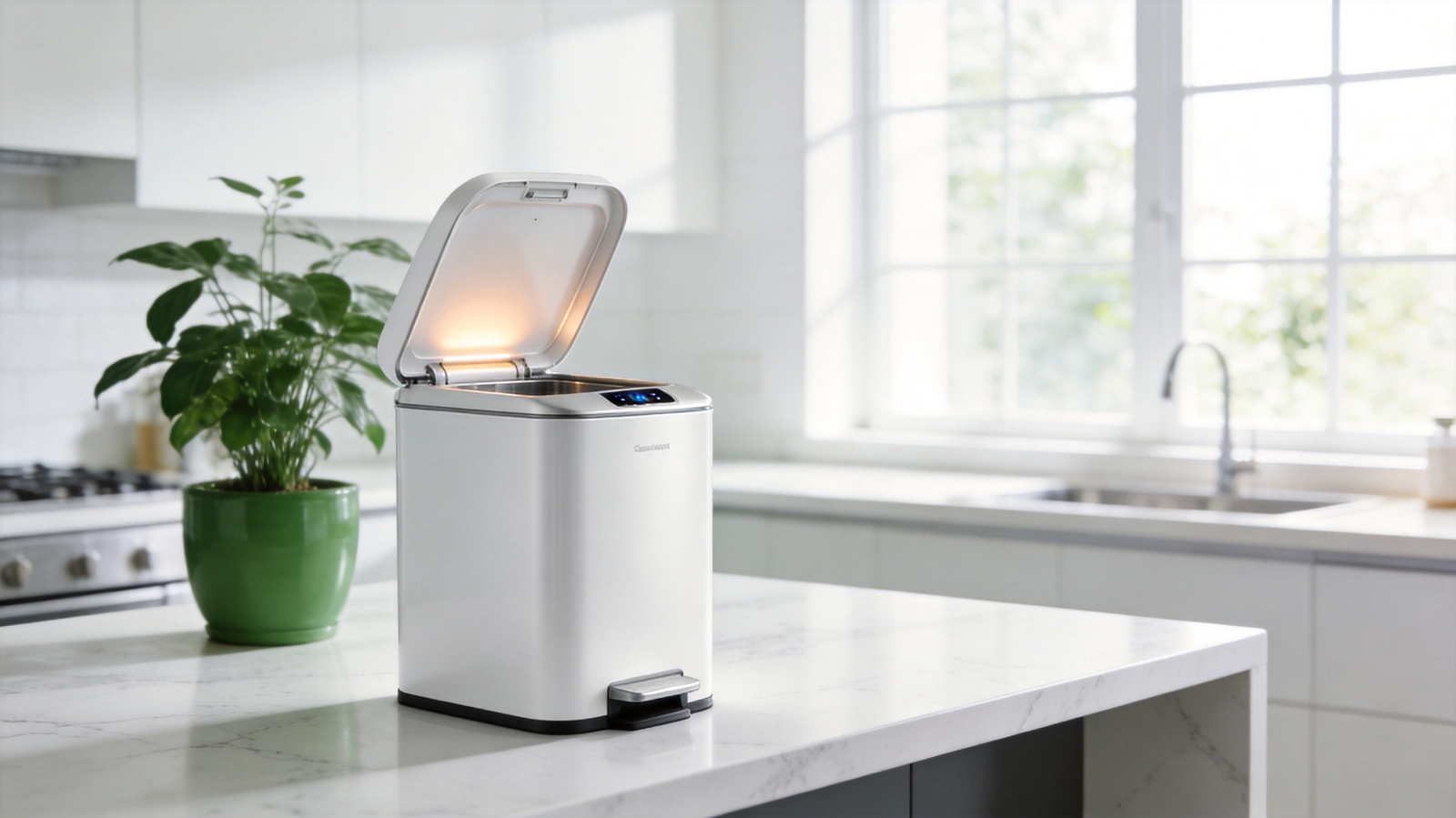
You wave your hand — the lid opens. You drop your waste — the lid closes. It feels like magic, but it’s actually a carefully engineered system of infrared physics, precision mechanics, and materials science working together in a package that sits quietly in your kitchen.
Most people never think about what’s happening inside their smart sensor trash can. But understanding the technology doesn’t just satisfy curiosity — it helps you make better purchasing decisions, troubleshoot issues faster, and get significantly more performance from your device.
This article breaks down every core system inside a modern smart sensor trash can: the infrared proximity sensor, the motorized lid mechanism, the sealed odor containment design, and the power management circuit. By the end, you’ll know exactly what separates a reliable smart bin from a frustrating one.
The infrared (IR) proximity sensor is the single most important component in a touch-free trash can. It’s what transforms an ordinary waste bin into a hands-free device — and the quality of this sensor determines whether your trash can responds instantly or leaves you waving awkwardly in the air.
The sensor module contains two elements: an IR emitter (usually an LED) and an IR receiver (a photodiode or phototransistor). Here’s the sequence that happens every time you approach:
Not all IR sensors are created equal. Here are the key performance factors:
表格
| Factor | What It Means | Impact on Experience |
|---|---|---|
| Detection range | Distance at which the sensor reliably triggers | Too short = awkward hovering; too long = false triggers from passersby |
| Response time | Delay between detection and lid activation | Faster is better — premium models respond in under 0.3 seconds |
| Ambient light rejection | Ability to filter out interference from sunlight and indoor lighting | Poor rejection causes missed triggers near windows or under bright LED lights |
| Consistency | Reliability across temperature and humidity changes | Cheap sensors drift in humid environments, causing intermittent failures |
The Elylife K Series uses calibrated IR sensors with a detection range of 10–15 cm (4–6 inches) , optimized to minimize false activations while providing reliable hand-wave triggering across various lighting conditions. The sensor module is housed behind a purpose-designed IR-transparent window in the lid, which protects the electronics while maintaining signal clarity.
For maximum sensor reliability, proper placement is essential. Our Sensor Trash Can Placement Guide covers how to position your bin to avoid interference from metallic surfaces, direct sunlight, and heat sources.
The motor is what physically moves the lid — and it’s where many budget sensor bins cut corners. A poorly designed motor mechanism leads to slow opening, loud slamming, premature wear, and eventually the dreaded “lid stuck halfway open” failure.
Most smart sensor trash cans use a DC micro motor connected to a gear train (usually plastic or nylon gears) that converts the motor’s high-speed, low-torque rotation into the controlled, slower movement needed to lift and lower the lid. The gear train serves two purposes:
Premium models like the Elylife K Series incorporate a damped closing mechanism — typically a friction damper or spring-assisted system that slows the lid during the final phase of closing. This achieves two critical outcomes:
Most modern smart bins offer dual activation modes:
The Elylife K130 and K230 both feature this dual-mode system, giving users the flexibility to choose between hands-free convenience and precise manual control depending on the situation.
A sensor trash can that opens hands-free is convenient — but if odors leak out when the lid is closed, the convenience means nothing. The sealed odor containment system is what separates premium smart bins from basic ones.
Effective odor containment requires three elements working together:
1. The Lid Gasket
A flexible rubber or silicone gasket runs around the perimeter of the lid. When the lid closes, the gasket compresses against the bin’s rim, creating a continuous seal that blocks odor molecules from escaping. The quality of this gasket — its material, cross-section shape, and compression force — directly determines sealing effectiveness.
2. The Tight-Fit Lid Design
The lid must sit flush against the bin body with minimal gap tolerance. Even a 2mm gap around the perimeter provides a significant escape path for volatile organic compounds (VOCs) from decomposing food waste. Precision-molded ABS plastic lids, like those used in Elylife K Series models, maintain consistent fit over thousands of open-close cycles.
3. The Inner Ring / Bag Holder
A well-designed inner ring secures the trash bag liner and prevents it from slipping down into the bin. This serves a secondary but important function: it keeps the bag’s open edges below the rim level, reducing the surface area through which odors can diffuse before the lid closes.
Odors from decomposing organic waste contain a mixture of volatile compounds including ammonia, hydrogen sulfide, and various mercaptans. Beyond being unpleasant, these compounds can trigger headaches, nausea, and respiratory irritation in sensitive individuals. A properly sealed smart trash can contains these compounds effectively, contributing to better indoor air quality.
For households managing specific health concerns, our guides on How Touch-Free Sensor Trash Cans Reduce Cross-Contamination and Your Trash Can Could Be Triggering Your Allergies explore the hygiene benefits in greater detail.
One of the most impressive engineering achievements in a smart sensor trash can is its power efficiency. Running an IR sensor (constantly), a microcontroller (constantly), and a motor (intermittently) on just 4 AA batteries — and getting 5–7 months of life from them — requires careful circuit design.
The typical power system consists of:
Understanding power consumption helps you maximize battery life:
表格
| Factor | Impact | Mitigation |
|---|---|---|
| High-traffic placement | More activations = more motor cycles = more power | Follow our Placement Guide to avoid unnecessary triggers |
| False triggers | Sensor detecting nearby objects or reflections | Keep 6+ inches clearance from metallic surfaces and reflective walls |
| Cold temperatures | Alkaline battery chemistry slows in cold environments | Avoid unheated garages in winter; battery capacity drops 20–30% below 40°F |
| Aging sensor components | IR LED efficiency degrades over years, requiring more current | Replace batteries with fresh alkaline cells; avoid rechargeable NiMH (lower voltage per cell) |
| Leaving lid manually open | Motor holds position continuously | Use touch mode only when needed; switch back to sensor mode after cleanup |
The Elylife K130 features a slide-out battery tray that makes replacement quick and tool-free — an important design detail, since the alternative (removing the entire lid to access batteries) turns a 30-second task into a frustrating ordeal.
For long-term maintenance tips including sensor care and battery management, our Smart Trash Can Maintenance Guide provides a comprehensive checklist.
The materials used in a smart sensor trash can affect durability, hygiene, aesthetics, and even sensor performance. Here’s a breakdown of the primary materials and what they mean for long-term use.
表格
| Material | Characteristics | Common Use |
|---|---|---|
| Stainless steel | Corrosion-resistant, fingerprint-resistant, premium feel, easy to clean, heavy | Premium models; kitchens and high-humidity areas |
| Tinplate (coated steel) | Lightweight, affordable, good scratch resistance with coating, decent durability | Mid-range models; bedrooms, offices |
| ABS plastic | Lightweight, affordable, limited durability, prone to scratching | Budget models |
The Elylife K130 uses a stainless steel body for maximum durability and moisture resistance, while the Elylife K230 uses thickened tinplate with a dual-layer eco-friendly coating — a cost-effective alternative that still provides excellent scratch and corrosion resistance for most household environments.
Almost all quality sensor trash cans use ABS (Acrylonitrile Butadiene Styrene) plastic for the lid. This engineering thermopinel offers the ideal combination of impact resistance, dimensional stability, and surface finish quality. The IR sensor window is molded directly into the ABS lid, with the plastic’s natural IR transparency at 850–940 nm wavelengths ensuring reliable signal transmission.
The inner ring (bag holder) is typically made from PP (polypropylene) — chosen for its chemical resistance (it won’t degrade from contact with waste liquids), its flexibility (it can snap into place and be removed for cleaning), and its low cost.
Understanding the technology helps you see why different models exist. Here’s how the core systems are implemented across the Elylife range:
表格
| Feature | B Series | K Series (K130/K230) | K Series (K140/K240) | M Series |
|---|---|---|---|---|
| Capacity Range | 9L–18L | 30L | 40L–60L | 30L–80L |
| Body Material | Plastic / Tinplate | Stainless Steel (K130) / Tinplate (K230) | Stainless Steel / Tinplate | Stainless Steel |
| Sensor Type | IR proximity | IR proximity + Touch | IR proximity + Touch | IR proximity + Touch |
| Detection Range | 8–12 cm | 10–15 cm | 10–15 cm | 10–15 cm |
| Power | 4× AA | 4× AA | 4× AA | 4× AA |
| Battery Life | 4–6 months | 5–7 months | 5–7 months | 5–7 months |
| Sealing | Basic rim gasket | Compressed rim gasket | Compressed rim gasket | Premium gasket + larger seal surface |
| Best For | Bathroom, bedroom | Kitchen, office | Large kitchen, family home | High-volume / commercial spaces |
When selecting a smart sensor trash can, consider which technology features matter most for your use case:
For a detailed comparison of smart vs. traditional trash cans across all performance dimensions, our Smart Sensor vs. Traditional Trash Can Comparison provides the full analysis.
Even the best-engineered smart trash can needs basic maintenance to keep every system performing at peak level. Here’s what each technology requires:
IR Sensor: Wipe the sensor window with a dry microfiber cloth every 1–2 weeks. Moisture, fingerprints, and dust accumulate on the IR-transparent surface, gradually reducing detection range. Avoid glass cleaners or wet cloths — liquid can seep into the sensor housing.
Motor Mechanism: No routine maintenance needed for the motor itself. If the lid begins opening or closing more slowly than usual, check the battery level first — low voltage is the most common cause of sluggish motor performance.
Gasket Seal: Inspect the lid gasket every 3 months. If it appears flattened, cracked, or is no longer creating a tight seal when the lid closes, clean it with a damp cloth and apply a thin layer of food-grade silicone lubricant to restore flexibility.
Battery Tray: Remove and inspect the battery contacts every 6 months. If you see white or green corrosion (common with alkaline batteries in humid environments), clean the contacts with a dry cotton swab. Always use fresh alkaline batteries — mixing old and new cells reduces overall performance.
For a complete troubleshooting workflow when things go wrong, our Smart Trash Can Maintenance & Troubleshooting Guide walks through every common issue step by step.
A smart sensor trash can is more than a convenience — it’s a compact system of integrated technologies working together every day. The infrared sensor watches over your kitchen, the motor provides silent service, the sealed gasket contains what you’d rather not smell, and the power management circuit squeezes months of life from a handful of batteries.
Understanding how these systems work gives you three advantages: you’ll choose the right model for your space, you’ll maintain it properly for years of reliable service, and you’ll troubleshoot problems quickly when they arise instead of replacing a perfectly good device.
The next time you wave your hand and that lid glides open, take a moment to appreciate the engineering behind it. It’s not magic — it’s better.
Technology should make your life simpler — not add complexity. Now that you know how your smart sensor trash can works, you can trust it to work better, last longer, and keep your home cleaner every single day.


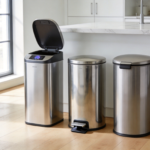
[…] The soft-close lid deserves special mention. At approximately 35 dB, it’s genuinely quiet. My wife, who works from home and sits 15 feet from the kitchen bin, confirmed she never heard it close during her work calls. […]
[…] are covered in raw chicken juice or flour, the last thing you want is to touch a bin lid. The touch-free sensor operation means you can toss a rinsed yogurt container into recycling without cross-contaminating the […]
[…] For a deeper look at the technology behind sensor-activated lids, read our How Smart Sensor Trash Cans Work: Technology Explained. […]
[…] How Smart Sensor Trash Cans Work: Technology Explained […]
[…] All models feature the same dual-mode opening system: wave your hand within 10–15 cm of the sensor, or tap the lid for manual control. Battery life ranges from 3–7 months depending on usage frequency. For a complete overview of how this technology works, read our Technology Explained Guide. […]
[…] Understanding these factors is the first step toward consistently reliable performance. For a deeper look at the technology behind these devices, see our Technology Explained guide. […]