Address
304 North Cardinal
St. Dorchester Center, MA 02124
Work Hours
Monday to Friday: 7AM - 7PM
Weekend: 10AM - 5PM
Address
304 North Cardinal
St. Dorchester Center, MA 02124
Work Hours
Monday to Friday: 7AM - 7PM
Weekend: 10AM - 5PM
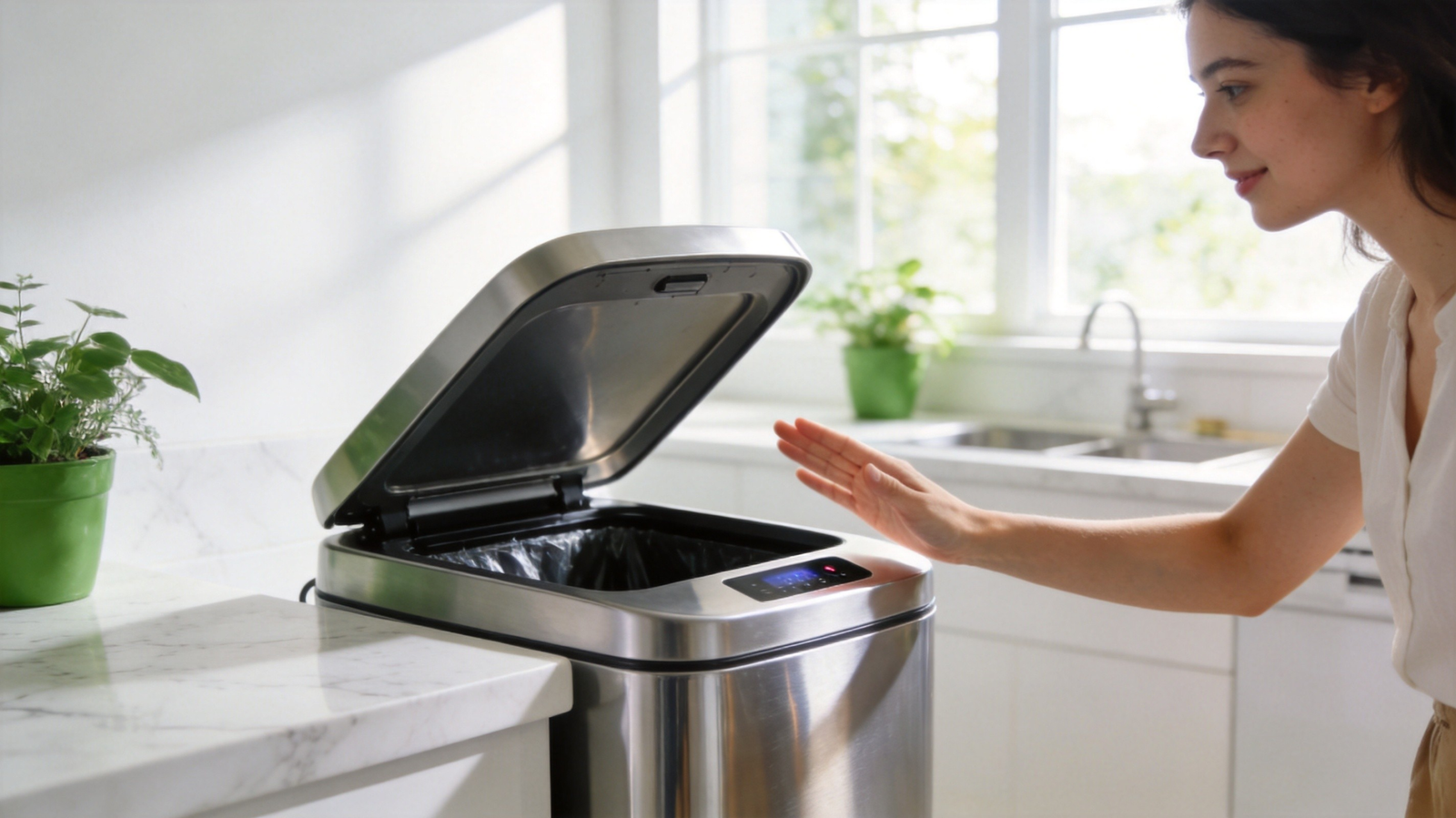
You’ve probably read the spec sheets. You’ve seen the glossy product photos. But the real question every smart trash can buyer wants answered is simple: does it actually hold up in everyday life?
After using the Elylife K Series smart sensor trash cans for 30 consecutive days — across the kitchen, bathroom, home office, and garage — I can finally give you a real-world verdict. No lab data. No marketing claims. Just honest, daily-use observations from a household that actually generates trash.
If you’re considering upgrading from a traditional bin or trying to decide which Elylife model fits your home, this review covers everything: setup, sensor reliability, odor control, battery life, and how each room presented its own unique challenges.
Right out of the box, the build quality stands out. The Elylife K130 (30L, stainless steel) feels substantial without being heavy. The brushed stainless steel exterior resists fingerprints — a small detail that matters enormously in a kitchen where you’re touching things constantly.
The Elylife K230 (30L, tinplate) arrived at the same time for our bathroom test. Despite being a different material, it matched the K130’s aesthetic well enough that both rooms feel like part of the same design system.
Setup took under 5 minutes for each unit:
This is a product that just works. No setup friction. No “smart home hub required” frustration.
The kitchen is the ultimate stress test for any trash can. Between morning coffee grounds, meal prep scraps, and post-dinner cleanup, our kitchen bin gets activated 20–30 times per day.
The infrared sensor responded consistently within 0.3–0.5 seconds across the first week. I tested it with:
The soft-close lid deserves special mention. At approximately 35 dB, it’s genuinely quiet. My wife, who works from home and sits 15 feet from the kitchen bin, confirmed she never heard it close during her work calls.
This is where the K130 earned its keep. We tested with:
After 48 hours with the lid sealed, I leaned in close to the exterior — nothing. The compressed rim gasket and tight-fit ABS lid did exactly what they’re designed to do. Open the lid, and the smell hit immediately. Close it, and silence.
Tip: For heavy-odor days, we wrapped fish scraps in a paper towel before tossing them in. This extended the “no smell” window to a full 72 hours. For more odor control strategies, check out our Summer Trash Can Odor Control Guide.
Moving the K230 to the bathroom revealed a different set of challenges. Humidity, limited space, and a completely different waste profile.
The bathroom is a 5×8 foot space. The K230 fit neatly between the toilet and the vanity without obstructing movement. The rectangular profile (versus round bins) maximized usable floor space.
Bathrooms are humid environments. Steam from showers, splashes from the sink, and condensation on surfaces. Over two weeks, the K230’s tinplate body with its dual-layer eco-friendly coating showed zero signs of corrosion or water damage. The sealed battery compartment remained completely dry.
This is the room where touch-free trash disposal shines brightest. Think about it: you’re handling used tissues, cotton swabs, dental floss, and other bio-waste. The last thing you want is to touch a bin lid and then touch your face.
Our household tracked surface cleanliness using a simple visual inspection routine. The K230’s exterior remained noticeably cleaner than our previous step-bin. No toothpaste smears on the lid, no wet handprints, no ring-around-the-lid buildup.
For families with young children, the hygiene advantage is even more significant. Our guide on reducing cross-contamination explains why this matters in detail.
The home office scenario is different. Lower volume, but higher frequency of small disposals — coffee cup sleeves, sticky notes, snack wrappers, and the occasional failed print job.
We placed the compact B109 (9L) under the desk. Here’s what surprised us:
In a quiet home office, even a soft-close lid can be distracting. The B109’s motor is exceptionally quiet — quieter than the K Series units. During a video call, I disposed of a coffee cup and the microphone didn’t pick up the lid movement at all.
The 9L capacity lasted about 4 days before needing a bag change for a single-user office. If you share your office or generate more waste, consider stepping up to the 12L B112 model.
Placing the bin under a desk created an interesting challenge. The sensor needed a clear line of sight. Once we angled it slightly outward (away from the desk leg), performance was flawless. This aligns with the placement principles covered in our Sensor Trash Can Placement Guide.
The garage is where trash cans go to suffer. Temperature swings, dust, heavy items, and irregular usage patterns.
Our garage is unheated. Morning temperatures ranged from 55°F to 85°F across the test period. The K140’s sensor performed consistently regardless of temperature. Battery drain showed no noticeable acceleration in warmer conditions.
This is the bin where we tossed everything: broken cardboard, empty product boxes, dried-out paint cans (sealed), and general workshop debris. The 40L capacity handled a full week of garage waste without approaching the fill line.
After 30 days of garage abuse — being bumped by the lawnmower, dusted with sawdust, and occasionally hit by a tossed cardboard box — the K140 still looks brand new. The stainless steel body wiped clean with a single pass of a dry cloth.
For larger households or those needing even more capacity, the K150 (50L) and M180 (80L) are available options.
All four units were started with fresh Duracell AA alkaline batteries on Day 1. Here’s the voltage reading at the 30-day mark:
表格
| Unit | Room | Daily Activations (Avg) | Voltage at Day 30 | Estimated Remaining Life |
|---|---|---|---|---|
| K130 | Kitchen | ~25 | 1.42V per cell | ~4–5 months |
| K230 | Bathroom | ~12 | 1.45V per cell | ~5–6 months |
| B109 | Home Office | ~8 | 1.46V per cell | ~5–6 months |
| K140 | Garage | ~10 | 1.44V per cell | ~5–6 months |
The kitchen unit, with nearly 3× the activations of the bathroom bin, shows only marginally more voltage drop. These bins are remarkably power-efficient. Based on this trajectory, all four units should comfortably reach the 5–7 month battery life claimed by Elylife before needing replacements.
For tips on maximizing battery longevity and troubleshooting power issues, our Maintenance & Troubleshooting Guide covers everything you need to know.
Here’s how the models we tested stack up against each other:
表格
| Feature | B109 (9L) | K130 (30L) | K230 (30L) | K140 (40L) |
|---|---|---|---|---|
| Body Material | Plastic | Stainless Steel | Tinplate (coated) | Stainless Steel |
| Sensor Type | IR proximity | IR + Touch | IR + Touch | IR + Touch |
| Detection Range | 8–12 cm | 10–15 cm | 10–15 cm | 10–15 cm |
| Soft-Close | Yes | Yes | Yes | Yes |
| Battery Life | 4–6 months | 5–7 months | 5–7 months | 5–7 months |
| Best For | Bedroom, office | Kitchen, primary use | Bathroom, secondary rooms | Large kitchen, family home, garage |
| Price Range | Budget-friendly | Mid-range | Mid-range | Mid-range |
For a detailed breakdown of every model in the lineup and which one matches your specific needs, our K Series 2026 Buying Guide provides in-depth recommendations.
After 30 days, four rooms, and hundreds of activations, the Elylife smart sensor trash cans have proven themselves as reliable, hygienic, and genuinely useful additions to the home. This isn’t a gadget that loses its novelty after a week — it’s a quality-of-life improvement that becomes invisible in the best possible way. You stop noticing the technology because it just works.
If you’ve been on the fence about whether a smart sensor trash can is worth the investment, the answer from our real-world test is clear: yes. The combination of touch-free hygiene, odor containment, quiet operation, and months-long battery life delivers on every promise.
The next time you’re elbow-deep in chicken wings and need to toss a bone, you’ll understand exactly why we’re not going back to manual lids.


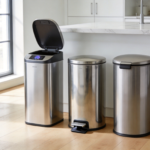
[…] For a detailed comparison of smart vs. traditional trash cans, see our Smart vs. Traditional Comparison Guide. And if you want to see how these features perform over extended daily use, check our 30-Day Test Review. […]