Address
304 North Cardinal
St. Dorchester Center, MA 02124
Work Hours
Monday to Friday: 7AM - 7PM
Weekend: 10AM - 5PM
Address
304 North Cardinal
St. Dorchester Center, MA 02124
Work Hours
Monday to Friday: 7AM - 7PM
Weekend: 10AM - 5PM
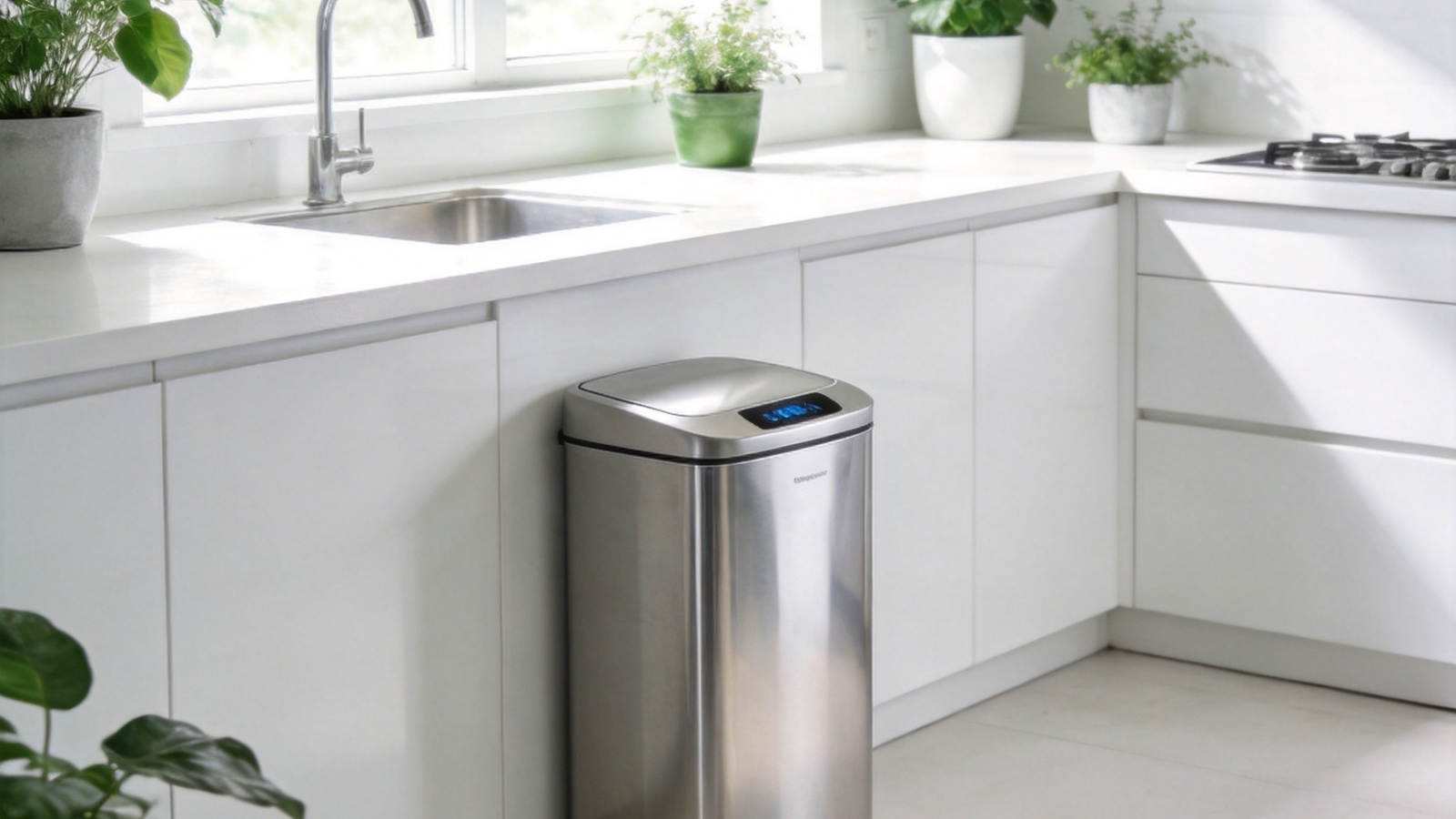
You’ve optimized your kitchen for efficiency. Meal-prep containers lined up. Countertops cleared. A place for everything. But there’s one area most people overlook — the trash can. It sits in the corner, quietly generating visual clutter, unpleasant odors, and low-grade frustration every single day.
Research in environmental psychology consistently shows that cluttered, disorganized living spaces elevate cortisol levels, reduce focus, and increase feelings of overwhelm. And your waste area — often the most neglected zone in the home — plays a surprisingly large role in that equation.
The good news? Upgrading to a smart sensor trash can isn’t just a hygiene decision. It’s a mental well-being decision. Here’s how a smarter waste management system reduces daily stress, supports a calmer home environment, and even benefits your household’s health.
Before we get to the trash can specifically, it’s worth understanding the broader science of clutter and mental health.
A landmark study published in the Personality and Social Psychology Bulletin found that people who described their homes as “cluttered” or “full of unfinished projects” had significantly higher cortisol levels throughout the day compared to those who described their homes as “restful” or “restorative.” The effect was especially pronounced for women, but subsequent research has confirmed the clutter-stress link across demographics.
Other key findings from environmental psychology:
Your trash can sits at the intersection of all three problems. It’s visual, olfactory, and behavioral.
An overflowing trash can, bags piled beside it, and spilled debris on the floor create what psychologists call “visual noise.” Unlike a tidy, integrated waste system, a chaotic trash area signals disorder every time you walk into the kitchen.
This isn’t just aesthetic — it’s neurological. Brain imaging studies show that cluttered environments reduce activity in the prefrontal cortex, the area responsible for planning, decision-making, and emotional regulation. In practical terms: a messy kitchen trash zone makes you feel less capable and more frazzled, even if you can’t pinpoint exactly why.
Most people have experienced the moment you walk into your kitchen and immediately notice the smell of yesterday’s garbage. Even if you’ve “gotten used to it,” your body hasn’t. Research from the Monell Chemical Senses Center shows that continuous exposure to unpleasant odors — even at levels below conscious detection — elevates stress hormones and reduces reported well-being.
Common odor sources from poorly managed trash include:
For households with children, elderly members, or anyone sensitive to chemical exposure, these compounds can also trigger headaches, nausea, and respiratory irritation — compounding the stress response with physical discomfort. For a deeper look at how trash can emissions affect indoor air quality, see our Pet Owners’ Indoor Air Quality Guide.
Let’s be honest: trash cans are gross. Touching a lid that hundreds of hands (or paws) have contacted, then touching your food prep surfaces, creates a psychological — and real — contamination concern. This is especially acute for parents of young children, people with compromised immune systems, or anyone with germ-related anxiety (which has become significantly more prevalent in recent years).
When you have to physically touch your trash can multiple times a day — opening the lid, pulling out bags, wiping the rim — you’re creating repeated touchpoints for cross-contamination. This doesn’t just spread bacteria; it creates a persistent low-level anxiety about cleanliness that adds to your daily mental burden. For more on how waste areas become contamination hotspots, check our Kitchen Germ Hotspots Guide.
Every time you struggle with a stuck lid, fumble for the foot pedal, or try to pry open a bin with your knee while your hands are full of scraps — you’re experiencing what behavioral scientists call “micro-friction.” These tiny frustrations don’t feel significant individually, but they accumulate. A study from UCLA’s Center on Everyday Lives and Families found that household inefficiencies — things that should be simple but aren’t — are among the top sources of daily domestic stress.
The most immediate mental well-being benefit of a smart sensor trash can is the elimination of the disgust response. When you approach a touchless bin and the lid opens automatically, there’s no moment of hesitation, no bracing against unpleasant surfaces, no awkward physical maneuvering.
This matters more than most people realize. Disgust is one of the six universal human emotions — it’s hardwired into our nervous system as a disease-avoidance mechanism. Every time you suppress a disgust response (touching a dirty lid, for example), your body undergoes a small stress reaction. Remove the trigger entirely, and those micro-stress reactions simply disappear.
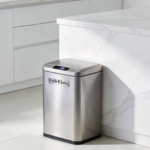
Elylife’s smart sensor trash cans use infrared proximity detection to open the lid within 0.3 seconds of detecting your approach — fast enough that the interaction feels effortless and natural. You never have to think about it, touch it, or brace yourself. The interaction is seamless.
A high-quality sealed smart trash can addresses the odor problem at its source rather than masking it with air fresheners (which introduce their own chemical stressors). When waste is contained behind a tight-sealing lid:
The psychological relief is immediate. You walk into your kitchen and notice… nothing. No smell. No visual disruption. Just a clean, quiet, integrated system that works. That absence of sensory irritation is a genuine well-being upgrade.
Every decision you make during the day — no matter how small — draws on a finite pool of cognitive resources. This is called “decision fatigue,” and it’s well-documented in behavioral science research. By the end of a long day, you’ve made thousands of micro-decisions, and your capacity for additional choices is depleted.
A smart trash can removes one of those decisions. You don’t have to decide how to open it, whether to use your foot or your hand, or whether the lid will actually work. The automation is so seamless that it barely registers as a decision at all — but cumulatively, these tiny cognitive savings add up across your day.
Think of it as “cognitive ergonomics” — designing your environment so that routine tasks require minimal conscious effort. Smart home technology is built on this principle, and your trash can is no exception.
A sealed smart trash can contains waste, odors, and bacteria more effectively than an open or loosely lidded bin. This means you spend less time managing trash-related messes — wiping the floor around the bin, dealing with spills, or addressing odor complaints from family members.
The time and effort savings translate directly into reduced household tension. When the trash area stays clean with minimal intervention, one persistent source of domestic friction simply vanishes.
Traditional step-on bins clank. Swing-top lids bang. Lids that don’t close properly rattle. These sounds are minor individually, but in an open-plan kitchen — where you’re cooking, talking, watching TV, and helping kids with homework simultaneously — every noise competes for your attention.
Smart trash cans with soft-close mechanisms operate near-silently. The lid opens and closes smoothly and quietly, without mechanical noise. In a home designed for calm, this matters. For additional tips on creating a peaceful kitchen environment, see our Sensor Trash Can Placement Guide.
Trash management is one of those household tasks that falls into the “nobody wants to do it, nobody wants to be reminded about it” category. Disputes over who left the lid open, who forgot to take out the trash, or who touched the bin with dirty hands are more common than most people admit.
A touchless, sealed smart trash can removes many of these friction points. When the lid operates automatically and contains odors effectively, the trash can stops being a source of household complaints. This is especially valuable in shared living situations — apartments, multi-generational homes, and households with roommates.
Parents of young children know that the kitchen trash can is simultaneously one of the most used and most contaminated items in the home. When children can operate the bin hands-free, they’re less likely to touch contaminated surfaces and then touch their faces, toys, or food.
This isn’t just practical — it’s psychologically reassuring. Knowing that your family’s waste management system actively reduces contamination risk gives you one less thing to worry about. For more on protecting your family from trash-related health risks, see our Baby-Proofing Guide and Cross-Contamination Guide.
Perhaps the most significant psychological benefit is the sense of order and control. When your waste management system works reliably — opens when you need it, seals when you don’t, looks clean and modern — it reinforces the feeling that your home is a well-managed, controlled environment.
This sense of environmental mastery is closely linked to life satisfaction and lower stress levels. It’s the same reason people feel better in a clean hotel room versus a messy one. Order in your physical environment translates to order in your mental environment.
Here’s where the mental well-being benefits connect to something larger. When your waste management system is efficient and stress-free, you’re more likely to maintain good waste habits — sorting recyclables properly, emptying bins on schedule, and avoiding the “overflow and ignore” pattern that leads to litter and environmental harm.
A well-designed smart trash system supports sustainable behavior by making it the path of least resistance. When recycling and waste disposal are easy, clean, and pleasant, you and your household are more likely to participate consistently. For a comprehensive approach to sustainable waste management at home, see our Home Recycling Guide and Reducing Food Waste Guide.
Not all smart trash cans deliver the same mental well-being benefits. Here’s what to look for:
表格
| Feature | Why It Matters for Stress Reduction | Elylife Advantage |
|---|---|---|
| True touchless operation | Eliminates disgust response and cross-contamination | IR sensor with <0.3s response time; wide detection angle |
| Airtight sealing | Contains odors at the source; reduces sensory stress | Precision-engineered lid with soft-close seal |
| Quiet motor | Maintains peaceful environment; no startling noises | Whisper-quiet motorized lid mechanism |
| Stainless steel construction | Easy to clean; resists fingerprints; looks integrated | Fingerprint-resistant brushed stainless steel finish |
| Adequate capacity | Fewer emptying cycles; less frequent trash-related interruptions | 30L–80L options for every room and household size |
| Manual override option | Backup control when batteries are low or during power issues | Always accessible manual mode |
For a detailed comparison of smart vs. traditional trash cans, see our Smart vs. Traditional Comparison Guide. And if you want to see how these features perform over extended daily use, check our 30-Day Test Review.