Address
304 North Cardinal
St. Dorchester Center, MA 02124
Work Hours
Monday to Friday: 7AM - 7PM
Weekend: 10AM - 5PM
Address
304 North Cardinal
St. Dorchester Center, MA 02124
Work Hours
Monday to Friday: 7AM - 7PM
Weekend: 10AM - 5PM
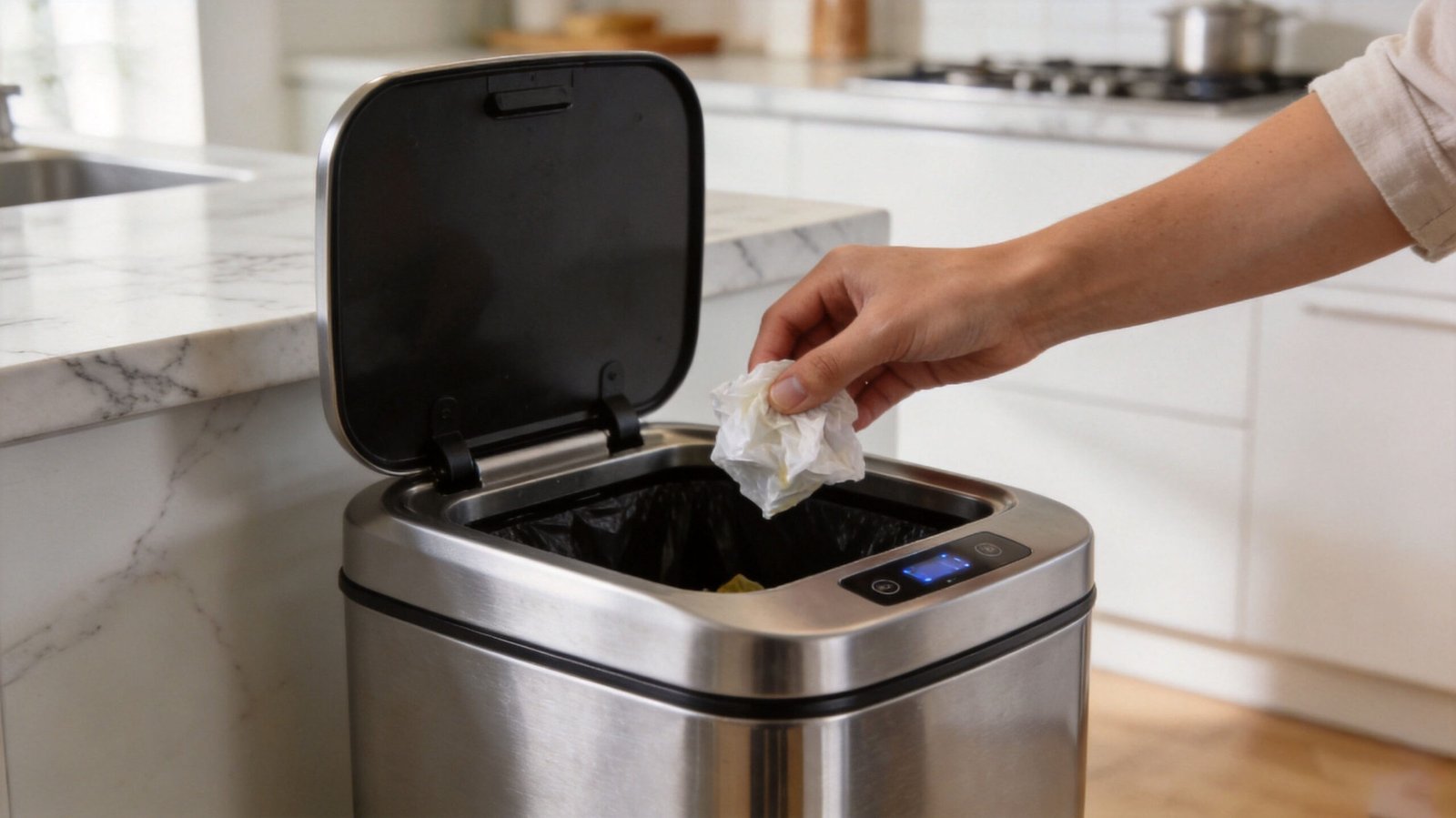
Meta Description: Maximize your Elylife sensor trash can’s performance with these 10 expert tips. Learn proper placement, bag selection, battery care, and cleaning techniques for lasting hygiene.
You’ve made the upgrade. Your new Elylife sensor bin sits in the kitchen, lid gleaming, ready to open at a wave of your hand. But are you getting the full benefit of that investment — or are habits from your old manual bin holding you back?
A sensor trash can is only as good as the habits around it. The good news? Getting it right is simpler than you think. Here are 10 expert tips to help your Elylife sensor bin perform at its best, every single day.
Your sensor bin needs a clear line of sight for its infrared sensor to work properly. Place it:
The ideal spot? A kitchen corner or island section where the bin is easily accessible but not crowded by appliances or cabinets. For bathrooms, a countertop placement works well — just keep it away from running water sources.
This is the most common mistake sensor bin owners make.
Using a bag that’s too large means it overhangs the rim — and that overhang breaks the gasket seal every time the lid closes. An airtight bin with an overhanging bag is effectively an open bin.
The fix: Choose bags sized for your bin’s capacity. For a 30L bin, use standard medium to large bags (roughly 25-30cm diameter). For 40-60L bins, go with large kitchen bags. The inner bag ring should hold the bag snugly with no excess material draping over the edge.
Need help choosing a bin for your space? Our Elylife K Series Sensor Bins: A Complete 2026 Buying Guide walks through every model from 30L to 60L.
The infrared sensor on your Elylife bin is typically located on the front of the lid. If a trash bag or its ties brush against this window, it can trigger false openings or confuse the sensor’s calibration.
After inserting a new bag, give the sensor area a quick visual check to make sure no material is in the way. This takes three seconds and prevents a lot of frustration.
Your Elylife bin offers two activation modes — and knowing when to use each one matters:
Wave mode (infrared sensor) : Best for wet or dirty hands, full trash disposal tasks, or when you want completely hands-free operation. Hold your hand within 10-15cm of the sensor for a clean, automatic open.
Touch mode: Useful for gentle access — say, when you just want a quick peek inside or when the bin is in a high-traffic area where passing too close might trigger an unwanted open.
Learning to toggle between the two modes based on context will give you a much smoother day-to-day experience.
There’s nothing worse than a sensor bin with dead batteries — suddenly you’re poking a lid that’s designed not to be touched.
Proactive tip: Mark your calendar every 5-6 months to check battery levels. Many people find the easiest way is to simply replace batteries twice a year during a regular home maintenance routine (like when you change your smoke detector batteries).
Under normal use (10-20 cycles daily), 4 AA batteries typically last 5-7 months. Heavy-use kitchens may see shorter lifespans. Elylife bins feature a removable battery tray for quick, tool-free swaps.
Dust, grease splatter, and kitchen humidity can cloud the sensor window over time, reducing sensitivity. A quick monthly wipe with a soft, slightly damp cloth is all it takes to keep the sensor responding crisply.
Avoid abrasive cleaners or scrubbing — the sensor window is a precision optical component. A gentle wipe is sufficient.
While the stainless steel exterior wipes clean easily, the interior also deserves attention:
If you’re dealing with persistent odors, check out 5 Reasons Your Kitchen Still Smells for a deeper dive into the causes and solutions.
Direct sunlight, stovetops, and heating vents can warm the interior of your bin — and warm waste decomposes faster. A cooler bin means slower bacterial growth and less odor.
Position your Elylife bin away from appliances that generate heat. If your kitchen gets significant afternoon sun through a window, consider a spot that stays shaded during the hottest part of the day.
It might be tempting to leave the lid open while you’re doing kitchen prep, but every second the lid is open is an opportunity for odors to escape and pests to detect the scent trail.
The sensor lid is designed for frequent use. It’s rated for 100,000+ openings — that’s more than 10 years of normal use. Don’t baby it. Let it do its job. The more consistently you use the lid, the better your kitchen will smell.
Curious about the science behind why sensor lids outperform manual ones? Read How Touch-Free Sensor Trash Cans Reduce Cross-Contamination.
If your household generates a lot of food scraps — cooking prep waste, plate scrapings, pet food bowls — consider emptying daily or every two days rather than waiting for the bin to fill.
This is especially important in warm weather. Organic waste in a sealed but warm environment breaks down faster, which can overwhelm even the best gasket seal. If you notice a smell when you open the lid, it’s a sign the bin has been sitting too long with wet waste.
表格
| Task | Frequency |
|---|---|
| Wipe sensor window | Monthly |
| Check bag fit | Every bag change |
| Battery replacement | Every 5-7 months |
| Deep clean interior | Monthly |
| Wipe exterior | As needed |
| Check gasket for debris | Monthly |
A Elylife sensor bin is an investment in a cleaner, healthier home. With a few simple habits, you’ll get the full hygiene benefit from day one.