Address
304 North Cardinal
St. Dorchester Center, MA 02124
Work Hours
Monday to Friday: 7AM - 7PM
Weekend: 10AM - 5PM
Address
304 North Cardinal
St. Dorchester Center, MA 02124
Work Hours
Monday to Friday: 7AM - 7PM
Weekend: 10AM - 5PM
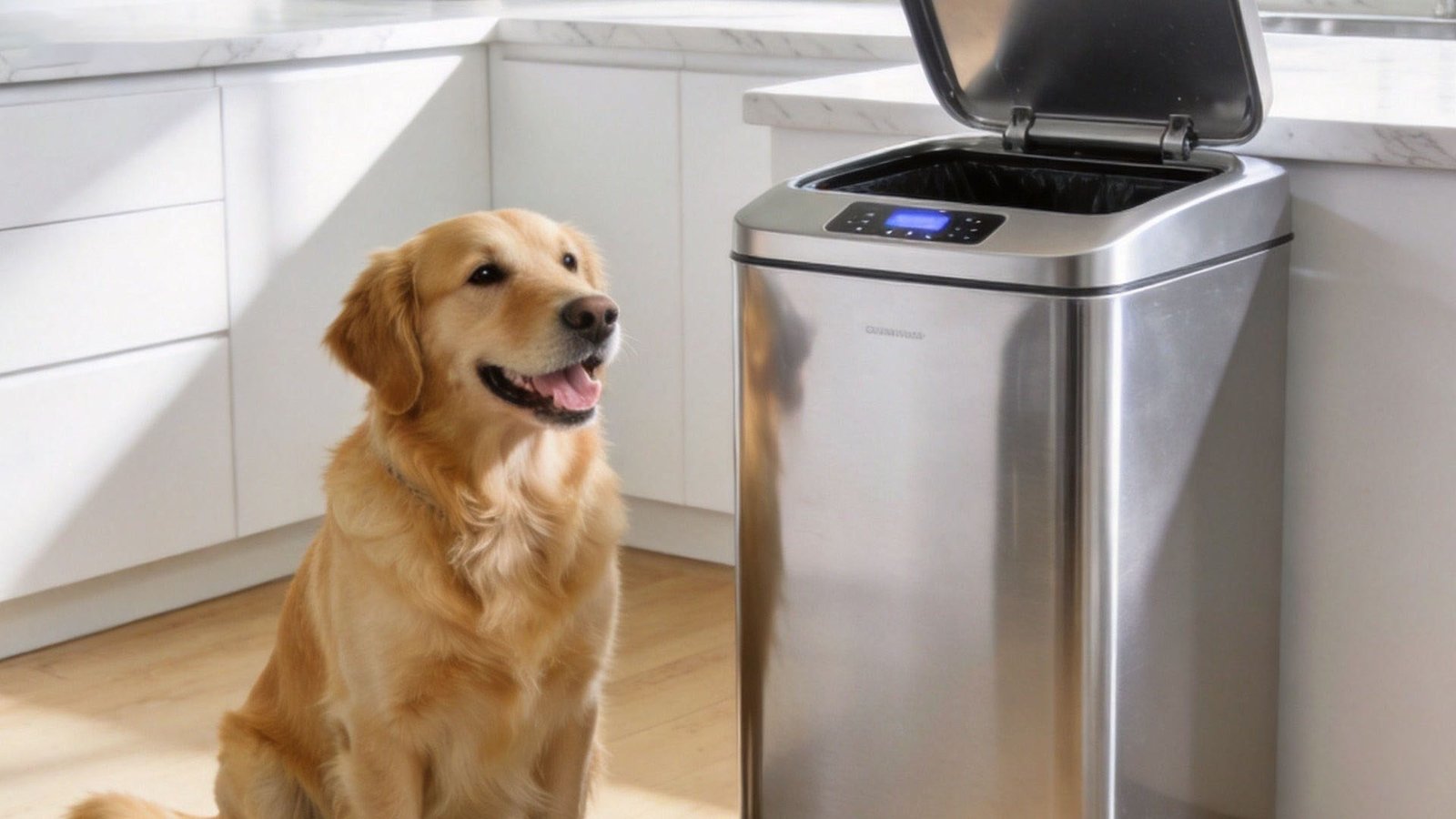
Meta Description: Pet waste in your trash releases bacteria, allergens, and volatile organic compounds into your home’s air. Learn how a sealed smart sensor trash can from Elylife creates a hygiene barrier that protects your family’s indoor air quality.
You vacuum the floors weekly. You run the HEPA purifier. You even wash your dog’s bedding every Sunday. Yet your home still has that faint, persistent “pet smell” that guests notice the moment they walk through the door.
The culprit might not be your dog’s fur or the litter box. It might be your trash can.
According to the American Pet Products Association, approximately 66% of U.S. households — around 86.9 million homes — own a pet. What many of these families don’t realize is that pet-related waste (used pee pads, fur clumps from grooming, soiled puppy pads, litter scoopings, and pet food packaging) accumulates in household bins and silently degrades indoor air quality day after day.
Here’s the science behind why — and what smart sensor trash can technology does to fix it.
When pet waste sits in an open or poorly sealed trash can, it doesn’t just smell bad. It actively pollutes the air you and your family breathe.
Pet urine contains urea, uric acid, and ammonia — compounds that release volatile organic compounds (VOCs) as they decompose. In a sealed, warm indoor environment, these VOCs accumulate continuously. The EPA estimates that indoor air pollutant levels can be 2 to 5 times higher than outdoor concentrations — and pet waste in an open trash can contributes significantly to this gap.
Ammonia, in particular, is detectable by the human nose at just 5 parts per million (ppm). But you don’t need to smell it for it to affect you. Low-level ammonia exposure causes eye irritation, respiratory discomfort, and can worsen asthma symptoms — especially in children and elderly family members.
Decomposing organic matter — including pet waste — releases bioaerosols: microscopic particles carrying bacteria, mold spores, and allergenic proteins into the air. Research from the Journal of Applied Microbiology shows these bioaerosols can travel up to 3 meters from their source.
In a typical home, air currents from HVAC systems, ceiling fans, and even walking past the bin disperse these particles throughout the living space. They settle on countertops, furniture, and your child’s toys.
Pet allergens — primarily the proteins Can f 1 (from dogs) and Fel d 1 (from cats) — are already present in every pet-owning home. These proteins are found in dander, saliva, and urine. When waste containing these proteins decomposes in an open bin, the allergenic particles become airborne alongside bioaerosols.
For the estimated 24 million American adults with pet allergies (per CDC data), this creates a compounding effect: the trash bin becomes a secondary source of allergen exposure, in addition to the pets themselves.
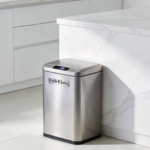
Not all trash cans handle pet waste equally. A sealed smart sensor trash can like the Elylife series addresses the indoor air quality challenge through three complementary design features.
The silicone gasket seal around the lid creates an airtight enclosure when closed. This means:
The result is a measurable reduction in airborne contaminants. Instead of actively polluting your indoor environment every minute the waste sits in the bin, the sealed design creates a passive containment system that works 24/7.
When you dispose of a fur-covered brush, a soiled pee pad, or a bag of pet food scraps, the last thing you want is to touch a bin handle — and then touch your face, your phone, or your child’s snack.
A motion-sensor activated lid eliminates this surface-to-hand allergen pathway entirely. Wave your hand, the lid opens. Step away, it closes silently. No contact, no allergen transfer.
This is especially important in homes with allergy sufferers. By preventing allergen transfer from waste to high-touch surfaces, you reduce the total allergen load your immune system deals with daily.
For a deeper exploration of how touch-free operation reduces bacterial spread, check our article on How Sensor Trash Cans Reduce Cross-Contamination.
Any pet owner has experienced the “trash can disaster” — the dog knocking over the bin, the cat batting waste across the floor, the raccoon (yes, even in suburban homes) getting into the outdoor bin.
Elylife smart sensor trash cans feature a weighted, stable base and a lid that only opens via sensor activation. This means:
This isn’t just about cleanliness. It’s about preventing the biological contamination event that occurs when pet waste spreads across your floor.
Understanding how smart bins help is only half the equation. Where you place them determines how much they help. Here’s a strategic placement guide for pet-owning households.
Your kitchen bin handles pet food cans, packaging, spoiled treats, and food scraps that attract not only odors but also insects. Place the sensor bin at least 3 feet from your primary food prep area — close enough for convenient disposal, far enough to prevent any aerosolized particles from reaching cutting boards.
Choose a 13-gallon (50L) capacity model for a family with multiple pets. This reduces emptying frequency and limits the duration of waste exposure.
If you bathe your dog or brush your cat in the bathroom, this room generates concentrated pet waste — fur clumps, nail trimmings, and grooming wipes. A smaller sensor bin (3-5 gallon / 12-20L) with an airtight seal keeps these materials contained until you’re ready to empty it.
This is particularly important in small, poorly ventilated bathrooms where VOCs can quickly reach uncomfortable concentrations.
For homes with puppies or senior dogs using indoor pee pads, the laundry room often becomes the disposal station. Used pee pads are among the highest-VOC waste items in a pet-owning home — the ammonia content is concentrated and persistent.
A sealed sensor bin in this location prevents ammonia buildup from permeating the surrounding area, protecting your HVAC return vent (if located nearby) from pulling contaminated air into the system.
A small sensor bin in the living area handles daily pet toy packaging, treat wrappers, and occasional accident cleanup. More importantly, it prevents the “accumulated pet smell” effect that builds when multiple small waste items sit exposed in an open wastebasket.
A smart trash can is powerful, but it works best as part of a consistent hygiene routine. Here’s a practical framework.
For additional optimization strategies, our 10 Expert Tips for Getting the Most Out of Your Sensor Bin covers advanced maintenance and placement techniques.
Not all trash cans perform equally in a pet-owning home. Here’s how they stack up across the hygiene factors that matter most.
表格
| Feature | Sealed Smart Sensor Bin | Open-Top Wastebasket | Pedal Bin |
|---|---|---|---|
| Odor containment | Airtight gasket seal traps VOCs completely | No containment — odors disperse freely | Partial — lid covers but doesn’t seal |
| Allergen transfer | Zero surface contact — touch-free | Direct hand contact with rim | Foot pedal accumulates pet hair and bacteria |
| Pet resistance | Weighted base, sensor-only activation | Easily tipped, no barrier | Pedal mechanism can be triggered by pets |
| Bioaerosol containment | Sealed environment prevents escape | Full aerosol dispersion | Reduced but not eliminated |
| Maintenance frequency | Sensor wipe + monthly deep clean | Daily wipe needed for visible contamination | Pedal mechanism requires regular cleaning |
| Noise level | Silent soft-close lid | No lid — no noise but no seal either | Mechanical pedal can startle pets |
| Ideal pet household size | 1-4+ pets (scalable capacity) | Best for low-waste rooms only | 1-2 pets, moderate use |
A few statistics that put the problem — and solution — in perspective:
When you add these together, the case for a sealed, touchless waste solution in a pet-owning home isn’t just convenient — it’s a genuine health upgrade.
表格
| Task | Frequency | Purpose |
|---|---|---|
| Empty pet waste bags | Daily | Prevents VOC and ammonia buildup |
| Wipe sensor window | 2-3x/week | Maintains detection sensitivity |
| Sanitize bin exterior | Weekly | Removes surface allergens and bacteria |
| Replace trash liner | Weekly | Eliminates residual VOC absorption |
| Deep clean interior | Monthly | Removes biofilm and odor residue |
| Inspect gasket seal | Monthly | Ensures airtight containment |
| Replace batteries | Every 5-6 months | Prevents sensor failure |
| Verify full lid closure | Every use | Confirms seal integrity |
| Vacuum around bin base | Weekly | Removes accumulated pet hair and dander |
Your pet brings joy, companionship, and unconditional love. Your trash can shouldn’t be the tradeoff. A sealed smart sensor bin keeps the good and contains the rest — protecting your family’s air quality, reducing allergens, and making pet parenthood just a little bit cleaner.