Address
304 North Cardinal
St. Dorchester Center, MA 02124
Work Hours
Monday to Friday: 7AM - 7PM
Weekend: 10AM - 5PM
Address
304 North Cardinal
St. Dorchester Center, MA 02124
Work Hours
Monday to Friday: 7AM - 7PM
Weekend: 10AM - 5PM
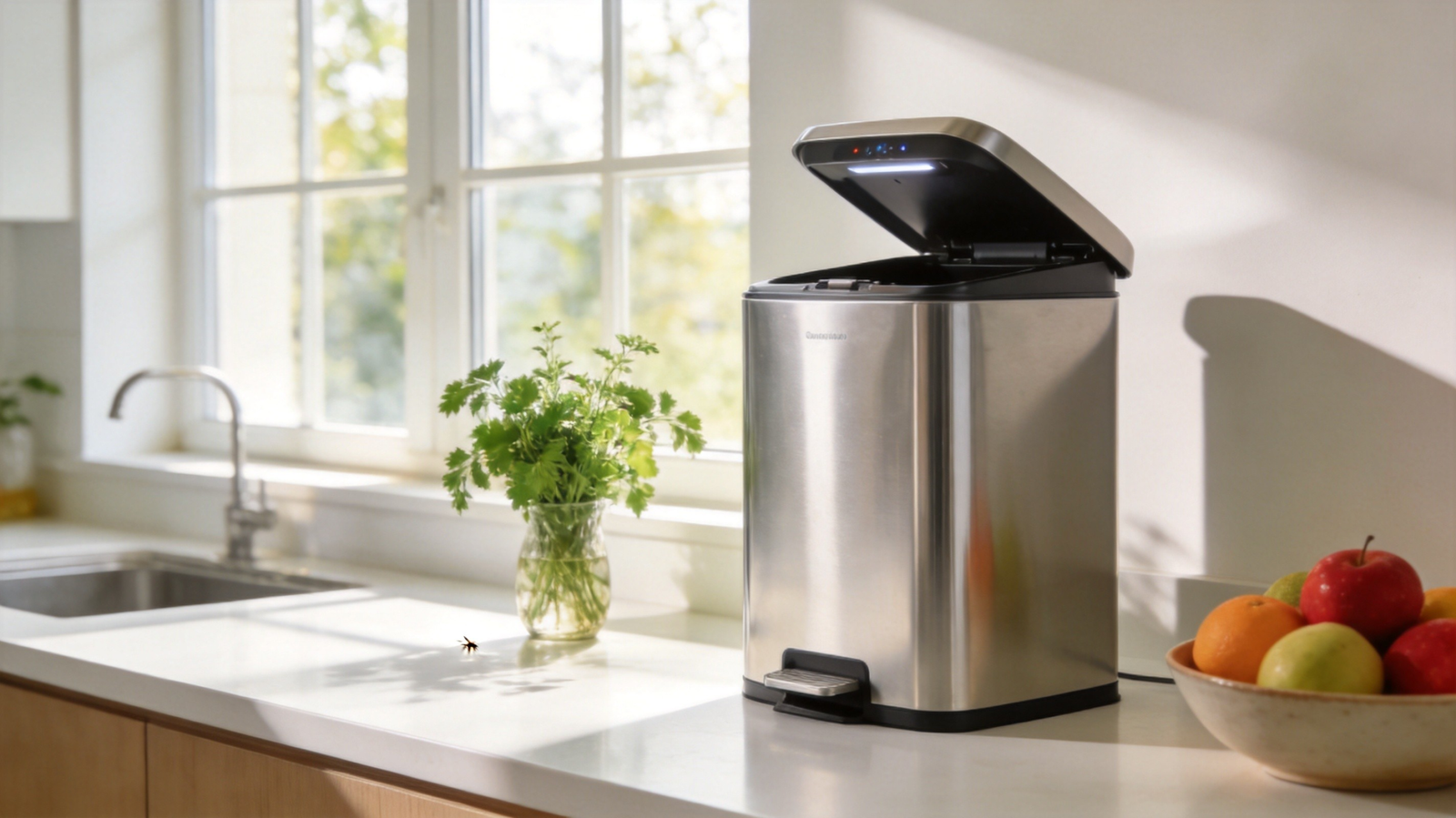
You walk into the kitchen, and there they are — a cloud of tiny flies hovering around your trash can like tiny, uninvited helicopters. You swat. They scatter. Five minutes later, they’re back.
If you’ve been battling fruit flies in your trash can, you already know how relentless they are. And here’s the frustrating truth: simply swatting or spraying them won’t solve the problem. Those flies didn’t just wander in — your trash can is actively attracting them. And until you understand why, the cycle will keep repeating.
This guide breaks down exactly what makes your trash can a fruit fly magnet, the science behind the infestation, and — most importantly — the specific steps that will stop it for good.
Fruit flies (Drosophila melanogaster) are tiny insects — about 1/8 inch long — with tan or brown bodies and distinctive red eyes. Despite their name, they don’t need actual fruit to survive. They need fermenting organic matter, which is essentially anything containing sugars that have started to break down.
According to entomology research from the University of Kentucky, a single female fruit fly can lay up to 500 eggs in her lifetime, and the entire life cycle from egg to adult can be completed in as little as 7 to 10 days at room temperature. At 25°C (77°F), eggs hatch in roughly 24 hours.
That’s why a fruit fly problem can explode seemingly overnight. One piece of overripe banana in the trash, left for just two days, can produce hundreds of offspring.
Your kitchen trash can isn’t just a container — from a fruit fly’s perspective, it’s a five-star resort. Here’s why:
Every time you toss vegetable peels, fruit rinds, coffee grounds, or leftover food into the bin, you’re creating a food source. As these scraps begin to decompose, they release volatile organic compounds — sweet, fermented odors that fruit flies can detect from considerable distances.
Research shows fruit flies have an extraordinary sense of smell. They can detect fermenting food from surprisingly far away, and they’re particularly drawn to the esters and alcohols produced during decomposition. Your trash can is essentially broadcasting a dinner invitation.
Fruit flies don’t just need food — they need moisture to reproduce. The damp environment inside a trash can (from wet food scraps, leaking containers, or condensation) provides the humidity their eggs and larvae require to survive.
Even a thin film of liquid at the bottom of your bin — from a rinsed juice bottle or a damp paper towel — is enough to support an entire generation of fruit fly larvae.
This is the part most people miss. The real breeding ground often isn’t the visible trash itself — it’s the hidden residue that accumulates in your trash can:
These hidden spots can continue to breed fruit flies even after you take out the trash — which is why many people report flies persisting despite regular garbage removal.
A trash can with no lid, a loose lid, or a lid that doesn’t seal properly gives fruit flies unrestricted access to the contents inside. They can fly in, lay eggs, and fly out — undisturbed.
Traditional swing-top bins and open-top containers are particularly vulnerable. Even step-on cans with loose-fitting lids can allow tiny fruit flies to pass through gaps.
Summer heat supercharges the fruit fly life cycle. At higher temperatures, food decomposes faster, fermentation intensifies, and eggs hatch more quickly. If you noticed your fruit fly problem gets worse in July and August, there’s a scientific reason: the heat is turbocharging their reproduction.
As we covered in our guide to summer trash can odor control, bacterial growth doubles every 20 minutes at room temperature — and the same principle applies to the fermentation processes that attract fruit flies.
Now that you know why your trash can is attracting fruit flies, here’s how to stop it — permanently.
Empty the trash completely. Remove the liner. Then clean every surface:
For extra sanitization, wipe surfaces with 70% isopropyl alcohol. This denatures any remaining eggs and disrupts the biofilm that harbors larvae. Avoid using bleach alone — it doesn’t penetrate the greasy film where eggs embed.
After cleaning, make sure the can is bone dry before inserting a new bag. Moisture is the single biggest factor in whether fruit flies will return.
To catch any remaining adult flies, set up a simple DIY trap near the trash can:
The vinegar attracts the flies, and the soap traps them. Replace the solution every 2–3 days until you stop seeing flies.
If you prefer a commercial option, the Terro Fruit Fly Trap and Zevo Flying Insect Trap are both highly rated and use non-toxic attractants safe for kitchens.
During warm months, don’t wait until the bin is full. Take out organic waste daily — or at minimum, every other day. The faster food scraps leave your kitchen, the less time fruit flies have to find and breed in them.
If your household generates a lot of food waste, consider keeping a secondary bin near your prep area specifically for fruit and vegetable scraps, and empty it more frequently.
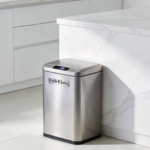
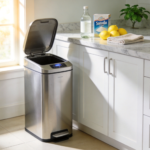
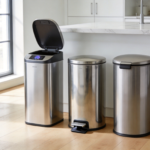
This is the single most effective long-term solution. A smart sensor trash can with a tightly sealing lid physically blocks fruit flies from accessing the contents. Unlike traditional swing-top or open bins, a well-designed touchless sensor trash can closes automatically and forms a seal that prevents odors from escaping — and flies from entering.
The Elylife K Series and M Series sensor bins feature precision-engineered lid mechanisms that close securely after every use, with no gaps for insects to exploit. Combined with hands-free infrared sensor operation, you never even need to touch the lid — reducing the spread of germs from the bin to your hands.
If you’re also dealing with persistent odor issues, our guide on how to stop your kitchen trash can from smelling covers complementary strategies that work alongside fruit fly prevention.
Eliminating the current infestation is only half the battle. Here’s how to prevent fruit flies from returning:
Empty beer cans, wine bottles, juice containers, and soda cans before tossing them in the recycling. Even a small amount of residue at the bottom is enough to attract fruit flies.
Keep ripe fruit in the refrigerator, not on the counter. If you prefer a fruit bowl, use a mesh cover or keep it in a cool, dry spot away from the trash can.
Fruit flies frequently breed in kitchen sink drains where organic residue accumulates. Once a week, pour boiling water down the drain, followed by a mixture of baking soda and white vinegar. Let it sit for 10 minutes, then flush with hot water.
Inspect under appliances, behind the trash can, and inside cabinets for spilled liquids that may have fermented unnoticed. A single spill of juice or soda behind the fridge can breed thousands of fruit flies.
If fruit flies are entering from outside, install fine-mesh screens on kitchen windows and ensure door seals are intact. Fruit flies can squeeze through remarkably small gaps.
Set a weekly reminder to wipe down the interior of your trash can, replace the deodorizer, and inspect for any residue buildup. Consistency is the key to long-term prevention.
Fruit flies in your trash can aren’t a sign that your kitchen is dirty — they’re a sign that your trash can is providing the three things fruit flies need to thrive: food, moisture, and access.
Remove any one of those three, and the problem shrinks. Remove all three, and the problem disappears.
The most effective combination is: deep cleaning + moisture control + a sealed smart trash can that physically prevents flies from reaching the waste inside. It’s a small investment that eliminates a big annoyance — and keeps your kitchen feeling genuinely fresh, not just superficially clean.