Address
304 North Cardinal
St. Dorchester Center, MA 02124
Work Hours
Monday to Friday: 7AM - 7PM
Weekend: 10AM - 5PM
Address
304 North Cardinal
St. Dorchester Center, MA 02124
Work Hours
Monday to Friday: 7AM - 7PM
Weekend: 10AM - 5PM
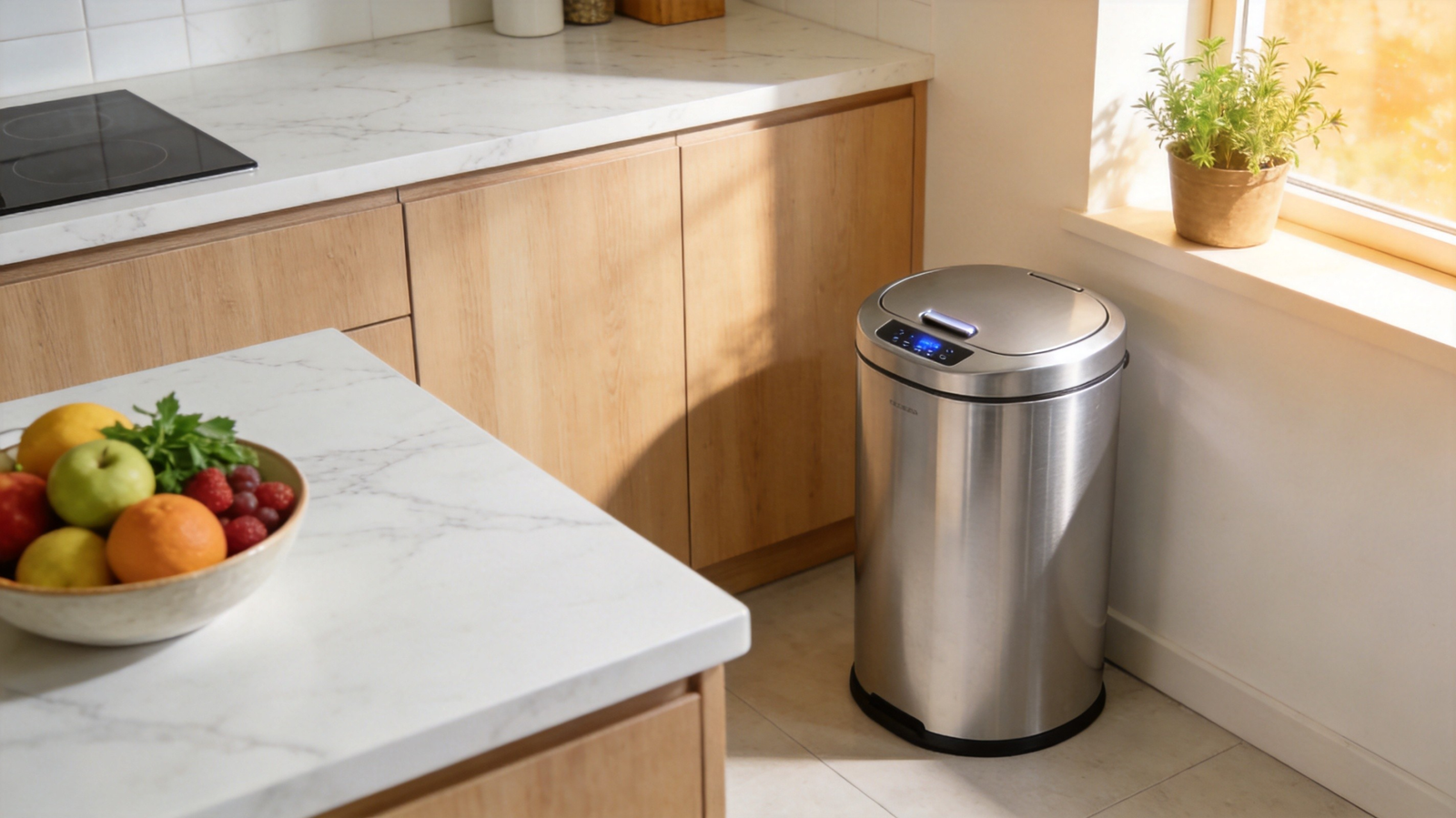
Your kitchen looks clean. The counters gleam, the dishes are put away, and you wiped down the stovetop after dinner last night. But a 2025 study published in the Environmental Health Engineering and Management Journal found that 86% of kitchen dish cloths tested positive for coliform bacteria — a marker associated with fecal contamination. And that’s just the beginning.
The average household kitchen harbors over 34 million bacteria per square inch on common surfaces — more than a typical bathroom. Yet most people clean by sight, targeting crumbs and spills while invisible microbial communities thrive on high-touch areas and overlooked zones.
Understanding where germs concentrate — and how everyday habits like waste disposal can spread or contain them — is the first step toward a genuinely healthier kitchen. This guide breaks down the science of kitchen microbial contamination and gives you a practical, room-by-room action plan.
Before reaching for the bleach, it helps to understand where bacteria and mold actually flourish. A 2025 study from Case Western Reserve University identified nine surprising bacterial hiding spots in the average kitchen — most of which have nothing to do with visible mess.
Research consistently identifies these as the highest-bacteria surfaces in home kitchens:
1. Kitchen sponges and dish cloths
Sponges are ground zero for microbial growth. A 2025 study from São Paulo State University measured sponge contamination at a median of 8.63 log CFU/cm² for mesophilic aerobes — orders of magnitude higher than any other kitchen surface. Sponges stay warm, damp, and saturated with food particles, creating ideal conditions for E. coli, Salmonella, and Klebsiella to multiply.
2. Sink faucets and handles
You touch faucet handles before washing your hands — often while handling raw meat. The damp environment at the base promotes biofilm and mold growth. Studies show faucet bases harbor more bacteria per square inch than refrigerator handles, cutting boards, or countertop surfaces.
3. Spice containers and seasoning jars
A 2020 study published in the International Journal of Food Microbiology found that nearly 50% of spice jars tested positive for cross-contamination — higher than any other kitchen surface tracked. When you reach for the cumin with chicken-covered fingers, you’re inoculating the container.
4. Refrigerator handles and seals
The rubber gasket around your fridge door creates a warm, moist seal that traps food particles and supports mold growth. Meanwhile, the handle is touched dozens of times daily — often mid-recipe with unwashed hands.
5. Light switches and outlet covers
Kitchen light switches carry an average of 217 bacteria per square inch — more than many toilet seats, according to testing cited by Realtor. They’re touched constantly yet rarely cleaned.
6. The trash can — inside and out
This is where it all ends up. Food scraps, liquids, and organic matter collect in the bottom of the bin. According to USDA-FSIS field audits (2021–2023), 89% of standard 13-gallon kitchen bins accumulate at least 12 mL of residual liquid daily — even with “dry” waste streams. That stagnant liquid becomes a breeding ground for Pseudomonas aeruginosa, E. coli, and anaerobic biofilm within 96 hours.
The kitchen trash can occupies a unique position in your home’s microbial ecosystem. It’s the convergence point for food waste, moisture, and frequent human contact — three factors that together create an ideal bacterial amplification system.
When organic residue (coffee grounds, vegetable trimmings, juice spills) contacts pooled water at ambient kitchen temperatures (68–77°F), biofilm matrix production accelerates exponentially. Research published in Environmental Science & Technology (2025) confirmed that cooking-derived organic compounds actively shape bacterial communities on household surfaces, with the trash area showing the highest diversity of human-associated and environmental genera.
A biofilm is not just “dirt.” It’s a structured community of bacteria encased in a protective polymer matrix that’s resistant to standard cleaning. Once established, it can persist for weeks and continuously seed surrounding surfaces with microorganisms.
Here’s what makes the trash can particularly problematic from a contamination standpoint:
This cycle repeats dozens of times per day in a typical household. A study from the National Safety Council (2022) identified contaminated bin contact as a leading cause of kitchen cross-contamination incidents.
Even with trash bag liners, leaks, condensation, and capillary wicking from paper products mean the bin interior stays damp. At pH levels between 5.2 and 6.8 (typical of decomposing food waste), this moisture becomes an ideal medium for gram-negative bacteria and mold spores. The dark interior of a closed bin provides the final element: warmth, moisture, and darkness — the trifecta for microbial growth.
The most effective intervention isn’t more cleaning — it’s reducing the number of times contaminated hands contact the bin in the first place. This is exactly what a smart sensor trash does.
A touch-free sensor trash can removes the lid, handle, and pedal from the contamination equation entirely. With infrared sensor activation, you dispose of waste without any physical contact. Research from Good Housekeeping’s 2026 kitchen germ audit confirmed that households with touch-free disposal systems showed significantly lower bacteria counts on surrounding surfaces compared to those with manual-lid or step-pedal bins.
When the bin lid stays untouched, several things happen:
For a deeper look at the technology behind sensor-activated lids, read our How Smart Sensor Trash Cans Work: Technology Explained.
Knowing where germs live is half the battle. Here’s how to systematically reduce microbial load based on what the research tells us.
表格
| Surface | Action | Why It Matters |
|---|---|---|
| Kitchen sponge | Microwave damp sponge for 2 min OR run through dishwasher | Reduces bacterial load by 99% (USDA data); replace every 14 days maximum |
| Faucet handles | Wipe with disinfectant wipe after handling raw meat | Prevents re-contamination of hands post-washing |
| Spice jars | Wipe with damp cloth after cooking | 50% cross-contamination rate demands regular attention |
| Fridge handle | Quick wipe with all-purpose cleaner | High-touch, high-transfer surface |
| Trash can exterior | Wipe sensor window and lid area with dry microfiber cloth | Maintains sensor function while removing surface bacteria |
Beyond cleaning, these behavioral shifts reduce the rate at which bacteria accumulate:
1. Adopt a “clean as you go” philosophy
The longer food residue sits on any surface, the deeper bacterial colonies penetrate. Wiping counters immediately after food prep prevents biofilm establishment.
2. Separate waste streams strategically
Keeping a designated compost or organic waste container separate from your main bin reduces moisture and nutrient availability for bacteria in the primary trash can. For a complete room-by-room waste sorting system, see our Home Recycling Made Simple guide.
3. Use the right trash bag and change it promptly
A leaking bag seeds the bin interior with bacteria-laden liquid. Replace bags before they’re completely full, and never let liquid pool at the bottom of the bin.
4. Invest in sealed, odor-containing bins
Odor is a proxy for microbial activity. Bins with airtight seals — like Elylife sensor bins — contain both smell and airborne microorganisms. For tips on managing seasonal odor challenges, check our Summer Trash Can Odor Control guide.
5. Position bins away from food prep zones
Even with sealed lids, trash cans should be placed at least 3–4 feet from active food preparation surfaces. For optimal placement strategies, see our Sensor Trash Can Placement Guide.
Use this checklist to maintain a systematically cleaner, lower-bacteria kitchen environment:
表格
| Zone | Daily | Weekly | Monthly | Smart Bin Role |
|---|---|---|---|---|
| Countertops & sinks | Wipe after cooking; sanitize sponge | Deep-clean drain; scrub with bleach solution | Descale faucet; clean behind sink | — |
| High-touch surfaces | Wipe faucet handles, fridge handle | Disinfect light switches, outlet covers | Clean appliance buttons, knobs | — |
| Food storage | Check for spoiled items; wipe spills | Clean fridge shelves; check gasket | Deep-clean interior; discard expired items | — |
| Spices & utensils | Wipe jars after cooking | Inspect for pests; discard expired spices | Deep-clean containers; replace old items | — |
| Waste disposal | Replace bag before full; wipe bin exterior | Scrub interior if residue detected | Full disinfection soak; check sensor function | Touch-free sensor bin eliminates lid contact; sealed system contains microbial particles |
| Dish textiles | Replace sponge every 14 days; microwave between uses | Wash all towels at ≥140°F | Replace dish rack if mold detected | — |
The kitchen is the room where microbial contamination has the most direct impact on your family’s health. But fighting bacteria isn’t about obsessive cleaning — it’s about designing systems that make contamination harder and cleanliness easier.
A touch-free sensor trash can eliminates one of the highest-frequency cross-contamination points in your kitchen. Sealed bins contain microbial activity rather than dispersing it. Combined with a science-informed cleaning protocol, these tools transform your kitchen from a microbial hotspot into a genuinely hygienic space.
For more on maintaining your smart bin’s performance, read our Smart Trash Can Maintenance Guide, or explore the Elylife product lineup to find the right sensor bin for your kitchen.


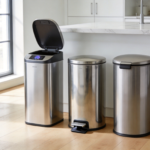
[…] moist environment inside a kitchen trash can is ideal for bacterial proliferation. In fact, a study on kitchen microbial contamination found that trash cans consistently rank among the top germ hotspots in the home — even […]
[…] to a study on kitchen microbial contamination, trash cans consistently rank among the top germ hotspots in the home — right alongside kitchen […]