Address
304 North Cardinal
St. Dorchester Center, MA 02124
Work Hours
Monday to Friday: 7AM - 7PM
Weekend: 10AM - 5PM
Address
304 North Cardinal
St. Dorchester Center, MA 02124
Work Hours
Monday to Friday: 7AM - 7PM
Weekend: 10AM - 5PM
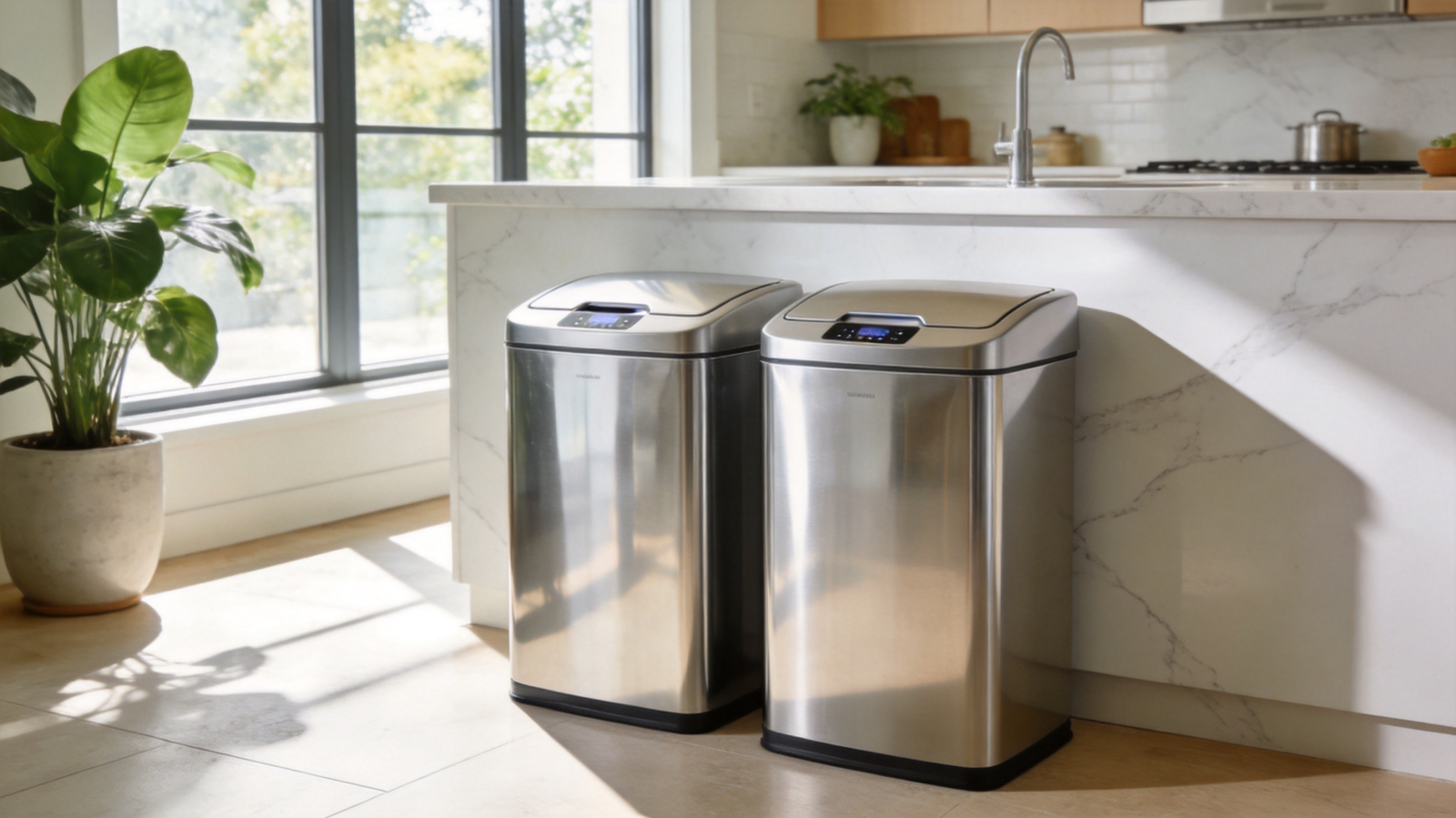
You’ve been researching smart trash cans for your kitchen, and two names keep showing up: Elylife and simplehuman. One is a premium brand that dominates Amazon bestseller lists and design blogs. The other is a fast-growing manufacturer offering sensor trash cans at a fraction of the price.
The question is obvious: Are you paying for genuinely better technology — or just a bigger marketing budget?
After analyzing both brands’ product lineups, specifications, sensor technology, real-world performance, and pricing structures, this comparison breaks down exactly where each brand wins, where it falls short, and which one actually delivers better value for your money.
simplehuman is a US-based premium housewares brand founded in 2000. They’ve built their reputation on design-forward kitchen and bathroom products, with their sensor trash cans serving as the flagship line. Their products are sold through major retailers including Amazon, Target, Williams Sonoma, and Home Depot.
Key positioning: Premium design brand with strong lifestyle marketing.
Elylife is a professional OEM/ODM sensor trash can manufacturer with a direct-to-consumer storefront. They specialize in infrared motion sensor technology and supply products globally through both B2B partnerships and their own online store at elyLife.com.
Key positioning: Value-focused smart trash can specialist with professional manufacturing expertise.
simplehuman uses what they call “adaptive motion sensor” technology — a combination of infrared proximity sensing and machine learning that adjusts to your movement patterns and environmental conditions. Their latest models also include voice activation (“open can” command) as a secondary control method.
Elylife uses precision infrared (IR) proximity sensors with optimized detection algorithms. The sensors are calibrated for 8–12 inch detection range with a 60–90 degree detection angle, and the firmware includes anti-false-trigger logic to prevent accidental openings from pets or passing movement.
Verdict: simplehuman’s voice control is a nice novelty, but in practice, most users open their trash can with a hand wave 95% of the time. Elylife’s IR sensors deliver reliable, consistent performance for the primary use case. If you rarely use voice commands, the extra technology doesn’t add daily value.
simplehuman uses fingerprint-proof stainless steel with a silver-ion antimicrobial coating across their sensor can lineup. Their 58L rectangular model features a planetary gear motor rated at 52 decibels — near-silent operation. Build quality is undeniably premium; these cans feel substantial and look designer-grade in any kitchen.
Elylife offers both stainless steel (K Series and M Series) and engineered ABS constructions (B Series). The stainless steel models feature anti-fingerprint finishes and soft-close lid mechanisms. While they don’t market silver-ion coatings, the sealed lid design provides effective odor containment.
Verdict: simplehuman wins on premium feel and finish. Elylife delivers solid build quality that holds up well in daily use — particularly the K and M Series stainless steel models — without the premium price premium.
This is where the two brands diverge significantly:
表格
| Feature | simplehuman | Elylife |
|---|---|---|
| Sensor can models | 3 styles (Rectangular, Semi-Round, Recycler) | 4 series (K, M, B, E) with 10+ models |
| Capacity range | 45L–58L (sensor cans) | 9L–80L |
| Small spaces | No compact sensor option | B Series: 9L, 12L, 18L |
| Large households | 58L max | M Series: up to 80L |
| Recycling option | Dual-compartment recycler (58L) | Available in select models |
simplehuman focuses on a narrow, high-end lineup for standard kitchen use. If you need a trash can for your bathroom, bedroom, or office, they don’t offer a compact sensor option — you’d need to look at their non-sensor mini bins.
Elylife covers the full spectrum. From a compact 9L bathroom bin (B109) to an 80L utility room workhorse (M180), there’s a sensor trash can for every room and household size. If you want to understand which capacity fits your space, check out our Smart Trash Can Size Guide.
Verdict: Elylife wins on range and flexibility. If you need anything other than a standard kitchen bin, simplehuman’s sensor lineup doesn’t have you covered.
Here’s where the comparison gets dramatic:
表格
| Product | simplehuman | Elylife Equivalent |
|---|---|---|
| Kitchen sensor can (30L class) | $300–$370 (58L Rectangular Sensor) | $28–$32 (K130, K230 — 30L) |
| Mid-range sensor can | €220 / £150 (Semi-Round 45L) | $34–$38 (M130, M230 — 30L) |
| Large capacity sensor can | $370–$400 (58L Recycler) | $47–$49 (M180 — 80L) |
| Compact sensor can | Not available | $18–$22 (B Series: 9L–18L) |
Let’s be direct: simplehuman charges 5–10x more than Elylife for comparable sensor trash can functionality.
A simplehuman 58L Rectangular Sensor Can costs $300. An Elylife K130 offers 30L of capacity with the same core technology — infrared motion sensor, soft-close lid, stainless steel body — for $28.
Even accounting for the capacity difference (58L vs 30L), you’d need two Elylife K130 units to match simplehuman’s volume. That’s still $56 vs $300.
Where does the money go with simplehuman? A significant portion funds their retail distribution network (Amazon, Target, specialty stores), lifestyle marketing campaigns, and brand positioning. You’re paying for the logo, the packaging, and the assurance of buying from an established brand.
Verdict: Elylife delivers dramatically better value. The core technology — IR sensors, motorized lids, odor-sealing designs — is functionally equivalent at a fraction of the cost.
simplehuman relies on their sealed lid design plus optional custom-fit liners that create a neat, contained waste bag system. Their code-specific liners (Code Q for rectangular, Code J for semi-round) are designed to fit perfectly with no overhang. They also offer an optional compost caddy that docks to the side of the can.
Elylife uses sealed lid construction with tight-close gaskets across all models. The K and M Series feature enhanced sealing for kitchens handling food waste. The liner rim system keeps bags secure and hidden.
Verdict: Both brands handle odor control effectively through sealed lid designs. simplehuman’s proprietary liner system is convenient but creates ongoing consumable costs (their custom liners are premium-priced). Elylife works with standard trash bags, giving you flexibility and lower long-term costs.
simplehuman sensor cans use either 4–6 AA batteries or a plug-in AC adapter (included with 58L models). Battery life is approximately 1 year with normal use. Their voice-activated models consume more power due to the always-listening microphone.
Elylife sensor bins use AA batteries with optimized standby power consumption. The IR sensor draws minimal current in standby mode, and the firmware includes power-saving algorithms that reduce unnecessary activations. Typical battery life extends 6–12 months depending on usage frequency.
Verdict: Comparable performance. simplehuman’s AC adapter option is convenient for kitchens with nearby outlets, but most users find battery power sufficient for either brand.
simplehuman offers a 5-year warranty on their sensor cans — a strong selling point that reflects confidence in their product longevity.
Elylife provides standard manufacturer warranty coverage with responsive customer support through their online store. As a direct-to-consumer manufacturer, they handle support in-house rather than through third-party retailers.
Verdict: simplehuman’s 5-year warranty is impressive and provides peace of mind. However, it’s worth noting that the warranty premium is already baked into the product price.
Here’s something neither brand will tell you in their marketing: the core technology inside most smart trash cans is fundamentally the same. An infrared proximity sensor, a small DC motor, a microcontroller, and a battery pack. The engineering differences between brands are incremental, not revolutionary.
Where brands like simplehuman excel is in refinement — the silver-ion coating, the whisper-quiet gear motor, the voice activation feature, the premium unboxing experience. These are genuine quality-of-life improvements.
Where brands like Elylife excel is in accessibility — bringing reliable sensor trash can technology to households that don’t want to spend a week’s grocery budget on waste management.
For most households, the deciding factor isn’t which brand has marginally better sensor sensitivity. It’s whether the investment makes financial sense relative to the value you’ll actually use every day.
If you’re buying one premium kitchen centerpiece and budget isn’t a concern, simplehuman delivers a polished experience with strong brand recognition.
If you’re outfitting your entire home with smart trash cans — kitchen, bathrooms, bedrooms, office — or you simply want reliable sensor technology without the luxury markup, Elylife offers exceptional value that’s hard to beat.
The Elylife K Series hits the sweet spot for most kitchens: 30L capacity, stainless steel construction, reliable IR sensors, and soft-close operation at under $32. Pair it with a B Series compact bin for the bathroom, and you’ve got whole-home smart trash coverage for less than the cost of one simplehuman unit.
For a deeper look at how Elylife’s different series compare, read our K vs M vs B Series Smart Trash Can Comparison.


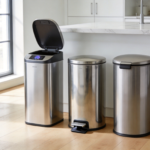
[…] tip: If you are comparing options, this Elylife vs simplehuman breakdown covers the key differences between premium and value-focused sensor trash […]