Address
304 North Cardinal
St. Dorchester Center, MA 02124
Work Hours
Monday to Friday: 7AM - 7PM
Weekend: 10AM - 5PM
Address
304 North Cardinal
St. Dorchester Center, MA 02124
Work Hours
Monday to Friday: 7AM - 7PM
Weekend: 10AM - 5PM
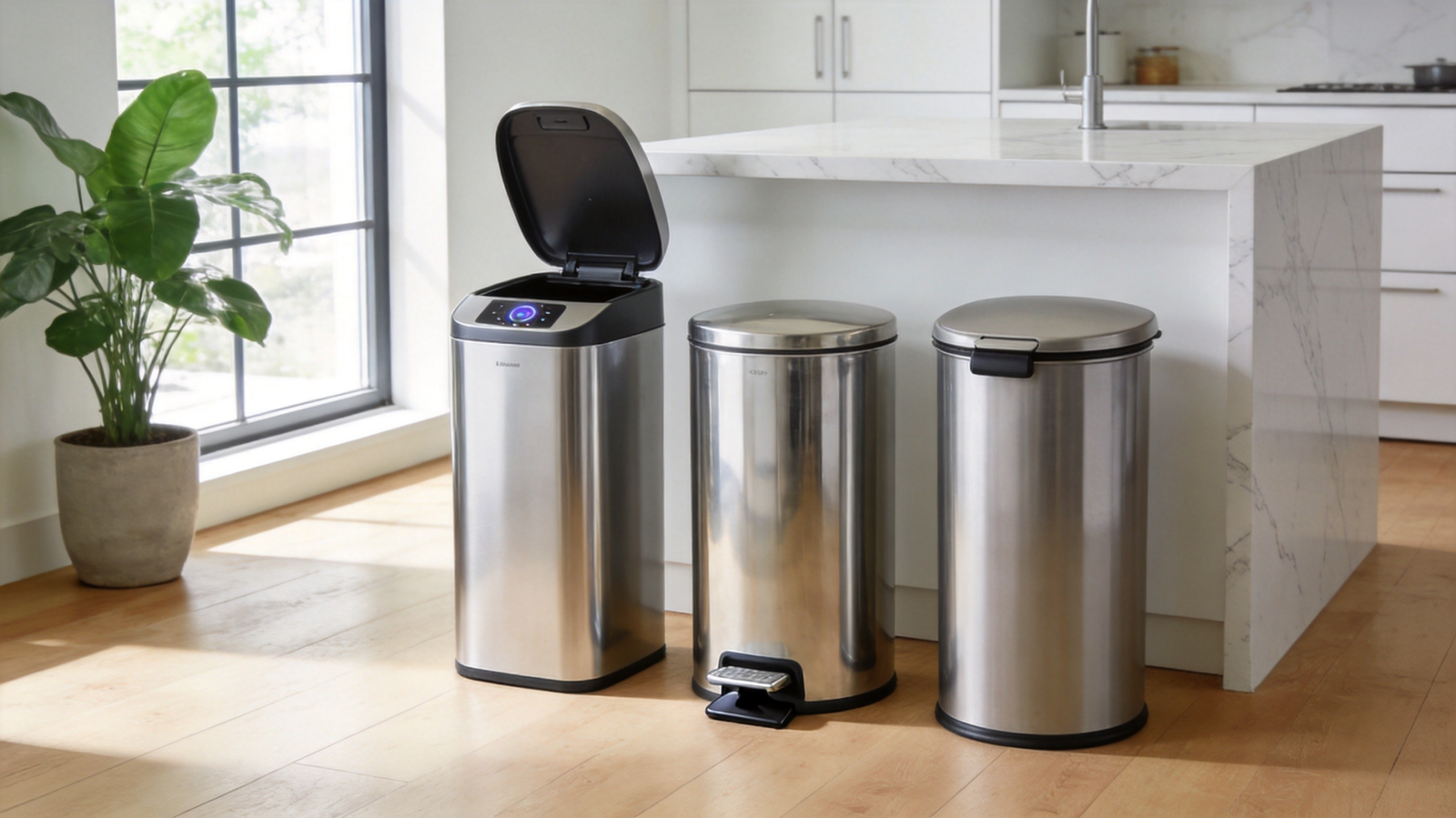
You probably don’t think about your trash can very often — until it’s smelly, overflowing, or annoying to use. But here’s the thing: the type of trash can you choose has a direct impact on your kitchen’s hygiene, your daily convenience, and even how clean your home stays.
If you’re shopping for a new trash can, you’ve likely noticed three main lid types on the market: touchless (sensor), foot-pedal, and swing-top. Each one opens differently, costs differently, and performs very differently in real-world use.
So which one should you pick?
In this guide, we’ll break down how each type works, compare them across six categories that actually matter, and give you a clear recommendation based on your lifestyle. By the end, you’ll know exactly which trash can type is the best fit for your home.
Before we compare them head-to-head, let’s first understand what makes each type different and how they actually work in everyday use.
Touchless trash cans use an infrared motion sensor to detect your hands or body. When you wave your hand near the sensor — usually within 6 to 12 inches — the lid automatically opens. After you drop your waste and step away, the lid closes on its own after a few seconds.
This technology has become increasingly popular in recent years, and for good reason. As more people have learned about how touch-free sensor trash cans reduce cross-contamination in the kitchen, demand for hands-free waste disposal has grown significantly.
How the sensor works: Modern touchless cans like the Elylife sensor trash can series use infrared proximity sensors that detect movement in a targeted zone. The sensor sends a signal to a small motor, which lifts the lid in roughly half a second. When the sensor no longer detects motion, a spring mechanism or motor gently lowers the lid back into place.
What we like:
What to consider:
Best for: Kitchens where you frequently cook with messy hands, bathrooms where hygiene is a priority, households with children or mobility-limited individuals, and noise-sensitive environments like open-plan living spaces.
Foot-pedal trash cans have been a kitchen staple for decades. They feature a mechanical pedal at the base that, when stepped on, lifts the lid through a lever or arm mechanism. Release the pedal, and the lid closes by gravity or a soft-close damper.
How the mechanism works: The pedal connects to a rod or arm that runs inside the can’s body. When you press down on the pedal, the rod pushes upward on the lid hinge. Higher-end models include a soft-close mechanism — typically a small hydraulic or pneumatic damper — that prevents the lid from slamming shut.
What we like:
What to consider:
Best for: Kitchens where you want hands-free opening but prefer a simpler, battery-free design; utility rooms; garages; covered outdoor areas where electronic sensors may not perform well in extreme temperatures.
Swing-top trash cans are the simplest design of the three. The lid sits loosely on a pivot point and swings open with a light push from your hand, hip, or knee. Gravity pulls it back closed once you let go.
How the mechanism works: There is essentially no mechanism at all — the lid is balanced on a central bar or hinge. Push one side up, and the other side drops down to seal the opening. It is the most basic form of trash can lid design, and it has been in use for over a century.
What we like:
What to consider:
Best for: Offices, bedrooms, bathrooms, and other low-traffic areas where odor control is less critical and convenience is the top priority. Also a solid choice for dorm rooms or temporary living situations.
Now let’s put all three types side by side and see how they stack up across the factors that affect your daily experience.
This is where the differences become really significant. Touchless trash cans are the clear winner. Since you never touch any surface, there is minimal risk of transferring bacteria from raw meat, dirty dishes, or bathroom germs onto the can. This is especially important when you are handling raw chicken or fish and need to dispose of scraps quickly.
Foot-pedal cans come in second place. Your foot opens the lid, which is more hygienic than hand contact — however, you still need to touch the lid to close it fully after dropping waste. Over time, that lid handle accumulates germs.
Swing-top cans rank last for hygiene. You are touching the lid every single time, and since the lid swings freely, it can also be bumped open by pets or children, exposing waste to the air.
Winner: Touchless
When your hands are full of food scraps, or you are standing at the counter peeling vegetables, how easy is it to dispose of waste?
Touchless cans win again here. A quick wave of your hand opens the lid instantly, and it closes automatically. You can keep cooking without breaking your rhythm at all.
Foot-pedal cans are also very convenient when you are standing directly in front of them. However, if you are sitting down, carrying something in both arms, or the can is tucked under a counter where the pedal is hard to reach, they become less practical.
Swing-top cans require a physical push, which means at least one hand must be free. They are the least convenient option when both hands are occupied.
Winner: Touchless
Here is where the rankings flip somewhat unexpectedly. Foot-pedal cans are the most durable option. The mechanical lever system is simple, and high-quality stainless steel models from reputable brands can last 10 years or even longer. The only part that commonly fails is the pedal itself, which can crack after years of heavy use — but even that is relatively uncommon with well-built units.
Touchless cans come in second. The electronic components — sensor, motor, and circuit board — add potential failure points. However, modern sensors are quite reliable, and many touchless cans last 5–8 years without issues. Battery corrosion inside the compartment is the most common problem over time.
Swing-top cans are technically the simplest, but the loose lid mechanism tends to become wobbly over time. The pivot point wears down, and the lid may start to slide off-center or fall off completely.
Winner: Foot-Pedal
Nobody wants a trash can that announces every piece of waste with a loud clang.
Touchless cans with soft-close motors are generally the quietest. The lid opens and closes gently and smoothly, with barely a whisper. Premium models like the Elylife K Series and M Series feature particularly well-damped motor mechanisms.
Foot-pedal cans with soft-close dampers are also very quiet during closing. However, the initial pedal press and lid opening can produce a slight clicking or mechanical sound. Budget models without soft-close features can be quite loud when the lid drops.
Swing-top cans are hit or miss. The lid can swing shut with a thud, especially if it is made of plastic. Stainless steel swing-top models with weighted lids tend to be quieter, but they are never as silent as a quality touchless or soft-close pedal model.
Winner: Touchless (slight edge over quality foot-pedal models)
Swing-top cans win this category easily. There is nothing to maintain — no batteries to replace, no sensors to clean, and no mechanical parts to lubricate. Simply wipe it down and keep using it.
Foot-pedal cans require moderate maintenance. You may need to occasionally clean the pedal mechanism and check that the lever arm is functioning smoothly. The internal rod can collect debris over time.
Touchless cans require the most ongoing maintenance. You need to replace or recharge batteries periodically, keep the sensor area clean and free of splashes or grease (which can cause false triggers), and occasionally check that the motor is operating correctly.
Winner: Swing-Top
Swing-top cans are the cheapest option, typically ranging from $15 to $30. They are an easy impulse purchase and a good choice if you are on a very tight budget.
Foot-pedal cans fall in the middle, usually priced between $20 and $50 depending on size, material, and brand. They offer good value for money since they combine convenience with durability.
Touchless cans are the most expensive, ranging from $30 to $80 or more. However, when you factor in the hygiene benefits, noise reduction, and hands-free convenience, many users find the investment worthwhile — especially for their primary kitchen trash can.
Winner: Swing-Top (for price); Touchless (for overall value)
表格
| Feature | Touchless (Sensor) | Foot-Pedal | Swing-Top |
|---|---|---|---|
| Hygiene | ★★★★★ | ★★★☆☆ | ★★☆☆☆ |
| Convenience | ★★★★★ | ★★★★☆ | ★★★☆☆ |
| Durability | ★★★★☆ | ★★★★★ | ★★★☆☆ |
| Noise Level | ★★★★★ | ★★★★☆ | ★★★☆☆ |
| Maintenance | ★★★☆☆ | ★★★★☆ | ★★★★★ |
| Price | $$$ | $$ | $ |
| Odor Control | ★★★★★ | ★★★★☆ | ★★☆☆☆ |
After comparing all three types in detail, here is our straightforward advice for most households in 2026:
For most kitchens, a touchless sensor trash can is the best overall choice. The hands-free operation is genuinely useful — not just a gimmick — when you are cooking with messy hands. The sealed lid also helps with odor control, which makes a real difference near food preparation areas. Plus, the quiet operation means you can dispose of waste without disrupting conversations or TV in adjacent rooms.
If you want a reliable touchless option, the Elylife K Series and M Series sensor bins are excellent choices — they combine a quality infrared sensor, stainless steel body, and sealed odor control at a competitive price point. For a deeper look at how these products compare, check out our detailed Elylife vs simplehuman comparison.
If you want something reliable, battery-free, and still hands-free, a foot-pedal can is a solid middle-ground option. It works everywhere — indoors, outdoors, in the garage, or on the patio — without worrying about batteries dying or sensors malfunctioning in extreme temperatures.
If you need a trash can for an office, bedroom, or low-traffic area where odor is not a major concern, a swing-top can gets the job done at the lowest price. Just do not expect premium hygiene or odor control.
Many households actually benefit from using different types in different rooms. For instance, a touchless can in the kitchen, foot-pedal cans in the bathrooms, and a simple swing-top in the home office. This approach gives you the best performance in each space without over-investing in areas where a premium can is unnecessary.
The “best” trash can type depends entirely on how you use it. Touchless cans lead in hygiene and convenience, foot-pedal cans win on durability and versatility, and swing-top cans are the simplest and most affordable.
Rather than asking which type is universally best, ask yourself: What matters most in the room where this trash can will live? If hygiene and hands-free ease are your priorities — and especially if you spend a lot of time cooking — a touchless sensor trash can is the upgrade you will notice every single day.


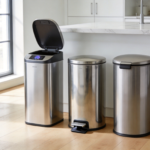
[…] curious about how different lid types compare in general, our detailed breakdown of touchless vs foot-pedal vs swing-top trash cans is a great starting […]
[…] Touchless vs Foot-Pedal vs Swing-Top Trash Cans: Which Type Is Best for You? […]
[…] Touchless vs Foot-Pedal vs Swing-Top Trash Cans: Which Type Is Best for You? […]
[…] Touchless vs Foot-Pedal vs Swing-Top Trash Cans: Which Type Is Best for You? […]
[…] in how touchless technology compares to other types, check out our detailed comparison of touchless vs foot-pedal vs swing-top trash cans for more […]
[…] type directly affects usability and hygiene. Swing-top lids are the simplest – low cost, minimal parts – but require hand contact and don’t […]