Address
304 North Cardinal
St. Dorchester Center, MA 02124
Work Hours
Monday to Friday: 7AM - 7PM
Weekend: 10AM - 5PM
Address
304 North Cardinal
St. Dorchester Center, MA 02124
Work Hours
Monday to Friday: 7AM - 7PM
Weekend: 10AM - 5PM
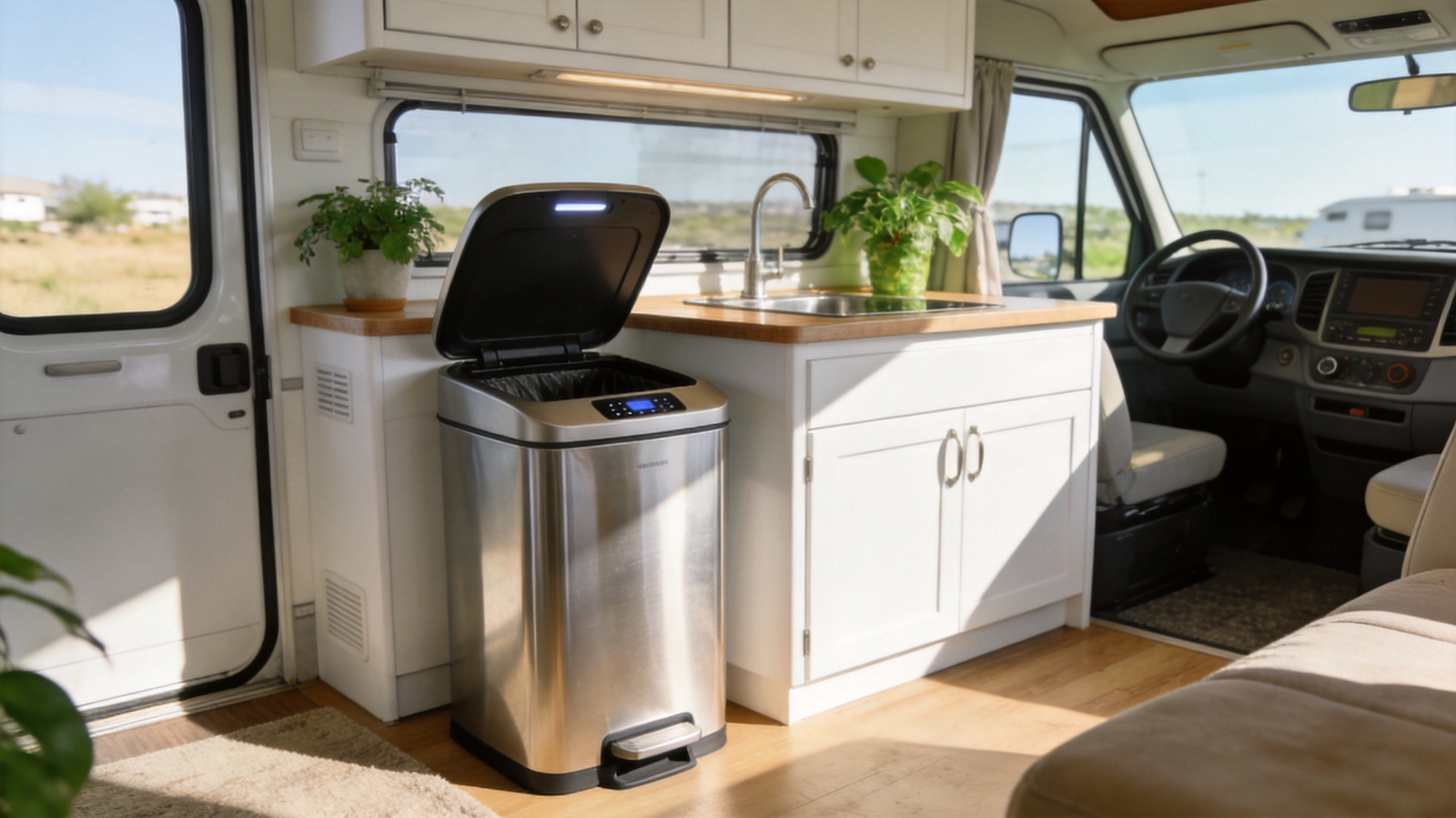
If you’ve ever dealt with a trash can sliding across the floor, spilling its contents every time you hit a bump on a dirt road, you already know that RV living demands a completely different kind of trash solution. In a standard home, you can set a trash can anywhere and forget about it. But on the road, every piece of gear needs to earn its keep — and your trash can is no exception.
In fact, one of the most common frustrations among full-time RVers and weekend campers is finding a waste bin that stays put, controls odors in a tiny enclosed space, and doesn’t require you to touch a germ-covered lid after prepping meals. That’s exactly why touchless (sensor-activated) trash cans have become a game-changer for the RV community.
In this guide, we’ll walk you through what makes a touchless trash can truly “RV-ready,” compare the top options available in 2026, and help you pick the best touchless trash can for your RV, camper van, or travel trailer. Whether you’re boondocking in the desert or parked at a lakeside campground, you’ll find a solution that fits your space and lifestyle.
To begin with, it’s important to understand why a standard household trash can rarely works well in an RV. Specifically, the confined, mobile environment of a camper introduces challenges that most home trash cans simply aren’t designed to handle.
First of all, RV kitchens typically have between 10 and 30 square feet of counter and floor space combined. As a result, every inch matters. A full-size 13-gallon kitchen trash can with a wide footprint will eat up valuable room that could be used for food prep, storage, or simply moving around comfortably. Therefore, an ideal RV trash can needs a compact, slim profile — usually no wider than 10–12 inches — without sacrificing usable capacity.
Secondly, in a sealed 150-square-foot living space, even minor trash odors become amplified. For instance, the smell of yesterday’s fish dinner lingers much longer in an RV than in a well-ventilated home kitchen. Consequently, a trash can with a tight-sealing lid is essential. Touchless models with automatic closing lids seal shut within seconds, thereby trapping odors far more effectively than open-top or swing-lid designs.
Thirdly, when you’re driving down a bumpy forest road or parking on uneven terrain, lightweight plastic bins tip over easily. Moreover, a tipped trash can inside a closed RV is one of the most unpleasant cleanup situations you can encounter. For this reason, your trash can needs a non-slip base, a low center of gravity, or ideally a way to secure it during transit.
Finally, in close-quarter living, cross-contamination is a real concern. After all, when your kitchen sink, cutting board, and trash area are all within arm’s reach, touching a dirty lid after handling raw chicken is not ideal. This is precisely why touchless sensor technology has become so popular among RV owners — it eliminates the need to touch any surface during waste disposal.
If you’re curious about how different lid types compare in general, our detailed breakdown of touchless vs foot-pedal vs swing-top trash cans is a great starting point.
Before we get to our top picks, let’s break down the key features that separate a genuinely RV-friendly touchless trash can from one that merely looks compact. Keep these criteria in mind as you evaluate your options.
Obviously, space is the number-one constraint. Look for models with a rectangular or oval shape that can slide into narrow gaps — between the fridge and the wall, beside the sink, or even mounted on a cabinet door. Ideally, the base should be no wider than 10–12 inches.
While a larger bin seems convenient, holding trash for too long in a warm, enclosed space creates stubborn odors. Therefore, a 1.5 to 3.5-gallon capacity is the sweet spot for most RVers. In other words, it’s large enough for 1–2 days of light waste but small enough to encourage frequent emptying at campground dumpsters.
Since most RVs don’t have conveniently placed electrical outlets near trash can locations, battery-powered models are the practical choice. However, not all sensor trash cans are equal here. Look for models that use 2–4 AA batteries and deliver at least 2–3 months of normal use (20+ openings per day). Alternatively, USB-rechargeable models are gaining popularity because they eliminate battery waste entirely.
As mentioned earlier, odor control is critical. Make sure the touchless lid closes completely and creates a near-airtight seal. Some premium models even include activated carbon filters — a feature borrowed from commercial kitchen waste systems — that actively neutralize VOCs and food odors.
Given that RV life involves movement, vibration, and occasional bumps, stainless steel or high-density ABS plastic construction is essential. Additionally, a removable inner bucket or liner ring makes bag changes significantly easier in tight spaces.
Now, let’s get to the heart of the matter. Below, we’ve compared five of the best touchless trash cans that work exceptionally well in RVs, camper vans, travel trailers, and even truck campers. Each pick is evaluated on footprint, capacity, odor control, battery life, and overall value.
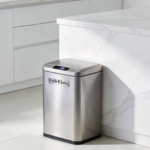
Starting with our top pick, the Elylife B Series sensor bins offer an outstanding combination of compact design, reliable sensor technology, and premium build quality that makes them ideal for life on the road.
表格
| Spec | B109 (9L / 2.4 gal) | B112 (12L / 3.2 gal) |
|---|---|---|
| Footprint | ~8.7″ × 8.7″ | ~9.8″ × 9.8″ |
| Height | ~14.2″ | ~16.5″ |
| Power | 4 AA batteries | 4 AA batteries |
| Lid Type | Full auto-close with seal | Full auto-close with seal |
| Material | Stainless steel body | Stainless steel body |
| Price | ~$18.30 | ~$19.71 |
Why it’s great for RVs:
Minor drawback: No activated carbon filter, though for the price point, the natural odor sealing of the stainless steel body is more than adequate for most RVers.
Next up, the iTouchless 4-Gallon model stands out because it’s one of the few compact touchless cans that includes a built-in activated carbon odor filter. Specifically, this filter absorbs volatile organic compounds and food smells, while the motorized lid seals firmly when not in use.
表格
| Spec | Details |
|---|---|
| Footprint | 10.3″ × 7″ |
| Height | 11.6″ |
| Power | 4 AA batteries or optional AC adapter |
| Filter | Replaceable activated carbon deodorizer |
| Material | Fingerprint-proof stainless steel |
| Price | ~$35–$45 |
Why it’s great for RVs:
Consideration: The 4-gallon capacity may be slightly large for very small camper vans. Also, in walkways narrower than 3 feet, the sensor can trigger accidentally as you walk past.
For van lifers and minimalist campers who need the smallest possible footprint, the Ninestars 2.1-gallon touchless model is a strong contender. Its oval shape measures roughly 8″ × 6″, making it one of the most compact sensor cans on the market.
表格
| Spec | Details |
|---|---|
| Footprint | ~8″ × 6″ |
| Capacity | 2.1 gallons (8L) |
| Power | 4 AA batteries |
| Material | ABS plastic |
| Price | ~$20–$25 |
Why it’s great for RVs:
Consideration: ABS plastic construction is lighter and less odor-resistant than stainless steel. Therefore, you’ll need to clean it more frequently to prevent lingering smells.
If you’re on a budget but still want reliable touchless performance, the Tramontina 2-Gallon Square Sensor Bin delivers impressive value. Priced around $30–$50, it offers stainless steel construction and automatic sensor operation at a fraction of the cost of premium models.
表格
| Spec | Details |
|---|---|
| Footprint | ~9″ × 9″ |
| Capacity | 2 gallons |
| Power | Battery-powered |
| Material | Stainless steel with ABS lid |
| Price | ~$30–$50 |
Why it’s great for RVs:
Consideration: Some users note the ABS lid feels less premium than full stainless steel options. However, it’s still durable enough for regular RV use.
Last but not least, if you need a secondary touchless bin for your RV bathroom or want something ultra-tiny for the countertop, a 4L mini sensor trash can is worth considering. These compact models, available from multiple brands, offer basic sensor functionality in a package smaller than a dinner plate.
表格
| Spec | Details |
|---|---|
| Footprint | ~6.7″ × 6.7″ |
| Capacity | 4L (~1 gallon) |
| Power | USB rechargeable |
| Material | High-density plastic (IPX5 waterproof) |
| Price | ~$15–$25 |
Why it’s great for RVs:
Consideration: The 1-gallon capacity means daily emptying for most users. This is best suited as a secondary bin or for very low-waste scenarios.
表格
| Model | Capacity | Best For | Odor Seal | Battery Life | Price Range |
|---|---|---|---|---|---|
| Elylife B109/B112 | 2.4–3.2 gal | Overall RV use | ★★★★☆ | 2–3 months | $18–$20 |
| iTouchless 4 gal | 4 gal | Active odor control | ★★★★★ | 3–4 months | $35–$45 |
| Ninestars 2.1 gal | 2.1 gal | Ultra-compact vans | ★★★☆☆ | 2–3 months | $20–$25 |
| Tramontina 2 gal | 2 gal | Budget pick | ★★★★☆ | 2–3 months | $30–$50 |
| Mini 4L Sensor | 1 gal | Bathroom/secondary | ★★★☆☆ | USB rechargeable | $15–$25 |
Ultimately, the Elylife B Series offers the best balance of price, build quality, and compact design for most RV owners. Meanwhile, if odor control is your absolute top priority, the iTouchless with its carbon filter is hard to beat. On the other hand, for van lifers who need the smallest possible bin, the Ninestars 2.1-gallon or the Mini 4L sensor can are excellent secondary options.
Once you’ve chosen the right touchless trash can for your rig, a few practical habits will help you get the most out of it on the road.
Even though many compact models have non-slip bases, it’s still wise to secure your trash can before driving. For example, a small bungee cord, hook-and-loop strips, or a tension rod in a nearby cabinet can prevent tipping during sharp turns. Similarly, placing the bin in a dedicated nook or against a wall adds natural stability.
Generally, campground dumpster stations are available at most established sites. However, if you’re heading off-grid for several days, make sure to empty your trash can beforehand. In particular, a 2–3 gallon bin filled with food waste in summer heat can develop persistent odors within 24–48 hours.
Above all, a sturdy, properly sized trash bag liner prevents leaks and makes bag changes quick and mess-free. Additionally, a bag that stays in place won’t shift during transit — which is especially important in a mobile environment. For more tips on keeping things fresh, check out our guide on how to keep your trash can clean without harsh chemicals.
Over time, cooking grease and humidity can build up on the infrared sensor, causing sluggish response or false triggers. Therefore, a quick wipe with a damp microfiber cloth once a month keeps the sensor responsive. In the same way, periodically checking the battery compartment for corrosion extends the life of your unit.
All things considered, upgrading to a touchless trash can is one of the simplest yet most impactful improvements you can make to your RV kitchen. Not only does it eliminate the hassle of touching a germ-laden lid, but it also helps control odors, saves space, and adds a touch of modern convenience to life on the road.
Our top recommendation remains the Elylife B Series sensor bins — they combine a genuinely compact footprint, durable stainless steel construction, and reliable sensor technology at an unbeatable price. Whether you’re weekend camping or living full-time in your rig, the Elylife B109 or B112 will handle your waste management needs with ease.
So if you’re still dealing with a tipped-over, smelly trash can in your camper, it might be time for an upgrade. Your nose — and your co-pilot — will thank you.