Address
304 North Cardinal
St. Dorchester Center, MA 02124
Work Hours
Monday to Friday: 7AM - 7PM
Weekend: 10AM - 5PM
Address
304 North Cardinal
St. Dorchester Center, MA 02124
Work Hours
Monday to Friday: 7AM - 7PM
Weekend: 10AM - 5PM
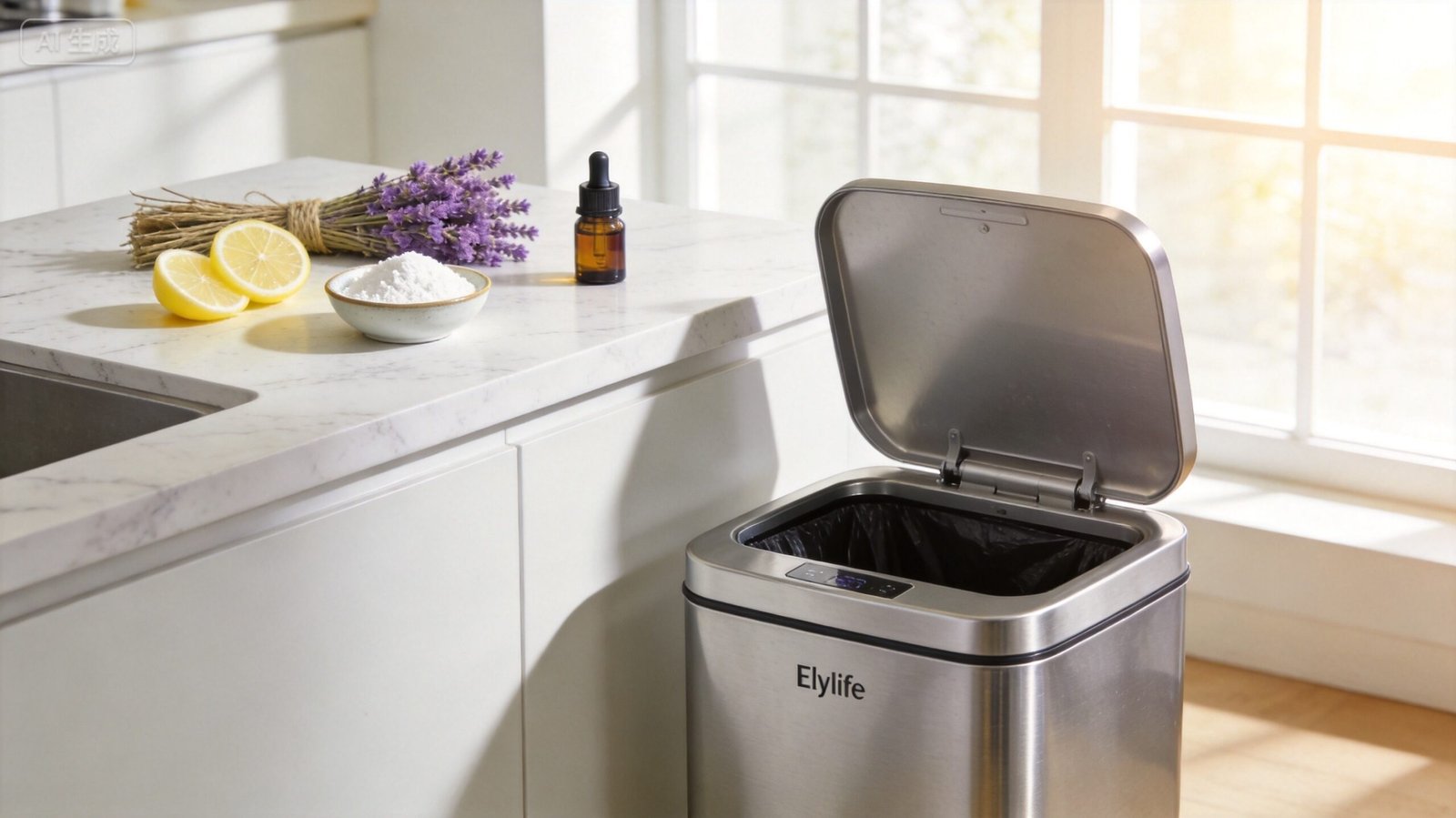
Let’s face it — no matter how often you take out the trash, that lingering smell inside your bin can be downright unbearable. Fortunately, you don’t need harsh chemical sprays or expensive commercial deodorizers to keep your trash can smelling fresh. In fact, some of the most effective natural trash can deodorizer solutions are probably sitting in your pantry right now.
In this guide, we’ll walk you through 10 proven natural methods to deodorize your trash can — from quick fixes to long-term strategies — so your kitchen (and nose) can finally breathe easy.
Before we dive into the solutions, it’s worth understanding why trash cans develop odors in the first place. Essentially, bacteria break down organic matter like food scraps, releasing sulfur compounds and other foul-smelling gases. On top of that, moisture trapped at the bottom of the bin creates the perfect breeding ground for odor-causing microbes.
Therefore, the key to long-lasting freshness isn’t just masking the smell — it’s about neutralizing the source. And as you’ll see below, natural ingredients can do this surprisingly well.
First up is the undisputed champion of natural odor control — baking soda (sodium bicarbonate). Baking soda is alkaline, which means it neutralizes acidic odor molecules rather than covering them up with fragrance.
How to use it:
As a result, you’ll notice a significant reduction in odors within hours. Moreover, baking soda is completely non-toxic, making it safe for households with children and pets.
Next on our list is white vinegar — another kitchen staple that works wonders as a natural trash can deodorizer. Vinegar contains acetic acid, which effectively kills odor-causing bacteria and breaks down the compounds that cause unpleasant smells.
How to use it:
Keep in mind, though, that vinegar does have its own strong scent initially. However, the vinegar smell dissipates completely once it dries — and it takes the trash odors right along with it.
If you’re dealing with persistent, stubborn odors, activated charcoal might be your best bet. This porous material has an enormous surface area, which allows it to trap and absorb a wide range of odor molecules — including those that baking soda can’t fully handle.
How to use it:
What’s more, activated charcoal is completely fragrance-free, so it won’t add any artificial scents to your kitchen.
In addition to the methods above, citrus peels offer a delightful natural alternative. The essential oils in lemon, lime, orange, and grapefruit peels contain limonene — a compound that naturally breaks down odors and leaves behind a clean, fresh scent.
How to use it:
That said, citrus peels work best as a supplementary method alongside your primary deodorizer — they add freshness but may not fully neutralize strong odors on their own.
Here’s another simple yet surprisingly effective natural trash can deodorizer hack. Simply add 5–10 drops of essential oil (tea tree, lavender, eucalyptus, or lemon work best) to a cotton ball and drop it into the bottom of your trash can.
Not only does this smell wonderful, but oils like tea tree and eucalyptus also have natural antibacterial properties. As a bonus, you can refresh the cotton ball every 3–5 days to keep the scent going.
Believe it or not, used coffee grounds are excellent at absorbing odors. After all, coffee is naturally acidic and porous — both qualities that make it great at trapping smell molecules.
How to use it:
Just make sure the grounds are completely dry before placing them in the bin — otherwise, they could add moisture and make the problem worse.
This might sound unconventional, but it’s surprisingly logical. If your kitchen generates a lot of smelly food waste, consider keeping a designated bag of smelly scraps in the freezer until trash day.
Here’s why this works: bacteria need warmth to multiply and produce odors. By freezing smelly waste (like fish bones, shrimp shells, or meat trimmings), you completely halt bacterial activity. Then, when you transfer the frozen scraps to your outdoor bin on pickup day, there’s virtually no smell.
Of course, this works best in combination with one of the other deodorizing methods for general odor control.
Food-grade diatomaceous earth (DE) is a naturally occurring sedimentary rock that’s ground into a fine powder. While it’s commonly known as a natural pest control solution, it also doubles as a moisture absorber — which, in turn, helps control odors.
How to use it:
However, be sure to use only food-grade DE — the pool-grade variety is not safe for indoor use.
While it might sound unusual, plain clay cat litter is an excellent moisture absorber that can work as a natural trash can deodorizer. Essentially, cat litter is designed to absorb liquid and trap odors — the same qualities your trash bin needs.
How to use it:
That said, opt for unscented varieties to avoid mixing artificial fragrances with your kitchen environment.
Finally, none of the deodorizing methods above will work long-term if you’re not also cleaning your bin regularly. In other words, prevention beats treatment every time.
For a thorough natural deep clean, follow these steps once a month:
If you want a step-by-step cleaning guide without using harsh chemicals, check out our detailed article on how to keep your trash can clean without harsh chemicals.
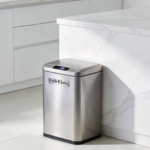
It’s also worth noting that the type of trash can you use plays a huge role in odor management. A well-sealed, high-quality sensor trash can with a tight-closing lid can dramatically reduce odor escape. For example, the Elylife Smart Sensor Trash Can features an automatic close function that seals in odors immediately after use — and with hands-free operation, you’re less likely to leave the lid open accidentally.
Additionally, if you’ve noticed smells seeping into surrounding areas, you might want to read our guide on how to remove trash can smell from carpet — because sometimes the problem extends beyond the bin itself.
表格
| Method | Odor Strength | Duration | Cost | Best For |
|---|---|---|---|---|
| Baking Soda | ★★★★ | 7–14 days | $ | Everyday use |
| White Vinegar | ★★★★ | 1–3 days | $ | Deep cleaning |
| Activated Charcoal | ★★★★★ | 60–90 days | $$ | Persistent odors |
| Citrus Peels | ★★★ | 2–5 days | $ | Light freshness |
| Essential Oil + Cotton | ★★★★ | 3–5 days | $$ | Pleasant scent |
| Coffee Grounds | ★★★ | 5–7 days | Free | Recycling waste |
| Freezing Smelly Trash | ★★★★★ | Ongoing | Free | Food scraps |
| Diatomaceous Earth | ★★★ | 14–30 days | $ | Moisture control |
| Cat Litter | ★★★★ | 14–30 days | $ | Leak absorption |
| Deep Cleaning | ★★★★★ | 30 days | Free | Full reset |
Keeping your trash can fresh doesn’t require expensive products or toxic chemicals. In fact, most of the natural trash can deodorizer methods listed above are affordable, effective, and easy to implement. The key is to find the combination that works for your household — and to stay consistent with your cleaning routine.
So, start with baking soda or vinegar as your base, add activated charcoal for extra insurance, and don’t forget the occasional citrus peel for a refreshing touch. Your kitchen will thank you.