Address
304 North Cardinal
St. Dorchester Center, MA 02124
Work Hours
Monday to Friday: 7AM - 7PM
Weekend: 10AM - 5PM
Address
304 North Cardinal
St. Dorchester Center, MA 02124
Work Hours
Monday to Friday: 7AM - 7PM
Weekend: 10AM - 5PM
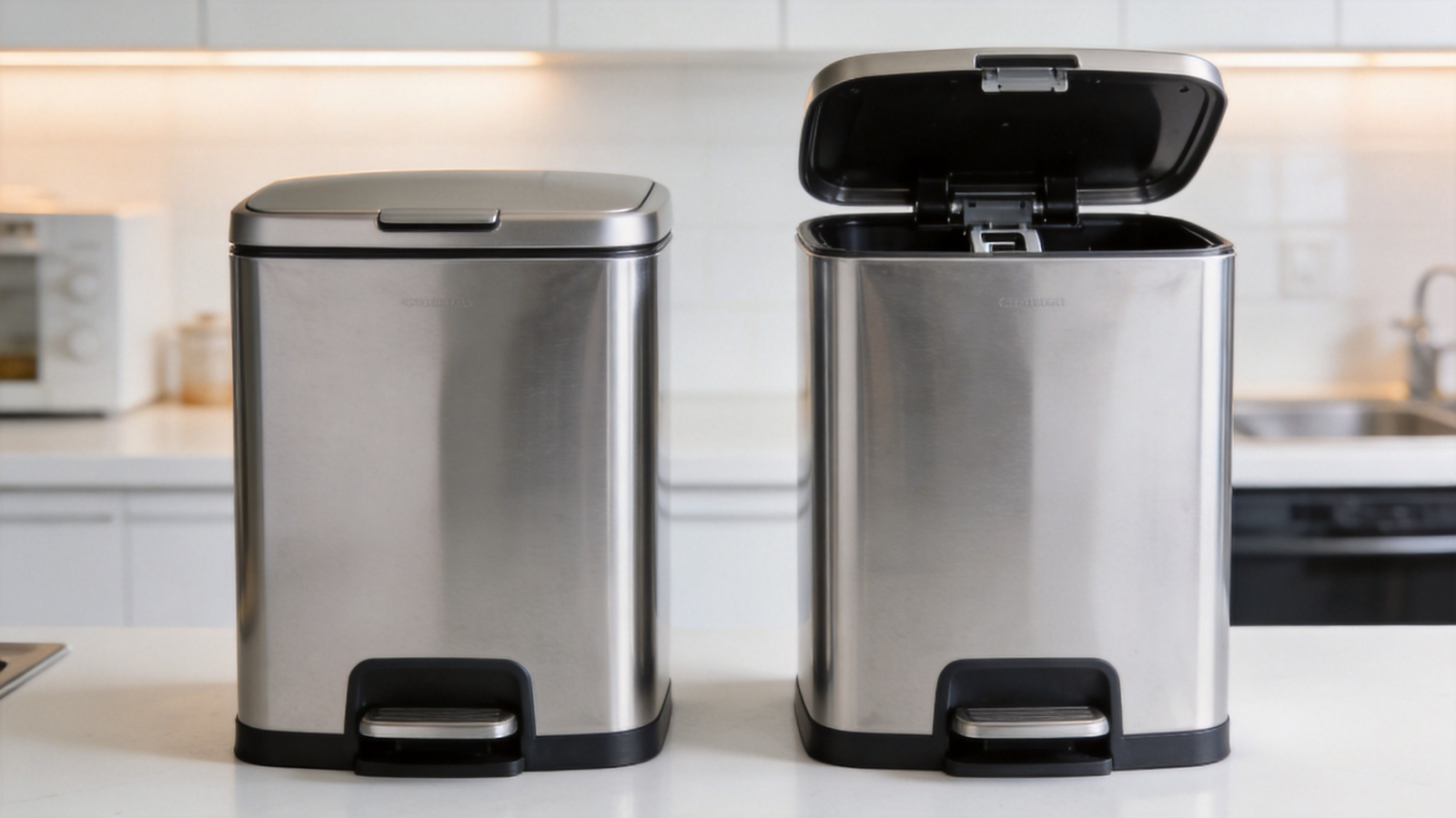
If you’ve been shopping for a new kitchen trash can recently, you’ve probably come across terms like “soft close” and “soft open” — and you might be wondering what they actually mean. Are they the same thing? Do you need both? And more importantly, which one is better for your kitchen?
These questions come up more often than you’d think. In fact, the soft close vs soft open trash can debate is one of the most common areas of confusion for buyers. Both features are designed to improve your daily experience, but they work in very different ways and serve different purposes.
In this article, we’ll break down exactly what soft close and soft open mechanisms do, how they differ, and which one (or both) you should prioritize when choosing your next trash can. We’ll also help you understand why some premium models — like those from Elylife — include both features as standard.
Let’s start with the more widely known feature. A soft close trash can is designed so that the lid closes slowly and quietly, regardless of how hard you push it down or how you let go. Inside the lid mechanism, there’s typically a small hydraulic damper or spring system that controls the speed of descent.
When you push the lid down manually (or when a sensor triggers the motorized closing sequence), the soft close mechanism engages to slow the lid as it approaches the closed position. As a result, the lid gently settles into place rather than slamming shut with a loud bang.
Now, here’s where things get interesting. A soft open trash can works on the opposite end of the spectrum — it controls how the lid opens, not how it closes. When you activate the opening mechanism (via foot pedal, sensor, or button), the lid rises slowly and smoothly instead of popping open suddenly.
The soft open mechanism uses a similar damper or spring system, but it’s calibrated to slow the lid’s upward movement. Consequently, the lid opens gradually, which prevents it from slamming against the back of the can or swinging too far forward.
To make the differences crystal clear, here’s a direct comparison of the two features:
表格
| Feature | Soft Close | Soft Open |
|---|---|---|
| What it controls | How the lid closes | How the lid opens |
| Primary benefit | Quiet, gentle closing | Smooth, controlled opening |
| Noise eliminated | Closing “clang” | Opening “thwack” |
| Safety advantage | Prevents finger pinching on closing | Prevents lid from swinging aggressively |
| Best for | Noise-sensitive environments, nighttime use | Tight spaces, households with kids/pets |
| Mechanism | Hydraulic damper on closing stroke | Spring/damper on opening stroke |
| Found in | Many mid-range to premium models | Mostly premium and smart models |
As you can see, these two features are complementary rather than competing. In other words, they address different parts of the same problem: making your trash can quieter and smoother to use.
Here’s the thing: if you can only choose one, soft close is generally the more impactful feature. That’s because the closing motion tends to generate more noise and causes more wear over time. However, the best experience comes from having both — and that’s exactly what you’ll find in many premium trash cans on the market today.
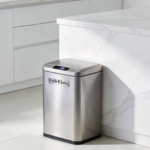
Models like the Elylife smart sensor trash can feature dual-action damping systems that provide soft opening and soft closing in one seamless motion. When the sensor detects your hands, the lid rises smoothly; when it’s time to close, it descends just as gently. The result is a trash can that feels almost silent in daily use.
If soft close and soft open features are important to you, here are the key factors to evaluate when comparing models:
Not all soft close/open systems are created equal. Higher-end models use stainless steel hinges and hydraulic dampers that last for years, while cheaper alternatives may use plastic components that wear out quickly.
Sensor-activated models with soft open/close features typically run on batteries or USB charging. Make sure the battery life is reasonable — ideally 6 months or more per set of batteries.
Stainless steel bodies with powder-coated finishes not only look better, but they also resist fingerprints, corrosion, and warping. For more on material choices, check out our comparison of indoor vs outdoor trash cans to understand durability across environments.
Consider your household size and kitchen layout. A larger family might need a 13-gallon model, whereas a couple in a small apartment could be perfectly happy with a 9-gallon option.
A trash can that’s easy to maintain will stay in better condition longer. Look for models with removable inner buckets and smooth surfaces that wipe clean easily.
To sum up, here’s a simple decision framework:
For most households, the dual-action approach delivers the best overall value. After all, a trash can is something you use multiple times every single day. Investing in one that operates quietly and smoothly is one of those small upgrades that makes a surprisingly big difference in your daily quality of life.
If you’re ready to explore models that combine both soft close and soft open technology with modern smart features, the Elylife touchless sensor trash can collection is an excellent place to start.