Address
304 North Cardinal
St. Dorchester Center, MA 02124
Work Hours
Monday to Friday: 7AM - 7PM
Weekend: 10AM - 5PM
Address
304 North Cardinal
St. Dorchester Center, MA 02124
Work Hours
Monday to Friday: 7AM - 7PM
Weekend: 10AM - 5PM
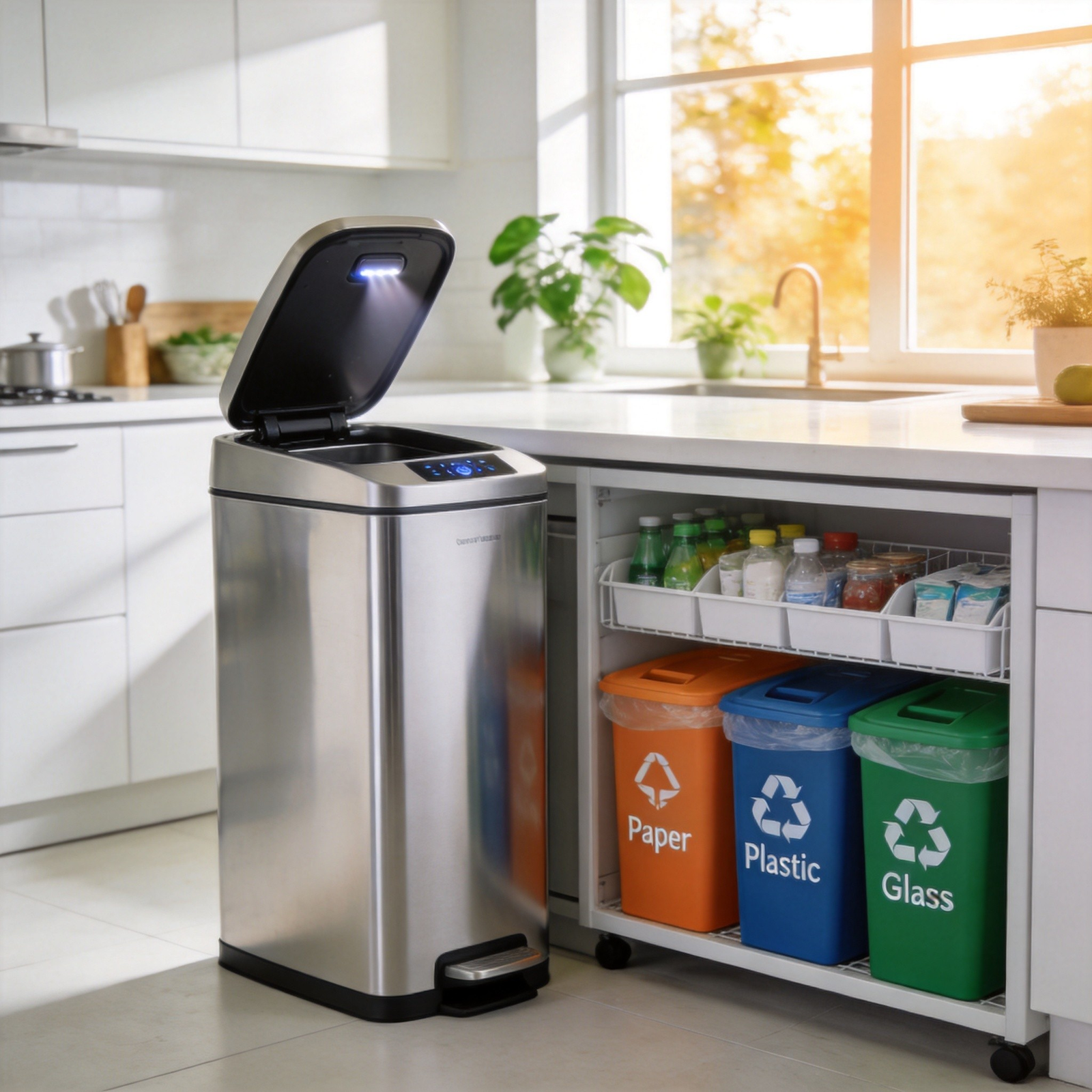
Recycling should be easy. But in most American households, it’s anything but. The average person generates about 4.4 pounds of trash per day, and despite decades of education, the U.S. recycling rate has stalled at roughly 32%. The problem isn’t willingness — 93% of Americans say recycling is important. The gap is in execution: confusion about what goes where, inconvenient setup, and cross-contamination between waste streams.
You don’t need a municipal overhaul to make a difference. A smarter approach to waste sorting — starting with how you organize bins in each room — can dramatically improve your household recycling rate. And smart sensor trash cans play a surprisingly important role.
If you’ve already read about how touch-free bins reduce cross-contamination or explored our zero-waste kitchen strategies, this guide takes the next step: building a practical, room-by-room waste sorting system that works with your daily habits.
Before diving into setup, let’s talk about why this matters beyond “it’s the right thing to do.”
Health impact: When recyclables get contaminated with food residue, they become unrecyclable — heading straight to landfill. Decomposing organic waste produces methane, a greenhouse gas 80 times more potent than CO₂ in the short term.
Financial impact: Many municipalities now offer variable-rate waste collection. Households that reduce general trash through effective recycling can save $100–$300 annually.
Environmental impact: Recycling a single aluminum can saves enough energy to power a TV for three hours. One ton of recycled paper saves 17 trees and 7,000 gallons of water.
The key word is consistently. A perfect system that’s too complicated is worse than a simple one that actually gets used. That’s where smart design — and smart trash cans — come in.
The most effective home recycling setups follow a simple principle: place the right bin in the right room, and make sorting the path of least resistance. Here’s how to build it.
The kitchen generates the most waste in any home, and it’s where sorting has the biggest impact. This is where you’ll want your highest-capacity bins.
Setup recommendation:
Why a smart sensor bin works here: When your hands are covered in raw chicken juice or flour, the last thing you want is to touch a bin lid. The touch-free sensor operation means you can toss a rinsed yogurt container into recycling without cross-contaminating the lid — crucial for consistency.
Pro tip: Rinse containers before placing them in recycling. A quick swish in dishwater prevents food residue from contaminating an entire batch. For more odor strategies, see our summer trash can odor control guide.
Bathrooms generate surprisingly recyclable waste: toilet paper tubes, shampoo bottles, soap packaging, and toothpaste boxes. Most people toss all of this into a single general waste bin.
Setup recommendation:
Why it works: Bathroom waste tends to be clean and dry — ideal for recycling. By placing a small recycling container within arm’s reach of the primary bin, you create a two-second sorting habit.
The Elylife K230 is excellent for bathrooms: its moisture-resistant coating handles humid environments, while touch-free operation prevents germ spread.
If you work from home, your office is ground zero for paper waste: printouts, envelopes, packaging materials, sticky notes, and coffee cup sleeves.
Setup recommendation:
Why a smart sensor bin works here: A sensor bin that opens automatically when your hand approaches lets you dispose of waste without looking away from your screen. The B109 operates completely silently, so it won’t disrupt video calls.
Key insight: Paper is the most valuable recyclable material by weight. Keeping office paper clean and separated from food-contaminated waste dramatically increases the likelihood it gets recycled.
The garage absorbs overflow waste, packaging from online orders, and items that don’t fit neatly into curbside recycling: plastic bags, Styrofoam, batteries, and electronics.
Setup recommendation:
Why it matters: Garage waste is where most households fall apart on recycling. Cardboard from deliveries gets crumpled and thrown out. Plastic film gets mixed with general waste. By dedicating a sorting corner — even just two bags on a shelf — you capture materials that would otherwise be lost.
For guidance on optimal bin placement in every room, check out our Sensor Trash Can Placement Guide.
The connection between a smart trash can and better recycling might not be obvious. Here’s why it matters:
1. Reduced contamination through touch-free operation
When your hands are covered in cooking grease or cleaning products, touching bin lids transfers residue. With touch-free sensor bins, recyclables stay cleaner because you’re not gripping a contaminated lid.
2. Sealed odor containment encourages indoor sorting
Many households skip recycling because food-contaminated items start to smell. The sealed gasket system on Elylife sensor bins locks in odors, making indoor recycling bins practical.
3. Quiet operation removes friction
Soft-close sensor bins operate at approximately 35 dB — quieter than a whisper. When your bins are pleasant to use, you use them consistently.
4. Zero maintenance burden
With 5–7 months of battery life, Elylife bins don’t create extra tasks. No charging, no apps, no updates. They just work.
Even well-intentioned households make these errors:
表格
| Mistake | Why It’s a Problem | Easy Fix |
|---|---|---|
| “Wishcycling” — tossing uncertain items in the recycling bin | Contaminates the entire load; non-recyclable items increase processing costs | When in doubt, throw it out — or check your municipality’s website for accepted materials |
| Not rinsing food containers | Food residue contaminates paper and cardboard in the recycling stream | Keep a small rinse basin next to your kitchen recycling station |
| Bagging recyclables in plastic bags | Most facilities can’t process plastic bags; they tangle sorting machinery | Use reusable containers or place items loose in the recycling bin |
| Mixing glass with paper | Broken glass contaminates paper batches, making them unrecyclable | Keep glass in a separate container or dispose of it carefully |
| Crushing aluminum cans | Flattened cans can be misread by sorting equipment as non-metal | Keep cans intact unless your municipality specifically requests crushing |
| Recycling greasy pizza boxes | Oil-soaked cardboard cannot be pulped with clean paper fibers | Tear off the clean top half for recycling; compost or trash the greasy bottom |
Your sorting system is only as green as the bags lining your bins.
Size matters: Using the right bag size for your Elylife model reduces waste and ensures proper lid function. Oversized bags interfere with the sensor mechanism — a problem documented in our 30-day review.
Use this checklist to set up and maintain your home recycling system:
表格
| Room | General Waste Bin | Recycling Setup | Key Items to Sort | Smart Bin Model | Maintain Weekly |
|---|---|---|---|---|---|
| Kitchen | 30L sensor bin | 2–3 divided containers or separate bins | Cans, plastic containers, cardboard, glass | K130 / K140 | Rinse recycling containers; wipe sensor |
| Bathroom | 12–30L sensor bin | Small 5–7L bag or container | Shampoo bottles, TP tubes, soap boxes | K230 / B118 | Empty bathroom recycling into main station |
| Home Office | 9L compact sensor bin | Desktop paper tray or small bin | Paper, envelopes, cardboard packaging | B109 / B112 | Shred sensitive documents; empty paper tray |
| Garage | 40–80L sensor bin | Designated bags for plastic film, e-waste | Cardboard, plastic bags, batteries, electronics | K140 / M180 | Take drop-off items to recycling center |
For detailed sensor cleaning instructions, refer to our Smart Trash Can Maintenance Guide.
The biggest mistake households make with recycling is relying on motivation rather than systems. Motivation fades. Systems persist.
A well-designed home recycling system removes every friction point: the right bin within arm’s reach, touch-free operation, odor-sealed storage, quiet operation, and months-long battery life. When sorting is easier than not sorting, it becomes automatic.
For more tips, check out our 10 Expert Tips for Getting the Most Out of Your Sensor Trash Can, or explore the Elylife product lineup to find the perfect bin for each zone in your home.


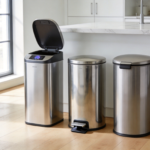
[…] Keeping a designated compost or organic waste container separate from your main bin reduces moisture and nutrient availability for bacteria in the primary trash can. For a complete room-by-room waste sorting system, see our Home Recycling Made Simple guide. […]