Address
304 North Cardinal
St. Dorchester Center, MA 02124
Work Hours
Monday to Friday: 7AM - 7PM
Weekend: 10AM - 5PM
Address
304 North Cardinal
St. Dorchester Center, MA 02124
Work Hours
Monday to Friday: 7AM - 7PM
Weekend: 10AM - 5PM
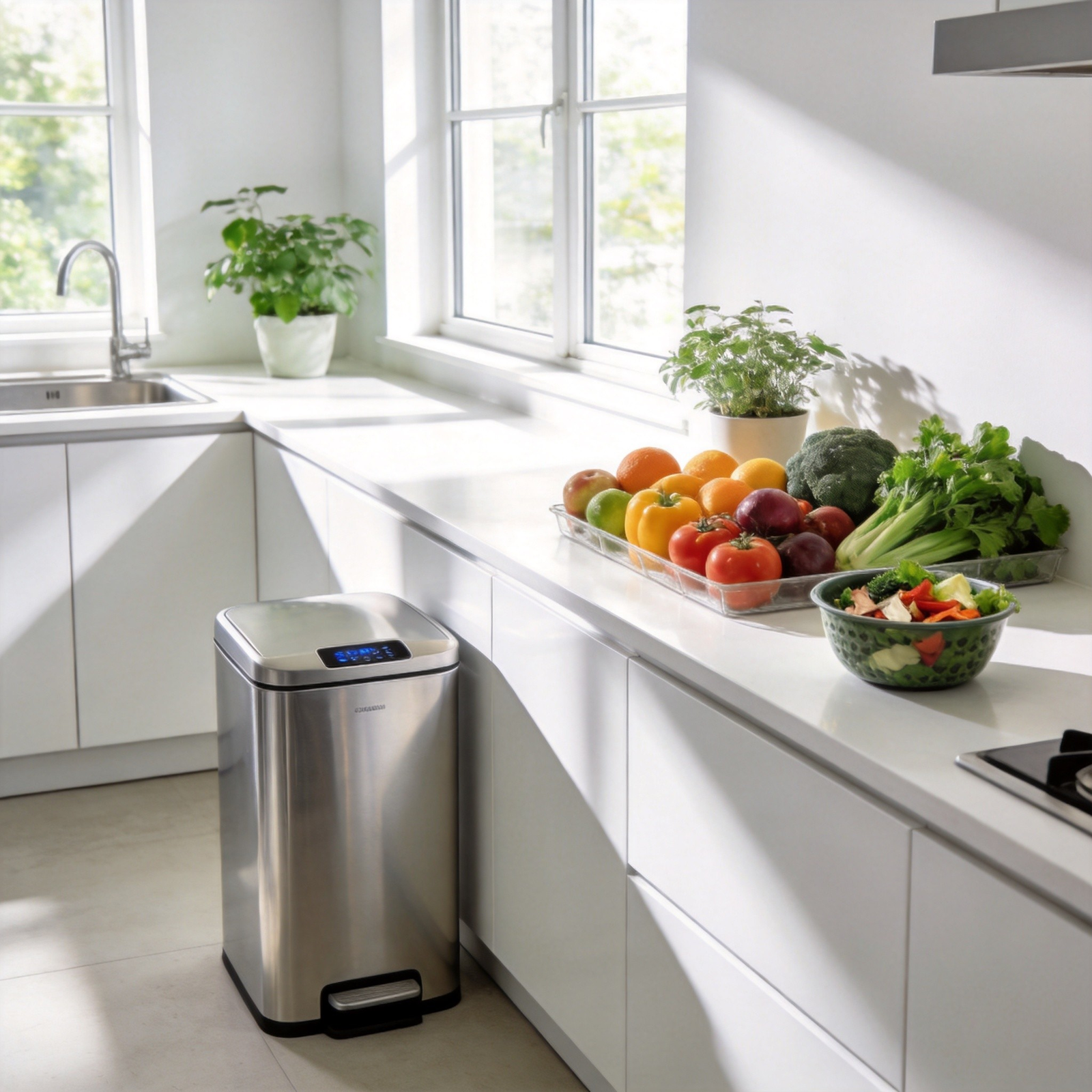
The average American household throws away roughly 30% of the food it buys every year. That’s not just wasted groceries — it’s wasted money, wasted water, wasted energy, and a significant contributor to methane emissions as decomposing food sits in landfills. The USDA estimates that food waste costs a family of four between $1,500 and $2,000 annually.
The good news: reducing food waste doesn’t require a lifestyle overhaul. Small, consistent changes in how you plan meals, store food, and manage kitchen waste can cut your household’s food waste dramatically. And the right tools — including a smart sensor trash can with a sealed design — play a surprisingly important role in building habits that stick.
Here are seven research-backed strategies to reduce food waste at home, plus the trash-day habits that keep your kitchen cleaner and healthier.
Before diving into solutions, it’s worth understanding the full picture.
Financial cost. A 2024 study by the National Resources Defense Council (NRDC) found that the average American family spends nearly $1,800 per year on food that ultimately goes uneaten. For single-person households, that number drops in absolute terms but rises per capita — because single households tend to buy full portions and struggle with leftovers.
Environmental cost. When food rots in a landfill, it produces methane — a greenhouse gas roughly 28 times more potent than CO₂ over a 100-year period, according to the EPA. If food waste were a country, it would be the third-largest emitter of greenhouse gases globally, behind only China and the United States.
Health cost. Food waste isn’t just an environmental problem — it affects your home environment too. Accumulating food scraps attract fruit flies, promote bacterial growth, and release volatile organic compounds that contribute to poor indoor air quality. For a deeper look at how trash management affects your indoor air, see our Pet Owners’ Indoor Air Quality Guide.
Reducing food waste is one of the most impactful single actions a household can take for both the planet and personal health.
The most effective food waste strategy happens before you even enter the grocery store. Before writing your shopping list, open the fridge and take stock of what’s already there. Plan meals around ingredients that need to be used up — that half-bag of spinach, the leftover rice, the yogurt nearing its date.
Practical tip: Designate one shelf or bin as the “use first” zone. Place items that are closest to expiration there, and build your next two or three meals around what’s in that zone.
Bulk purchases feel like savings, but they only save money if you actually consume everything. Buying a family-size bag of salad greens when you live alone almost guarantees waste. Match purchase quantities to your household size and consumption rate.
Improper storage is one of the leading causes of premature spoilage. Knowing where different foods belong extends their life by days or even weeks.
表格
| Food Item | Common Mistake | Correct Storage |
|---|---|---|
| Tomatoes | Refrigerated (kills flavor) | Countertop, stem-side down |
| Berries | Left in plastic container | Breathable container, unwashed until use |
| Bread | Refrigerated (stales faster) | Freezer for long-term storage |
| Potatoes | Stored near onions (accelerates sprouting) | Cool, dark place, away from onions |
| Herbs | Left in plastic bag | Stems in water, loosely covered |
| Cheese | Wrapped in plastic wrap | Wax paper or parchment, then loose foil |
Understanding proper storage is a foundation step. For more on keeping your kitchen environment clean and hygienic, check our Kitchen Germ Hotspots Guide.
Date labels cause enormous confusion. The FDA estimates that more than 20% of consumer food waste is tied to misunderstanding date labels.
Here’s what the common labels actually mean:
Learning to read these labels prevents perfectly good food from being tossed prematurely.
Leftovers are one of the most wasted food categories because people tire of eating the same thing twice. The fix isn’t willpower — it’s variety.
Batch cooking with repurposing in mind: When you make a large pot of chili on Sunday, plan to transform it — chili Tuesday becomes chili-topped baked potatoes Thursday, and what remains becomes a filling for stuffed peppers on Saturday.
The “eat me first” container: Keep a designated container in the fridge for leftovers. Everyone in the household knows to check it before opening new food.
Freeze what you can’t eat soon: If you know a leftover won’t be eaten within three days, freeze it immediately. Label it with the date and contents. Most cooked foods freeze well for 2–3 months.
Some food waste is unavoidable — eggshells, coffee grounds, vegetable peels, fruit cores. Instead of sending these to the landfill, composting transforms them into nutrient-rich soil for gardens.
Backyard composting: If you have outdoor space, a simple compost bin handles fruit and vegetable scraps, coffee grounds, tea bags, eggshells, and yard trimmings. Avoid meat, dairy, and oily foods in open compost systems.
Indoor composting: For apartments or homes without yard space, countertop compost bins or bokashi systems work well. Empty collected scraps into a community compost drop-off or municipal green bin program if available.
The key is separating compostable scraps from your general waste stream. This is where your trash can setup matters — a dedicated small bin for compostables next to your main smart trash can keeps the process seamless.
You can’t reduce what you don’t measure. For one week, pay attention to what you throw away. Note which foods are most frequently wasted and why — did they spoil? Did you cook too much? Did you forget they existed?
After a week, patterns will emerge. Most families find that the same 3–5 items account for the majority of their waste. Target those specifically: buy less, store better, or plan recipes that use them up.
Some families find it helpful to keep a simple notepad on the fridge or use a phone note to log discarded items. Even a rough count creates awareness that drives lasting behavioral change.
The trash can itself influences your waste habits. A well-designed kitchen waste station makes sorting and disposing easier, which reinforces good habits.
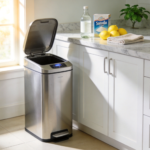
A smart sensor trash can with a sealed lid does more than look modern. It actively supports your food waste reduction efforts in three ways:
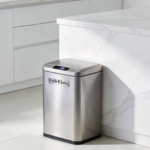
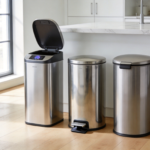
Elylife’s smart sensor trash cans — available in the K Series (30L–60L) and M Series (30L–80L) — feature sealed designs, infrared sensors, and splash-resistant construction. The sealed lid keeps odors locked in, the sensor lets you dispose of scraps hands-free during busy cooking sessions, and the stainless steel body wipes clean in seconds.
Browse the full Elylife collection to find the right model for your kitchen.
Food waste starts in the kitchen, but managing it effectively involves your whole home:
表格
| Room | Food Waste Action | Trash Setup |
|---|---|---|
| Kitchen | Plan meals, store food properly, compost scraps | Sealed smart sensor bin (30L–50L) + small compost container |
| Dining Area | Serve smaller portions, offer seconds as needed | Small bin nearby for napkins and non-food waste |
| Fridge | Rotate items, “use first” shelf visible | Check before shopping |
| Pantry | FIFO organization (first in, first out) | Regular inventory check |
| Garage | Set up composting system or green bin | Larger bin (50L+) for bulk waste |
表格
| Action | Status |
|---|---|
| Audit your fridge — identify items near expiration | ☐ |
| Create a “use first” shelf or bin | ☐ |
| Plan 3 meals around existing ingredients before shopping | ☐ |
| Learn the date labels on your most-wasted items | ☐ |
| Set up a compostable scraps container on the counter | ☐ |
| Track food waste for one week (note what and why) | ☐ |
| Check your trash can — is it sealed, right size, hands-free? | ☐ |
| Share meal planning duties with household members | ☐ |
| Freeze leftovers within 2 days of cooking | ☐ |
| Review and adjust after 30 days | ☐ |
Reducing food waste isn’t about perfection — it’s about awareness. Most households waste food not because they don’t care, but because small oversights compound over time: buying too much, storing incorrectly, forgetting leftovers, and tossing scraps in an open bin that attracts pests and odors.
The strategies above are simple, but their cumulative impact is significant. A family that cuts food waste by even 50% saves $750–$1,000 per year and prevents hundreds of pounds of organic matter from reaching landfills. And when you pair those habits with the right kitchen tools — a sealed, sensor-activated smart trash can that makes disposal effortless and hygienic — the systems reinforce each other.
Small changes, consistently applied, create lasting impact. Start with one or two strategies this week, and build from there.
For more on creating a cleaner, healthier kitchen environment, explore our Zero-Waste Kitchen Guide and our Home Recycling Guide: Room-by-Room Waste Sorting.