Address
304 North Cardinal
St. Dorchester Center, MA 02124
Work Hours
Monday to Friday: 7AM - 7PM
Weekend: 10AM - 5PM
Address
304 North Cardinal
St. Dorchester Center, MA 02124
Work Hours
Monday to Friday: 7AM - 7PM
Weekend: 10AM - 5PM
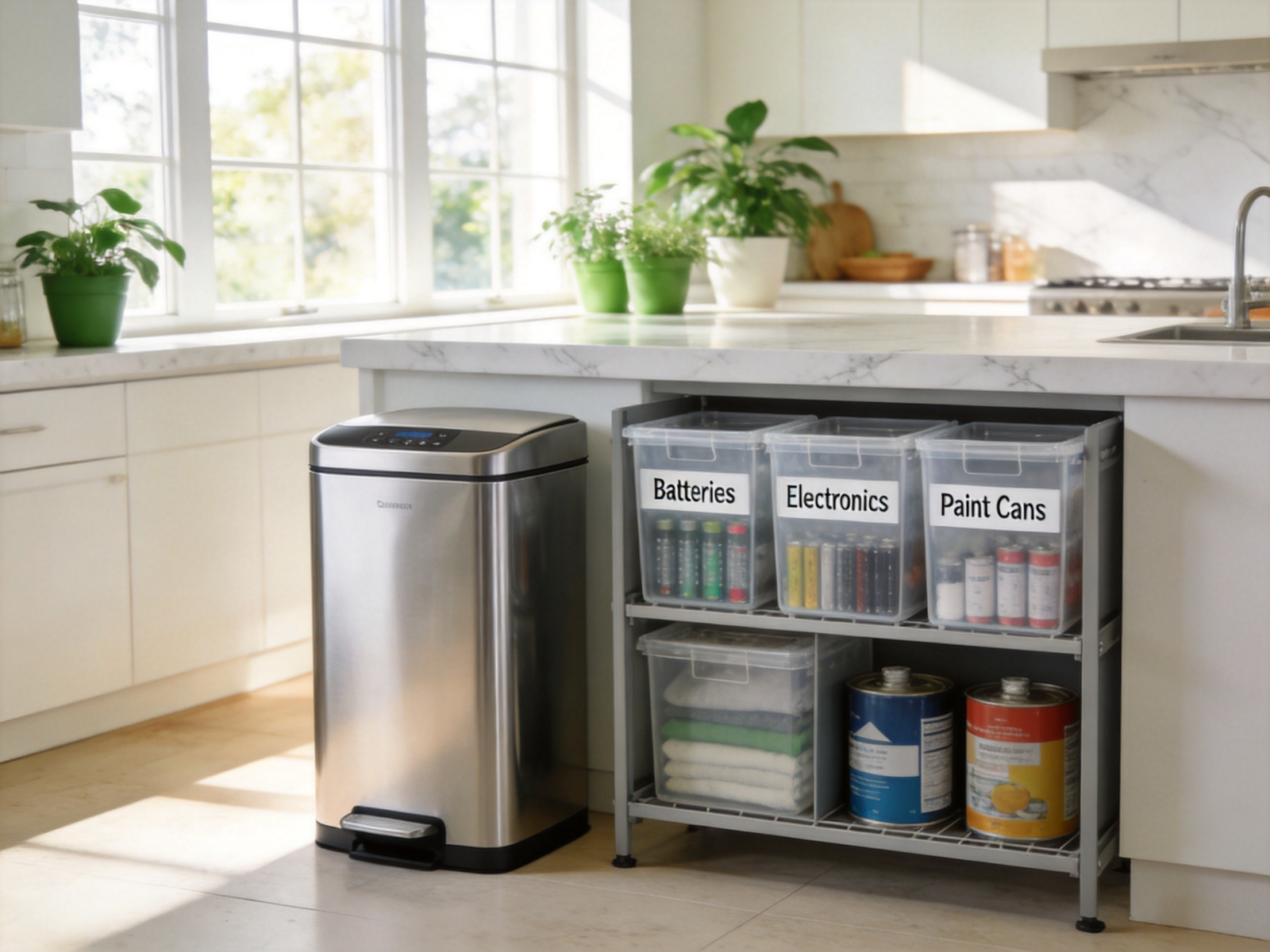
Every household generates waste beyond everyday food scraps and packaging. Dead batteries, expired medications, half-used paint cans, old electronics — these items are common in most homes, yet most people have no idea how to dispose of them safely. Tossing them into your regular trash can isn’t just careless. It’s dangerous, illegal in many jurisdictions, and harmful to the environment.
Household hazardous waste (HHW) includes products that can catch fire, corrode metal, react explosively, or release toxic fumes. The EPA estimates the average American home generates nearly 20 pounds of hazardous waste per year. Multiply that across 130 million households, and you’re looking at 2.6 billion pounds of potentially dangerous material passing through the waste stream annually.
This guide covers what counts as household hazardous waste, why it should never go in your regular trash, how to identify hazardous items room by room, safe disposal methods, and how a smart waste management system helps you stay organized.
The EPA defines household hazardous waste based on four characteristics:
表格
| Category | Common Items | Where Found |
|---|---|---|
| Batteries | AA/AAA alkaline, lithium-ion, button cells, lead-acid | Drawers, remotes, toys, cars |
| Electronics | Phones, laptops, tablets, chargers, power banks | Every room |
| Paints & Solvents | Oil-based paint, stain, varnish, paint thinner | Garage, basement |
| Cleaning Products | Bleach, ammonia, drain cleaner, oven cleaner | Kitchen, bathroom |
| Automotive | Motor oil, antifreeze, brake fluid, gasoline | Garage |
| Healthcare | Expired medications, sharps, mercury thermometers | Bathroom, medicine cabinet |
| Lighting | CFL bulbs, fluorescent tubes (contain mercury) | Throughout the home |
When hazardous materials end up in landfills, they don’t stay contained. Battery acid leaches into soil and groundwater. Mercury from broken CFL bulbs vaporizes into the air. A single lithium battery crushed in a garbage truck can start a fire that spreads across an entire landfill section.
Sanitation workers handle trash without hazardous material protective equipment. Leaking bleach causes chemical burns. Exploding aerosol cans send shrapnel flying. Punctured sharps create biohazard exposure. These aren’t hypothetical — they happen regularly.
Many states prohibit hazardous waste disposal in regular trash. Fines range from $100 to $10,000+ per violation. Improper disposal also violates the Resource Conservation and Recovery Act (RCRA) for certain materials.
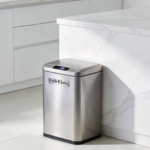
Hazardous chemicals damage your smart trash can. Corrosive cleaners degrade the stainless steel finish and internal gaskets. Leaking battery acid ruins sensor electronics. Flammable solvents near a sensor bin with an electric motor create genuine fire risk. Protecting your investment means keeping these materials out of your everyday bin.
For guidance on maintaining your smart bin, see our Smart Trash Can Maintenance Guide.
Most people don’t realize how much hazardous waste they accumulate because it’s scattered throughout the house:
Kitchen: Aerosol cooking sprays, oven cleaner (sodium hydroxide — highly corrosive), drain cleaner, bleach and ammonia (deadly when mixed), nail polish remover (flammable acetone), expired medications.
Bathroom: Hair dye products, aerosol deodorants and hairsprays, mercury thermometers, expired prescription medications, sharps (insulin needles, lancets).
Garage & Utility Room: Motor oil, antifreeze (ethylene glycol — toxic and attractively sweet-tasting), gasoline, paint and solvents, batteries, pool chemicals, pesticides.
Home Office: Old phones and laptops (lithium batteries, heavy metals), printer ink cartridges, power banks, cables and circuit boards (lead, cadmium).
Most counties operate household hazardous waste collection sites or scheduled events, free for residents. To find yours:
表格
| Item | Retailer Programs |
|---|---|
| Batteries | Home Depot, Lowe’s, Best Buy, Call2Recycle drop boxes |
| Electronics | Best Buy, Staples, Apple trade-in |
| Fluorescent bulbs | Home Depot, Lowe’s, IKEA |
| Paint | Habitat for Humanity ReStore (unused latex), PaintCare programs |
| Medications | CVS, Walgreens, Walmart drug take-back kiosks |
Many communities host annual “HHW Roundup” events. Check local government websites, community social media, or utility bill inserts for dates and locations.
Most households accumulate hazardous items for weeks before disposal. Follow these storage rules:
Do:
Don’t:
For households managing complex waste streams, a dedicated staging area separate from your daily-use Elylife sensor trash can is essential. Your smart bin handles everyday waste — not chemicals and batteries.
表格
| Item | Disposal Method | Never Put In |
|---|---|---|
| Alkaline batteries | Recycling drop-off (preferred) or regular trash where permitted | Regular trash (if recyclable locally) |
| Lithium-ion batteries | Call2Recycle drop-off, electronics retailer | Regular trash — fire hazard |
| Expired medications | Pharmacy take-back kiosk, DEA Take-Back Day | Regular trash, toilet, sink |
| Oil-based paint | HHW collection facility only | Regular trash — flammable |
| Fluorescent bulbs | Home Depot/Lowe’s drop-off or HHW facility | Regular trash — mercury |
| Electronics (e-waste) | Retailer take-back, certified e-waste recycler | Regular trash — heavy metals |
| Motor oil | Auto parts store drop-off, HHW facility | Regular trash, storm drain |
| Sharps (needles) | FDA-cleared sharps container → pharmacy or HHW drop-off | Regular trash — biohazard |
| Aerosol cans (full) | HHW collection facility | Regular trash — explosion risk |
| Mercury thermometers | HHW facility only | Regular trash — toxic |
Effective waste management means routing every item to its proper destination:
This four-stream system protects your family’s health, your smart bin’s longevity, and the environment. For more on building healthier waste habits, see our Zero-Waste Kitchen Guide.
表格
| Action | ✓ |
|---|---|
| Identified hazardous items in kitchen (cleaners, aerosols, medications) | ☐ |
| Identified hazardous items in bathroom (medications, sharps, thermometers) | ☐ |
| Identified hazardous items in garage (paint, solvents, automotive fluids) | ☐ |
| Located nearest HHW collection facility | ☐ |
| Located nearest retail battery/electronics drop-off point | ☐ |
| Set up dedicated HHW storage container (labeled, ventilated, child-proof) | ☐ |
| Separated incompatible chemicals | ☐ |
| Verified no hazardous waste in regular smart trash can | ☐ |
| Scheduled medication take-back (pharmacy kiosk or DEA event) | ☐ |
| Set calendar reminder for next community HHW collection event | ☐ |
Household hazardous waste is a problem every home faces, but most people ignore it until something goes wrong — a chemical spill, a battery fire, a child finding expired pills. The solution: know what’s hazardous, keep it out of your regular trash, store it safely, and dispose of it properly.
Your smart sensor trash can is designed for daily household waste — not chemicals, batteries, or electronics. Set up a four-stream system (daily trash, recycling, compost, hazardous waste staging) and protect your family, your home, and the environment.
Start with the checklist above. Walk through each room. Find your local disposal options. It takes one afternoon to set up a system that keeps your home safe for years.