Address
304 North Cardinal
St. Dorchester Center, MA 02124
Work Hours
Monday to Friday: 7AM - 7PM
Weekend: 10AM - 5PM
Address
304 North Cardinal
St. Dorchester Center, MA 02124
Work Hours
Monday to Friday: 7AM - 7PM
Weekend: 10AM - 5PM
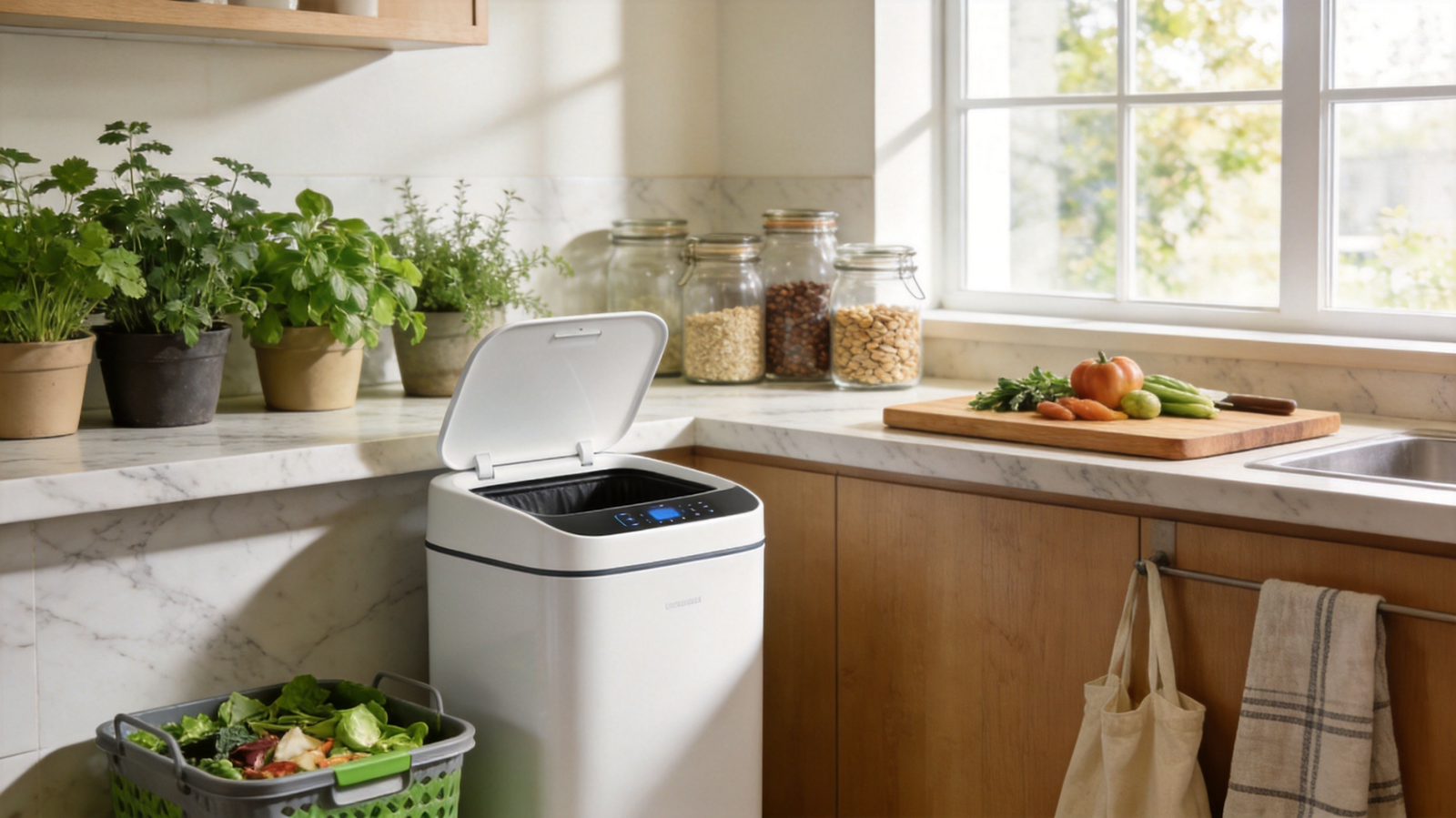
The average American household generates over 4 pounds of trash per day — that’s nearly 1,500 pounds per year. Most of it ends up in landfills, where organic matter produces methane, a greenhouse gas 80 times more potent than CO₂ over a 20-year period.
If that number feels overwhelming, here’s the good news: you don’t need to overhaul your entire lifestyle to make a meaningful difference. A zero-waste kitchen isn’t about perfection — it’s about progressive habits that compound over time. Small, consistent changes in how you sort, store, and dispose of waste can cut your household trash volume by 30-40%.
This guide walks you through 7 practical, science-backed habits that reduce waste, lower your carbon footprint, and create a healthier home environment — starting today.
Zero-waste living follows the 5R framework popularized by sustainability expert Bea Johnson:
A zero-waste kitchen applies these principles to food prep, storage, cleanup, and waste disposal. The goal isn’t to produce literally zero trash — it’s to dramatically reduce the volume and environmental impact of what your household discards.
Research from the Journal of Cleaner Production shows that households adopting basic zero-waste practices reduce their solid waste output by an average of 32% within the first six months. The health co-benefits — better indoor air quality, reduced exposure to decomposition byproducts, fewer pest attractants — make the effort doubly worthwhile.
Before you can reduce waste, you need to understand what you’re throwing away.
The 7-Day Trash Audit:
Most households discover that 40-50% of their trash is organic matter (food scraps, coffee grounds, tea bags) that could be composted instead. Another 20-30% is packaging that could be avoided by buying in bulk or choosing alternatives.
This single audit gives you a roadmap for the highest-impact changes specific to your household. No guesswork required.
The biggest barrier to waste reduction isn’t motivation — it’s friction. If recycling and composting require extra trips to different bins, most people default to throwing everything in one container.
The solution: Create a centralized sorting station in your kitchen with three clearly labeled compartments:
表格
| Station | Accepts | Volume (typical household) |
|---|---|---|
| Landfill | Non-recyclable packaging, broken items, contaminated materials | 20-30% |
| Recycling | Clean plastics (#1-2, #4-5), glass, metal cans, paper, cardboard | 30-40% |
| Compost/Organic | Food scraps, coffee grounds, tea bags, paper towels, yard waste | 35-45% |
A three-compartment sensor trash can system makes this effortless — each bin opens hands-free as you approach, eliminating the contact point that makes people reluctant to sort frequently.
For families concerned about kitchen hygiene at the sorting station, our guide on How Sensor Trash Cans Reduce Cross-Contamination explains how touchless operation prevents bacteria transfer during frequent waste sorting.
Food waste in landfills generates methane. Composting it instead produces nutrient-rich soil amendment and avoids those emissions entirely.
Apartment-friendly composting options:
The key is making collection convenient. A small, sealed compost container on your counter — emptied daily into your main compost system — removes the friction that kills composting habits.
Health note: Properly sealed compost containers also prevent fruit fly infestations, a common summer kitchen pest that can carry bacteria. Our Kitchen Food Safety Guide covers additional strategies for keeping organic waste contained and safe.
Single-use plastic wrap, zip-lock bags, and disposable containers account for a surprising share of kitchen waste. The average household uses 500+ plastic bags per year for food storage alone.
High-impact swaps:
表格
| Disposable Item | Reusable Alternative | Annual Waste Reduction |
|---|---|---|
| Plastic wrap | Silicone stretch lids, beeswax wraps | ~150 ft² of plastic film |
| Zip-lock bags | Silicone storage bags (Stasher, etc.) | ~200+ bags |
| Paper towels | Cotton dish towels, Swedish dishcloths | ~1,500 sheets |
| Aluminum foil | Reusable silicone baking mats | ~75 sq ft of foil |
| Disposable plates/cutlery | Ceramic, stainless steel, bamboo | ~300+ pieces |
These swaps pay for themselves within 2-4 months and reduce both your waste volume and your household’s plastic exposure — particularly important for families with young children, as explored in our Baby-Proofing Your Kitchen Trash Can guide.
Packaging makes up roughly 30% of municipal solid waste in the United States. A significant portion comes from food packaging — single-serving containers, excessive wrapping, and multi-layer materials that can’t be recycled.
Bulk-buying strategies that work:
The waste reduction is significant: households that adopt bulk purchasing for staple items reduce their packaging waste by an estimated 25-35% .
If you’re using plastic grocery bags or conventional plastic trash liners, you’re adding hundreds of plastic bags to landfills each year — on top of the waste already inside them.
Sustainable liner alternatives:
When choosing compostable bags, look for BPI (Biodegradable Products Institute) certification — without it, “biodegradable” claims are often greenwashing. Standard plastic bags labeled “degradable” don’t meaningfully break down in landfill conditions.
For maintaining freshness with eco-friendly liners, our Summer Trash Can Odor Control Guide shares practical strategies that work with any liner type.
The trash can itself plays a bigger role in your sustainability and health journey than most people realize.
An open or poorly sealed trash can:
A smart sensor trash can addresses all of these issues simultaneously:
Decomposing organic waste releases a cocktail of gases including ammonia, hydrogen sulfide, and various VOCs. In a poorly ventilated kitchen, these compounds accumulate — particularly in summer when decomposition accelerates.
A sealed smart trash can acts as a containment barrier, keeping these gases locked inside the bin rather than circulating through your living space. This is especially important for households with allergy sufferers, asthmatics, or anyone sensitive to indoor air pollutants. Our article on Your Trash Can Could Be Triggering Your Allergies explores this connection in detail.
For elderly household members or anyone with mobility limitations, a touchless sensor bin removes a physical barrier to proper waste sorting. No bending, no stepping on pedals, no struggling with heavy lids — just approach and the bin opens. This small design difference can mean the difference between consistent sorting habits and frustration-driven single-bin disposal.
The Elylife K Series and B Series sensor bins are specifically designed with this combination of sealed construction, reliable infrared sensing, and quiet motorized operation — making them ideal for health-conscious, sustainability-focused households.
Here’s a practical roadmap to implement these habits over the next 30 days:
表格
| Week | Action | Expected Impact | Difficulty |
|---|---|---|---|
| Week 1 | Complete a 7-day trash audit | Identify your top 3 waste categories | Easy |
| Week 1 | Set up a 3-station sorting system | Enable consistent waste separation | Moderate |
| Week 2 | Start composting food scraps | Reduce organic waste by 40-50% | Moderate |
| Week 2 | Switch to reusable food storage | Eliminate 500+ plastic bags/year | Easy |
| Week 3 | Begin bulk-buying staple items | Reduce packaging waste by 25-35% | Moderate |
| Week 3 | Switch to compostable or paper liners | Reduce plastic liner waste | Easy |
| Week 4 | Upgrade to a sealed smart sensor trash can | Improve hygiene, odor control, sorting frequency | Easy |
By the end of 30 days, a household following this plan can expect to reduce total waste output by 30-40% — while simultaneously improving kitchen hygiene and indoor air quality.
Waste reduction isn’t just about a cleaner home. The EPA estimates that composting and recycling together divert over 90 million tons of material from landfills annually in the United States. When households participate, the collective impact is substantial:
Your kitchen is where these choices happen — multiple times a day. The habits you build there ripple outward in ways that extend far beyond your home.
Zero-waste living isn’t an all-or-nothing proposition. It’s a series of small, practical choices that compound into significant environmental and health benefits over time. You don’t need a perfect system — you need a system that works for your household and that you’ll actually maintain.
Start with one habit this week. Add another next week. Within a month, your kitchen waste will look dramatically different, your home will feel cleaner and fresher, and you’ll have built routines that serve your family and the planet for years to come.
The tools are simple: a sorting system, a compost setup, reusable containers, and a trash can that makes doing the right thing the easiest thing.
Small habits, practiced consistently, create outsized impact. A zero-waste kitchen isn’t about sacrifice — it’s about designing a home environment where the sustainable choice is the natural choice. Start with one habit today, and let the momentum carry you forward.


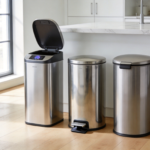
[…] you use one — this encourages proper waste sorting without extra trips across the kitchen. Our Zero-Waste Kitchen Guide covers how to set up an efficient three-station sorting system alongside your sensor […]